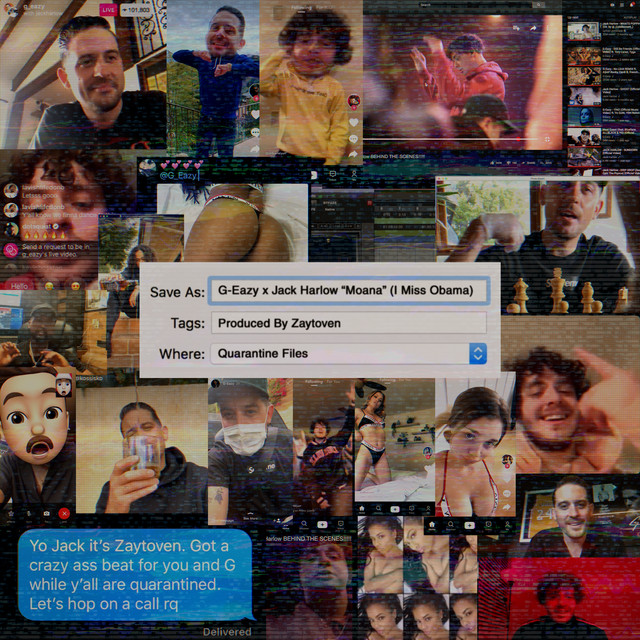
Moana by G‐Eazy, Jack Harlow
The meaning of Moana G‐Eazy, Jack Harlow is less about a deep story than a carefully staged image. The song presents a flashy, late-night world where money, attention, sex, and status all blur together. Instead of offering emotional confession, both rappers lean into performance. They sound amused, cocky, and fully aware that the song is built to feel big, reckless, and quotable.
"Moana" - G‐Eazy, Jack Harlow
I don't wanna hear about no drama
The check ain't right if it ain't no commas
Loading lyrics...
Unable to load lyrics
We're unable to display the lyrics at this time. Please try again later.
Produced by Zaytoven, the track arrived as a loose, high-energy collaboration from two rappers with different personas: G-Eazy’s slick nightlife cool and Jack Harlow’s playful, conversational charisma. That mix matters, because the song’s meaning comes from attitude as much as from content.
The Real Point Hides Behind the Party
On the surface, the record is a club rap song about women, drugs, fame, and getting paid. The repeated line about not wanting drama sets the tone, but the song immediately undercuts that claim. They say they do not want complications, yet everything around them invites chaos.
That tension is the key idea. The hook pairs no drama
with demands for money and stories about attraction, disloyalty, and public attention. In other words, they act detached while moving through a world that thrives on mess. Interpretation: the song is not really about avoiding drama. It is about controlling it, staying above it, and turning it into entertainment.
The title image works the same way. The reference to look like Moana
is less a character study than a quick visual shortcut. It turns a person into an image, which fits the song’s larger theme: everybody becomes part of a surface-level spectacle.
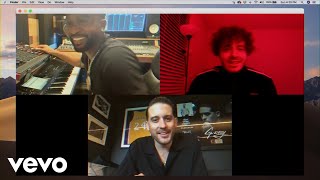
Watch the official Moana
music video
Brag Rap With a Smirk
A big part of the meaning of Moana G‐Eazy, Jack Harlow is how both artists treat bragging as a kind of performance art. Wealth appears in lines about checks, houses, and paid appearances. Desire appears just as casually. Nothing is described as rare or sacred; everything is available, exchangeable, and part of a fast-moving night.
G-Eazy’s verse is especially direct about status. He frames his life as one where money should arrive in large amounts and access is assumed. Jack Harlow follows with a style that feels more loose and joking, but the message stays similar. He moves through parties and flirtation with total confidence, tossing out punchlines that sound tossed-off but are carefully timed.
That is why the song feels funny and arrogant at once. Even when the subject matter is crude, the delivery suggests they know the audience expects exaggeration. Interpretation: the track is selling persona first, not honesty.
The Chorus Turns the Song Into a Loop
The hook is what makes the song memorable. It repeats ideas about avoiding conflict, expecting serious money, and attracting someone who may already be committed elsewhere. Those details are not there to build a plot. They create a loop of temptation, ego, and detachment.
The check ain't rightif itain't no commas
This short moment sums up the song’s value system. Money is the first test of worth. From there, the rest of the nightlife fantasy falls into place: smoke, women, crew loyalty, and public display.
The repeated ending question about putting on a show hints at another layer. The song knows that nightlife is theatrical. Everybody is watching everybody else, and each verse becomes part of that display.
How the Sound Supports the Message
Zaytoven’s production is essential to how the track lands. Known for trap production and piano-driven bounce, he gives “Moana” a beat that feels bright, roomy, and confident rather than dark or tortured. That choice keeps the song playful even when the lyrics get abrasive. According to AllMusic, Zaytoven’s style has long helped shape modern trap’s melodic edge.
The instrumental leaves enough space for both rappers to coast. There is no need for dense storytelling because the beat already communicates luxury and motion. The groove feels like an upscale party where people are trying to look effortless.
This also fits G-Eazy’s larger catalog, which often mixes cool detachment with nightlife imagery, as heard across releases documented by Billboard. In “Moana,” that persona gets sharpened by Harlow’s lighter, more mischievous energy.
What the Song Says About Power and Image
One of the strongest themes here is objectification. Women are mostly presented as symbols of beauty, status, or immediate pleasure. That does not make the song unique in rap or party music, but it does shape its meaning. The track is less interested in relationships than in conquest and display.
Another theme is control. They keep trying to sound untouched by emotional stakes. Phrases like hard no
and so gone
push the idea that they can move through excess without getting caught by it. Interpretation: that confidence may be part of the fantasy. The constant need to announce control can suggest how unstable this world actually is.
There is also a strong motif of spectacle. Crews, clubs, smoke, designer living, and attention all turn the song into a scene rather than a confession. Listeners are meant to picture the lifestyle instantly.
Final Take on “Moana”
So, what is the meaning of Moana G‐Eazy, Jack Harlow? At its core, the song is a flashy portrait of modern rap celebrity, where money proves value, attraction becomes performance, and emotional distance is part of the brand. Its real subject is not romance or even conflict. It is image management inside a party that never fully slows down.
That is why the song works best when heard as swagger with self-awareness. It is blunt, catchy, and built around vibe over depth. Interpretation: rather than asking listeners to believe every detail literally, it invites them to enjoy the exaggerated world both rappers create.
Disclaimer: This interpretation is based on the lyrics, performance, and available context, and other listeners may reasonably hear the song differently.








