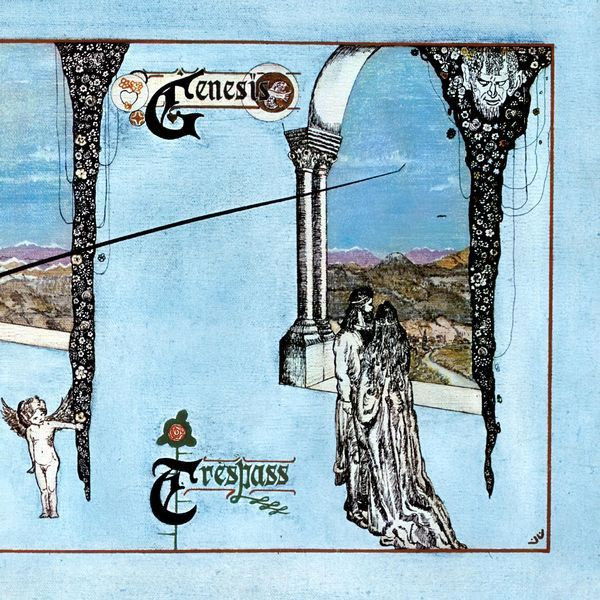
Dusk by Genesis
The meaning of Dusk Genesis centers on loss, spiritual doubt, and the search for a reason to keep going when the world feels damaged. Early Genesis often mixed poetic images with big emotional questions, and “Dusk” is a strong example of that approach. Written by Tony Banks, Peter Gabriel, Anthony Phillips, and Mike Rutherford, and released on Trespass in 1970, the song turns private pain into a series of striking symbols.
"Dusk" - Genesis
Touching all that's real
And once it stroke the love's body
Loading lyrics...
Unable to load lyrics
We're unable to display the lyrics at this time. Please try again later.
Rather than telling one simple story, it moves through touch, memory, nature, conflict, religion, and fate. By the end, it suggests that even after despair, some faint new beginning may still appear.
Where the Song Starts: From Presence to Absence
The opening image is physical and immediate. The speaker notices a hand still moving, still able to feel what is real. But that contact is no longer comforting. The hand once held love, and now it seems trapped in memory, almost scratching backward at what cannot be recovered.
That shift matters to the meaning of Dusk Genesis. The song opens with a person caught between living in the present and being pulled into the past. The phrase touching all that's real
suggests the world still exists around them, yet their mind keeps returning to what is gone.
This tension gives the whole song its emotional shape. They are not numb. They feel too much.

Watch the official Dusk
music video
Morning Images in a Song Called “Dusk”
One of the song’s most interesting moves is its use of gentle natural images. It mentions a flower’s scent, morning colors, friendship, and tears that may fade. These details create a brief sense of renewal.
Still, Genesis does not let that comfort last. The line about rain driving the day away turns beauty into something fragile. Even lovely moments pass quickly.
Interpretation: This is why the title matters. “Dusk” is not only a time of day. It suggests a threshold, the dim point between light and darkness. The song keeps asking whether fading light means total ending, or only transition.
Questions Without Easy Answers
In the next section, the lyric turns to plain but deep questions. If a leaf falls, is the tree destroyed? If people take water, is the well empty? These are not just nature observations. They are ways of thinking about grief, change, and survival.
The song seems to ask: when something is lost, does everything collapse with it? When love suffers damage, can life still continue?
This is one reason the meaning of Dusk Genesis feels so universal. The images are simple, but the emotional issue is huge. A single loss can make a person feel as if the whole self has broken. The song gently tests that fear rather than declaring an answer.
Human Pain, Seen Everywhere
The middle of “Dusk” broadens from private sorrow to shared human struggle. It moves from a mother’s sigh to lovers fighting like wild animals. These scenes suggest that pain is not limited to one person’s story. It is woven into family life, romance, and ordinary existence.
The image of two angry tigers
is especially sharp. It turns a relationship into something fierce and destructive. Love here is not soft; it can wound.
Yet the song also hints that fear can briefly disappear in the middle of extreme emotion. That detail is important. Suffering does not just hurt; it can also overwhelm thought itself, erasing hesitation for a moment.
Faith, Fate, and Cosmic Loneliness
The darkest turn comes when the lyric invokes Jesus suffering while heaven does not seem to notice. That is a bold image of spiritual abandonment. It does not necessarily reject faith, but it does show a person staring at the possibility that suffering may go unseen.
Then the song shifts to a sinking ship and a captain left alone. The metaphor is easy to grasp and very effective. Control is gone, danger is near, and leadership offers no rescue.
A new dawn seems to be rising,Never to recall this passerby.
Before that small hope arrives, the speaker feels like a pawn on the chessboard
, vulnerable to a careless move by a higher power. Interpretation: This may be the song’s clearest statement of existential fear. The speaker worries that human life is tiny, exposed, and subject to forces it cannot control.
How the Music Supports the Meaning
Part of what makes “Dusk” effective is that the arrangement matches the lyric’s uncertainty. On Trespass, Genesis was still shaping the pastoral-progressive sound that would define their early period. The band’s Trespass lineup leaned on acoustic textures, soft dynamics, and careful mood-building rather than hard rock force.
In “Dusk,” that restraint matters. The song feels delicate, almost hovering. The softer instrumental setting lets the words breathe, which makes the anxiety land more quietly and more deeply. Instead of dramatizing despair with sheer volume, Genesis lets the listener sit inside it.
Peter Gabriel’s vocal delivery also helps. He does not sound theatrical here so much as reflective, as if they are observing emotional wreckage in real time.
The Final Turn Toward Light
For most of its length, “Dusk” sounds unsure whether life can recover from pain. Then it ends by glancing toward renewal. The image of dawn on the horizon does not erase the suffering that came before. It simply introduces the possibility that despair is not the last word.
That final move gives the meaning of Dusk Genesis its lasting power. The song is not optimistic in a simple way. It does not promise healing, justice, or clear faith. But it does leave room for continuation.
Why “Dusk” Still Connects
What makes “Dusk” memorable is its balance. It is intimate but not narrow, poetic but readable, bleak but not hopeless. Its images of touch, rain, leaves, animals, ships, and dawn all circle the same question: how does a person endure when love, faith, and certainty begin to slip away?
Interpretation: The best answer the song offers is modest. A person may not control loss, and they may never fully understand suffering, but they can still look toward the horizon.
That is why the track still resonates with listeners who love early Genesis. It captures the hour when pain feels largest, yet morning remains barely possible.
Disclaimer: This interpretation is based on the lyrics, known Genesis context, and musical analysis. As with many early Genesis songs, listeners may reasonably hear different meanings in its imagery.







