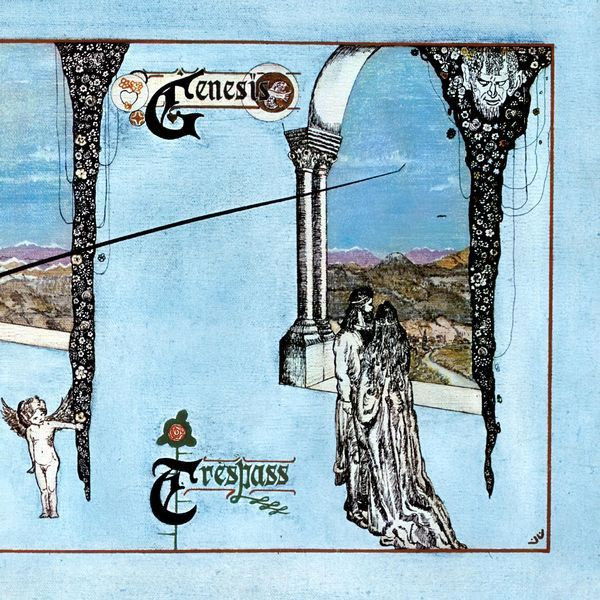
Stagnation by Genesis
Why This Early Genesis Song Still Feels Unsettling
The meaning of Stagnation Genesis starts with a world that feels empty after disaster. The printed lyric note before the song imagines a rich man who buries himself underground and survives humanity. That setup matters because it turns the song into more than a sad mood piece. It becomes the voice of someone left alone with memory, guilt, and a need for cleansing.
"Stagnation" - Genesis
Enough to spend all his fortunes in burying himself
Many miles beneath the ground. as the only surviving
Loading lyrics...
Unable to load lyrics
We're unable to display the lyrics at this time. Please try again later.
On Genesis’s 1970 album Trespass, “Stagnation” sits at the point where the band was moving away from pop and toward progressive rock mixed with folk textures. The song was credited to Tony Banks, Peter Gabriel, Anthony Phillips, and Mike Rutherford, with Gabriel writing lyrics to music shaped by the group. In the band’s own retrospective book Chapter and Verse, they described how the track came together as a collaborative piece.

Watch the official Stagnation
music video
A Song About Survival That Does Not Feel Victorious
At a basic level, the narrator seems to be alive after everyone else is gone. Yet there is no triumph in that position. The opening image of a red sky
sounds like warning, aftermath, or both. They notice peace in nature, but that peace feels eerie because there is nobody left to share it.
That is why the song’s title matters so much. “Stagnation” suggests stillness, blocked movement, and water that no longer flows. The narrator is alive, but emotionally and spiritually stuck. They cannot fully mourn, fully change, or fully return home.
Interpretation: the song is about survival without renewal. It asks what is left when a person outlives the world they knew, and whether cleansing the past is even possible.
The Search for Cleansing Runs Through Every Section
The strongest thread in the lyric is water. Early on, the narrator says there is time to wash in a pool and wash away the past
. That sounds hopeful for a moment. They want purification, almost like a ritual that could remove grief and guilt.
But Genesis quickly undercuts that hope. Later, the song moves to a far uglier form of water, where the narrator imagines waiting by a mirror-like surface and finding bitter minnows
among weeds and filth. Instead of fresh water bringing rebirth, the song gives them stagnant water full of decay.
That contrast is central to the meaning. The narrator longs for cleansing, but the world around them offers only corruption. Even the repeated need for a drink is not just physical thirst. It sounds like a desperate need to clear out dust, dirt, and inner pollution.
I want a drink.Then let us drinkThen let us smileThen let us go
In this brief closing turn, drinking becomes both literal and symbolic. It suggests relief, fellowship, and maybe death, depending on how a listener hears the final invitation.
Who the Narrator May Be Speaking To
Part of the song’s power comes from its uncertainty. The narrator addresses a my friend
figure, but the song never fully explains who that is. It could be a real companion, a lost loved one, God, the moon, or even the self split into two voices.
This ambiguity makes the song feel haunted. They seem to talk to someone absent yet present, someone who might offer comfort but never answers directly. The moon as a smiling companion adds to that strange feeling. Nature watches, but it does not rescue.
Interpretation: the “friend” may stand for hope itself. The narrator keeps reaching outward because being the last survivor is unbearable alone.
How the Music Deepens the Meaning
“Stagnation” is nearly nine minutes long, and Peter Gabriel once called it a “journey song.” That description fits. Rather than move in a simple verse-chorus pattern, the music travels through changing moods, as if the narrator is wandering through different states of mind.
The arrangement is a big part of why the song works. On Trespass, Genesis leaned hard into twelve-string guitars, organ, piano, and Mellotron. “Stagnation” blends Anthony Phillips and Mike Rutherford’s layered acoustic sound with Tony Banks’s keyboards. The result feels pastoral on the surface but uneasy underneath.
Banks also created a surreal organ effect by switching the organ off and on, giving one descending passage an unstable, sinking quality. That technical detail matters because it mirrors the lyric’s emotional collapse. The ground never feels solid.
There is also a striking vocal effect in the passage about the underwater scene. Research on the album notes that Gabriel sang through a narrow tube so the voice would sound submerged. That production choice is not just clever. It turns the listener into a witness inside the stagnant pool, trapped with the narrator’s thoughts.
The Band Context Helps Explain the Song’s Mood
This was an early Genesis lineup, before Phil Collins joined and before Steve Hackett helped define the classic 1970s sound. Trespass was released on October 23, 1970, and was the last Genesis album with Anthony Phillips. The record was made at Trident Studios with producer John Anthony, during a period when the band was writing more collectively than usual.
That moment of transition matters. “Stagnation” sounds like a band discovering how to stretch a song into a dramatic landscape. Critics were mixed on Trespass at the time, but later listeners often hear it as a blueprint for what Genesis would become. In that sense, “Stagnation” is not stagnant at all as a piece of band history. It is a bridge.
Final Meaning: Between Prayer, Thirst, and Escape
The best way to understand the meaning of Stagnation Genesis is to hear it as a post-apocalyptic lament about being unable to cleanse the self. The narrator wants water, companionship, and a path home. Instead, they find silence, memory, and polluted stillness.
At the same time, the ending leaves a small opening. The call to drink, smile, and go may suggest acceptance at last. Whether that means healing, surrender, or death is left unresolved.
That uncertainty is why the song lasts. It does not hand over one neat answer. It lets listeners sit inside loneliness, thirst, and fragile hope.
Disclaimer: This interpretation separates documented facts about the song’s creation from critical reading of its lyrics and imagery. As with many Genesis songs, meanings can remain open to the listener.







