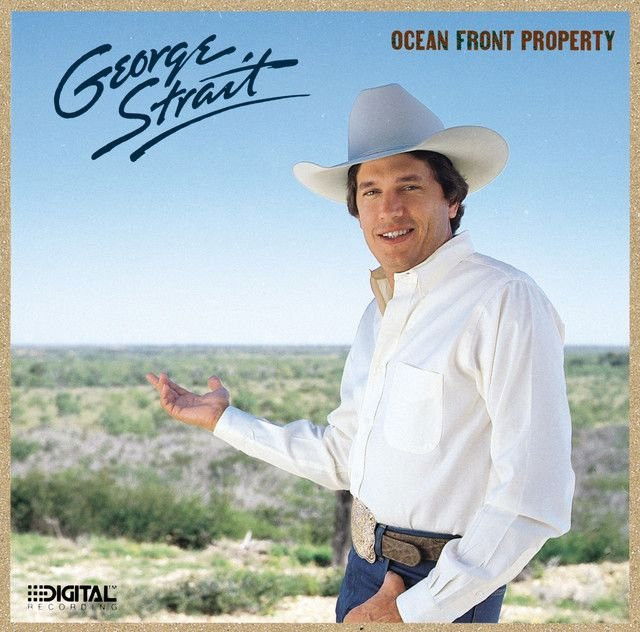
Why 'Ocean Front Property' Cuts Deeper Than a Joke
The meaning of Ocean Front Property George Strait starts with a joke, but it does not end there. On the surface, the song sounds like a witty put-down after a breakup. Under that humor, though, it hints at denial, pride, and the pain of trying to sound untouched when someone clearly still matters.
"Ocean Front Property" - George Strait
I won't miss you
And I won't ever take you back
Loading lyrics...
Unable to load lyrics
We're unable to display the lyrics at this time. Please try again later.
George Strait recorded the song as the lead single and title track from his 1986 album Ocean Front Property. It was written by Hank Cochran, Royce Porter, and Dean Dillon, and it became Strait’s 10th No. 1 country hit, according to Songfacts and Wikipedia. That success makes sense: the song is simple, catchy, and built around one of country music’s sharpest metaphors.
The breakup story hidden inside the punchline
At its core, the song presents a speaker insisting they do not care if a lover leaves. They claim the person’s memory will not linger, and they say they will not chase them or take them back. In plain terms, the speaker is trying to sound firm, cool, and emotionally done.
But the chorus changes everything. When they boast about having ocean front property
in Arizona, the song reveals that the earlier claims are not meant to be trusted. Arizona is famously landlocked, so the image is absurd on purpose. The message is clear: if someone believes that impossible sale, they might also believe the speaker’s claim that they feel nothing.
That is the key to the meaning of Ocean Front Property George Strait. The song is not really about real estate. It is about emotional bluffing.

Watch the official Ocean Front Property
music video
How the chorus exposes the lie
The genius of the chorus is that it turns denial into a sales pitch. The speaker says, in effect, that their lack of love is as believable as a fantasy deal. The line about seeing the sea from the porch is so exaggerated that it becomes a confession.
Even the tossed-off offer to throw the golden gate in free
adds to the joke. It makes the speaker sound like a fast-talking salesman trying too hard. That matters because heartbreak often works this way: people cover hurt feelings with swagger, sarcasm, or bravado.
Interpretation: The more confidently the speaker talks, the less convincing they become. Their certainty feels performative. Instead of proving they are over the breakup, they expose how badly they want to believe their own story.
George Strait's delivery keeps it from turning silly
A weaker performance could have made the song feel novelty-driven. Strait avoids that. His singing is measured, steady, and almost casual, which keeps the humor dry rather than broad. That restraint helps the sadness stay in the room.
Critic Ben Foster argued that the song is subtly clever
with a real undercurrent of heartache, praising Strait’s straightforward vocal for keeping it from sounding campy, as quoted on Wikipedia. That is a useful way to hear it. Strait does not wink too hard at the listener. They let the metaphor do the work.
Why the production matters so much
The arrangement also supports the song’s meaning. Sources describe it as neotraditional country with honky-tonk touches and links to older styles associated with Bob Wills and Lefty Frizzell, per Wikipedia. Produced by Jimmy Bowen and George Strait, the track stays clean and uncluttered.
That musical choice matters. A bright but controlled country groove gives the song motion, while the lack of dramatic excess mirrors the speaker’s attempt to stay composed. The band sounds confident and relaxed, but not flashy. That leaves space for the lyric’s central contradiction: the speaker says I won't miss you
, yet the whole song exists because they clearly need to say it out loud.
In country music, plain arrangements often make emotional doublespeak stand out more. Here, fiddle-and-steel-style textures and a steady beat make the sarcasm feel lived-in, not theatrical.
The writers built a country classic from one impossible image
The song’s writing history adds another layer. Songfacts notes that Dean Dillon later admitted he disliked the song at first, calling it hokey and saying he was unsure people would get it. He was wrong: listeners absolutely got it.
That reaction says a lot about the lyric. The premise is funny enough to remember on first listen, but emotionally true enough to last. People recognize this kind of heartbreak immediately. Many have heard someone insist they are fine when they are obviously not.
Two ways to read the speaker
There are at least two strong readings of the narrator:
- They are deeply hurt and covering it with sarcasm. This is the most common reading.
- They know they are lying and want the ex to notice. In this version, the performance is almost a final message: they still care.
Both readings fit because the song never breaks character. It keeps the mask on, which is exactly why the pain shows through.
Why the song still works today
Part of the song’s staying power is its efficiency. In just a few lines, it captures pride, heartbreak, humor, and self-deception. It also fits George Strait’s larger appeal in the 1980s: he could deliver traditional country songs with clarity and ease, without overacting the emotion.
So, the meaning of Ocean Front Property George Strait is this: it is a breakup song about pretending not to be broken up over. Its famous image is a joke, but the joke reveals the truth. The speaker cannot honestly say they are over the relationship, so they hide behind something obviously impossible.
That balance of wit and ache is why the song became a No. 1 hit and remains one of Strait’s most memorable recordings.
Disclaimer: This interpretation is based on the lyrics, performance, and documented song history. Like all song analysis, some meaning remains open to listener interpretation.







