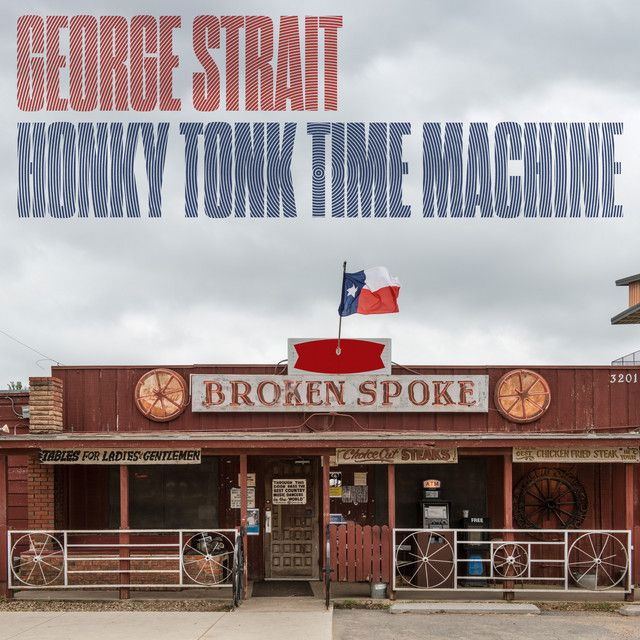
Why George Strait Sang About Duty's Hidden Cost
The meaning of The Weight Of The Badge George Strait starts with a simple idea: a badge is small, but the duty behind it is enormous. George Strait's song turns that contrast into a tribute to police officers, especially the pressure they carry at work and the strain their families carry at home.
"The Weight Of The Badge" - George Strait
As he says goodbye to his wife and kids
He spent his life just like his dad's
Loading lyrics...
Unable to load lyrics
We're unable to display the lyrics at this time. Please try again later.
Released on September 30, 2019, as the second single from Honky Tonk Time Machine, the track was co-written by George Strait, Dean Dillon, and Bubba Strait, and produced by Strait with Chuck Ainlay. It is widely identified as a neotraditional country song, which fits its direct storytelling and plainspoken emotion. According to Strait's public comments, the song was meant as a tribute to people who "carry the weight of the badge each day."
More Than a Tribute Song
At its core, the song follows an officer through ordinary but heavy moments: leaving home for work, facing danger, surviving injury, and returning to duty. That structure matters. Instead of treating law enforcement as an abstract symbol, the song shows a person with a spouse, children, fear, and resolve.
The opening image of a graveyard shift
does a lot of work. It places the story at night, when danger and loneliness feel larger. Then the officer says goodbye to family before driving off. The song immediately frames service as something shared by the whole household, not just the person in uniform.
Interpretation: This is why the title lands so strongly. The "weight" is not metal. It is obligation, public trust, and the constant chance that a routine night may become a crisis.
Watch the official The Weight Of The Badge
music video
How the Story Builds Its Meaning
The verses move in a clear timeline:
- An officer leaves home for another overnight shift.
- They are described as experienced, already shaped by years on the job.
- The chorus explains the mission:
protect and serve
is not just a slogan but a lived promise. - A later verse reveals a hospital stay, proving the danger is real.
- The closing lines return to endurance: they will not break
under the weight of the badge
.
That hospital scene is the emotional hinge. Until then, the song speaks about risk in general terms. After that, the threat becomes personal and visible. The family praying beside the bed shows what public service costs in private life.
It doesn't weigh a lot
until you put it on
Those two short lines are the song's clearest statement. They explain that responsibility feels light from a distance, but overwhelming once it becomes your job.
The Chorus Turns Duty Into Burden
The chorus is built around contrast. On one hand, there is commitment. On the other, there is fragility. The officer swears an oath, gives everything to it, and walks a razor fine
line between strength and collapse.
That phrase matters because it removes any myth of invincibility. The song praises courage, but it does not pretend courage makes fear disappear. Instead, it suggests bravery means continuing while fully aware of what could happen.
Interpretation: The repeated refusal to buckle is not macho posturing. It sounds more like self-discipline. The officer keeps going not because the burden is easy, but because giving in would betray the oath and the people depending on them.
Family Is Part of the Song's Heart
One of the strongest parts of the meaning of The Weight Of The Badge George Strait is the way it includes loved ones. The wife and kids appear early, then return during the hospital scene. This creates a quiet argument: when an officer goes to work, the family also enters a state of waiting.
That detail keeps the song from being only about public heroism. It becomes a song about domestic sacrifice too. The line about doing it "for us" and "for them" widens the purpose of service. It is for community, yes, but also for the family that believes in the work even when the work is dangerous.
Why George Strait's Style Fits the Message
Musically, the track avoids drama for its own sake. Its neotraditional country setting favors steady rhythm, clean instrumentation, and a measured vocal. That restraint helps the message. A louder or flashier arrangement might have pushed the song toward spectacle, but Strait sings it with calm gravity instead.
This matches his long career persona: reliable, understated, and deeply rooted in country storytelling. The song appeared on his 30th studio album, and its sober tone stood out against some of the album's lighter material. It was not a major chart smash, peaking at No. 51 on Billboard's Country Airplay chart and No. 43 on Hot Country Songs, but it clearly found meaning with listeners connected to first responders and service families.
The later video deepened that reading by featuring real first responders and family voices. It was released in 2021 around First Responders Day and framed the song as an explicit act of appreciation.
A Respectful but Specific Message
The song is not subtle about its point of view. It honors law enforcement and treats the work as noble, costly, and necessary. Some listeners may hear it mainly as a patriotic tribute. Others may hear a broader theme about any role where duty asks a person to carry fear without showing it.
Both readings can coexist. The specific subject is policing, but the emotional engine is responsibility. The song asks listeners to consider what happens when a symbol of authority is also a source of strain, pain, and family worry.
What the Song Finally Says
In the end, the meaning of The Weight Of The Badge George Strait is about unseen burden. George Strait and his co-writers present the badge as a compact symbol of risk, service, and endurance. The song's power comes from how plainly it says that courage is heavy.
That is why the title works so well. It invites listeners to look past the object and think about the life attached to it.
Disclaimer: This interpretation is based on the song's lyrics, release context, and documented public comments from George Strait. Like any song, listeners may hear it differently.









