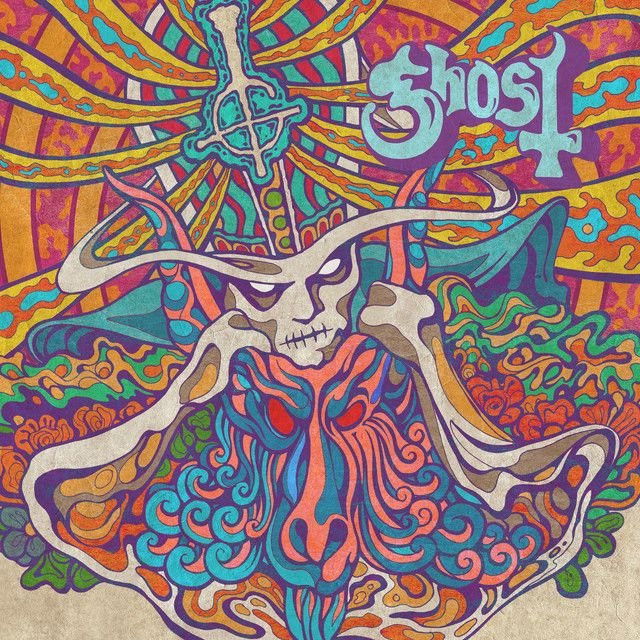
Kiss The Go-Goat by Ghost
Why This Ghost Song Sounds Naughty and Knowing
The meaning of Kiss The Go-Goat Ghost starts with a joke, but it does not end there. On the surface, the song is a playful, flirt-heavy invitation wrapped in occult language. Under that surface, it is about temptation, false promises, and the appeal of choosing a darker, freer path when ordinary authority has failed.
"Kiss The Go-Goat" - Ghost
Whoa, kiss, kiss, kiss the go-goat
You've been playing around the magic that is black
Loading lyrics...
Unable to load lyrics
We're unable to display the lyrics at this time. Please try again later.
Ghost released the track as part of the 2019 EP Seven Inches of Satanic Panic, a retro-styled project presented as a “lost” 1969 recording by Papa Nihil. Factually, the EP was released digitally on September 13, 2019, and the song was written by Tobias Forge, Salem Al Fakir, and Vincent Pontare. Forge also produced the EP under the name Gene Walker with Ghost. Those details matter because the whole release was built as a fake archival artifact, which shapes how listeners hear the song: not as confession, but as theatrical world-building.

Watch the official Kiss The Go-Goat
music video
The Core Meaning: Seduction After Disappointment
At its heart, the song describes someone who has looked for meaning in the wrong places and is now being tempted by a new figure. The verses suggest disappointment with empty systems, weak leaders, and promises that never paid off. When the narrator points to magic that is black
, they are not praising serious occult practice in a literal way as much as using forbidden imagery to frame desire and rebellion.
The sharper line of thought comes when the song says those old influences never gave anything back. That idea turns the track into more than shock rock. It becomes a seduction story aimed at someone disillusioned by authority, tradition, or romance. In that reading, the “goat” figure is not just Satanic decoration. He stands for a tempting alternative that seems honest about what he wants.
A Devilish Pickup Line With a Bigger Theme
The chorus is catchy because it reduces the whole song to one outrageous command: kiss the go-goat
. Paraphrased, the hook says: stop chasing illusions and embrace the taboo option in front of you. It is comic, sexual, and blasphemous all at once.
That balance fits Ghost’s style. Their songs often use Satanic symbols less as doctrine than as dramatic language for freedom, pleasure, and anti-authoritarian energy. Here, the repeated names Satan, Lucifer
are less about theology than mood and character. The song turns the devil into a charismatic lover, one who offers mutual desire instead of moral judgment.
Interpretation: The track can be heard as a parody of salvation language. Instead of spiritual rescue, it offers erotic and social release. That twist is the joke, but also the point.
How the Verses Build the Story
From false dreams to mutual desire
One of the song’s key ideas is that fantasy can mislead. When Ghost sing cling onto a dream
, they warn that longing alone does not make something real or good. The dream may glitter, but it may still disappoint.
Then the song flips from warning to invitation. The central seduction works because it promises reciprocity. The person being addressed is not told to worship from a distance. They are told the feeling goes both ways, summed up in the teasing line it takes two
. That makes the devilish figure seem strangely fair, even considerate, compared with the selfish “dads” and failed guides in the verses.
The phrase that made people search
The Latin phrase Osculum obscenum
adds another layer. It roughly translates as an “obscene kiss,” and it helped drive online curiosity after release. In context, it heightens the song’s mock-ritual mood. The phrase sounds ancient and dangerous, but Ghost use it with a wink. It gives the chorus a ceremonial feel while keeping the song campy and fun.
Hey, baby, kiss the goat
kiss, kiss, kiss the go-goat
This is the article’s only multi-line lyric quote, and even here the point is less the words themselves than their function: they make the chorus feel like a cheer, a chant, and a dare.
The Sound Explains the Message
The production is a huge part of the song’s meaning. Seven Inches of Satanic Panic was designed to sound like late-1960s rock, and “Kiss the Go-Goat” leans into psychedelic pop, garage rock bounce, and vintage swagger. The fuzzy guitars, handclap-ready rhythm, and bright organ tones make the song feel mischievous rather than threatening.
That matters because the music softens the dark imagery. If these same lyrics sat on a harsh metal track, they would feel confrontational. On this groove, they feel teasing, almost bubblegum. The arrangement tells listeners not to take the blasphemy at face value. They are supposed to enjoy the theater of it.
The official video pushes that idea further by staging Papa Nihil at the Whisky a Go Go in a fake 1969 setting. That visual context supports the song’s meaning: Ghost are performing a myth about rock history, temptation, and sleazy cool, not delivering a literal sermon.
Artist Context Makes the Joke Clearer
Ghost’s leader Tobias Forge has often framed the band as a mix of horror, satire, and classic rock craft. That context is important. The song’s scandalous language works because Ghost know exactly how exaggerated it is. Critics have noted that the band frequently returns to the appeal of Lucifer as a symbol of joyful surrender and resistance to rigid power structures.
So the meaning of Kiss The Go-Goat Ghost is not simply “praise the devil.” It is better understood as a stylized fantasy where the devil becomes the one honest salesman in a world full of frauds. The person addressed has been let down by dreams, by authority, and by false glitter. The goat offers a different bargain: desire without pretending to be pure.
Final Take: Camp, Critique, and Catchiness
Ghost turn taboo imagery into a pop hook, and that is why the song lasts in the mind. It is funny, seductive, and a little mocking. Beneath the wink, though, there is a real theme: people become vulnerable to dark charm when respectable systems fail them.
That mix of satire and seduction is what gives the song its bite. Interpretation: listeners can hear it as a playful occult romance, a spoof of religious language, or a broader story about trading false promises for honest temptation.
Disclaimer: This interpretation is based on the song’s lyrics, performance style, and publicly available release context. As with most Ghost songs, ambiguity and theatrical irony are part of the design.








