Why "I Stand Alone" Still Hits So Hard
The meaning of I Stand Alone Godsmack comes down to a simple but powerful idea: they present isolation not as weakness, but as survival. The song sounds like a battle cry, yet its deeper force comes from pain. This is not just about being tough. It is about breaking away from control, fear, and whatever keeps the speaker from feeling whole.
"I Stand Alone" - Godsmack
You can't control me
If you try to take me down, you're gonna break
Loading lyrics...
Unable to load lyrics
We're unable to display the lyrics at this time. Please try again later.
Godsmack released the song in 2002, and it became one of their signature hits. It was also tied to The Scorpion King, which helped frame it as an anthem of defiance and endurance. That context matters because the song already feels cinematic: heavy, urgent, and built for a showdown.
The Core Message Beneath the Roar
At the heart of the track, the speaker pushes back against a force that tries to dominate them. Early lines make that plain through the warning you can't control me
. The wording is direct, but the emotion underneath is more layered. They do not sound calm or free. They sound cornered, then determined.
That tension is key to the meaning. The song is not celebrating loneliness for its own sake. Instead, it argues that standing alone may be the only honest option when trust has been poisoned. The repeated hook I stand alone
becomes less a boast than a line they must keep saying to hold themselves together.
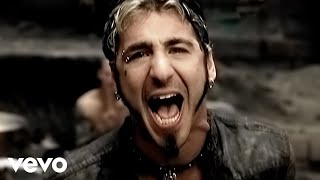
Watch the official I Stand Alone
music video
Who or What Is the Enemy?
One reason the song lasts is that its target stays open. On the surface, it can sound like the speaker is addressing a manipulative person. Phrases like so-called goddess
suggest someone hiding behind false power or image. In that reading, the song is about rejecting emotional control and seeing through a mask.
Interpretation: It also works as an inner struggle. When the speaker mentions the poison in me
, the conflict starts to sound internal. The enemy may be self-doubt, anger, addiction, trauma, or any destructive force living inside. That ambiguity gives the song reach. Listeners can hear either a personal betrayal or a war with the self.
How the Verses Build the Conflict
The verses move like stages of resistance:
- First, the speaker names the control.
- Next, they separate from it and refuse to be broken.
- Then, they admit the damage is still felt inside.
- Finally, they claim the right to choose their own path.
That progression gives the song its emotional arc. It begins with confrontation and ends with a fragile kind of freedom. Even when the speaker sounds strong, there is still hurt in the language. A phrase like feeling your sting
shows that independence has a cost.
Why the Chorus Feels So Big
The chorus works because it turns confusion into clarity. In the verses, the speaker wrestles with pressure, fading belief, and inner pain. In the refrain, all of that gets condensed into one repeated declaration.
Interpretation: The repetition matters because it sounds like self-command. They are not just telling the other force to back off. They are reminding themselves who they are. That is why the hook feels both triumphant and desperate. The line is sturdy, but the emotions around it are still shaking.
And now it's my time
my time to dream
Dream of the sky
This brief section shifts the song. It is still defiant, but it opens a door toward hope. The speaker is not only resisting something bad; they are reaching for something better.
Sound, Production, and Why It Matches the Theme
Musically, “I Stand Alone” is built to feel like impact. Godsmack’s hard rock approach uses thick guitar riffs, pounding drums, and a vocal performance that moves between grit and strain. Those choices make the conflict feel physical.
The production is polished but aggressive, which suits a song about refusing pressure. The riffing creates forward motion, while the drums hit like a march into battle. Sully Erna’s vocal delivery is especially important. He does not sing these lines like abstract thoughts. He pushes them out as if they are being won in real time.
That is part of why the song connected so strongly in the early 2000s rock landscape. It fit an era that favored hard-edged, emotionally direct singles, but it also had a cleaner anthem shape than many peers. That made it easy to attach to a movie, a workout playlist, or a personal breaking point.
Artist Context Gives It Extra Weight
Godsmack formed in the late 1990s and built a reputation on muscular hard rock with themes of pain, anger, and resilience. Sully Erna, credited here by his full name, Salvatore P. Erna, wrote the song. That authorship matters because his writing often centers on struggle turned into force.
The connection to The Scorpion King amplified the song’s image, but the lyrics are more personal than plot-specific. They do not tell a movie story. They tell the story of someone refusing to disappear.
The Lasting Meaning of I Stand Alone
So what is the meaning of I Stand Alone Godsmack? Most clearly, it is a song about choosing self-possession when trust, faith, or identity feels under attack. Its strength comes from mixing defiance with damage. The speaker stands alone not because it feels good, but because it feels necessary.
That is why the song still works. It understands that independence can sound loud while still coming from a wounded place.
Disclaimer: This interpretation is based on the released lyrics, performance, and public context. As with most songs, listeners may hear different meanings in the same lines.







