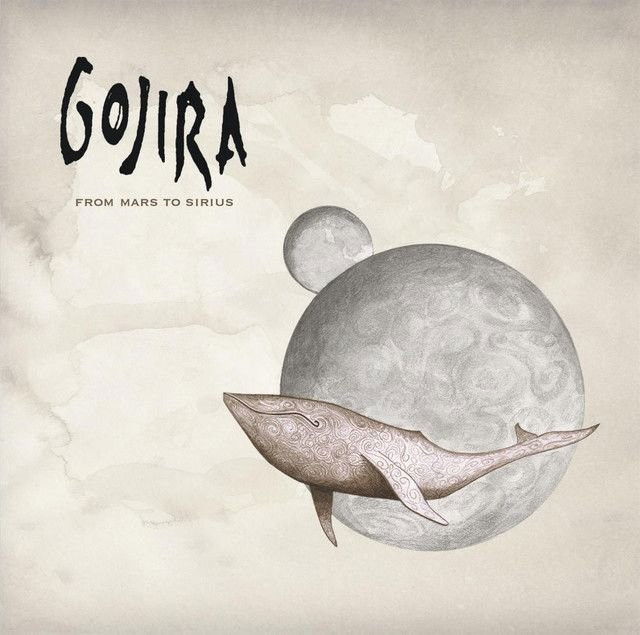
Why "Flying Whales" by Gojira Still Soars
The meaning of Flying Whales Gojira starts with a strange image and turns it into something moving. On paper, flying whales sound surreal, even absurd. In the song, though, they become a vision of wisdom, escape, and renewal.
"Flying Whales" - Gojira
The flood on earth again
I have to find the whales
Loading lyrics...
Unable to load lyrics
We're unable to display the lyrics at this time. Please try again later.
Released on From Mars to Sirius in 2005, the track sits inside an album widely described as a concept record about environmental damage, marine life, and a journey from war toward peace. It is also often singled out as one of the band’s defining songs. That larger context matters because “Flying Whales” is not just fantasy for fantasy’s sake. It uses fantasy to talk about the broken state of the world.
A Vision Born from Ruin
The song opens in disaster. The narrator describes a world swallowed by chaos and flood, then begins a search for whales that once showed the way to life. In simple terms, the lyrics imagine humanity in crisis and looking for guidance outside itself.
That is why the early images feel so urgent. Phrases like waters of chaos
and the sinking ship of men
present human civilization as unstable, lost, and self-destructive. Rather than finding answers in politics or technology, the narrator turns toward nature, memory, and myth.
Interpretation: the whales represent a wiser order than human society. They are not framed as monsters or prey. They are guides.

Watch the official Flying Whales
music video
Why the Whales Matter So Much
On the album level, “Flying Whales” has been described as a homage to whales, which fits Gojira’s long-running concern with ecology and respect for nonhuman life. In that sense, the whales are both literal animals and symbolic beings.
The song treats them as ancient presences that communicate beyond language. Near the end, the lyrics stress that deep truth can be shared with no words at all
. That idea is crucial. The whales do not lecture the narrator. Their existence alone teaches another way of being.
This is where the song becomes more spiritual than political. The whales seem to embody calm, scale, and intelligence. They move above human panic, dwelling in light
rather than in the darkness people have made.
The Journey from Depths to Sky
A big part of the meaning of Flying Whales Gojira comes from its movement. The narrator begins below, under pressure and in darkness, then rises into vision.
The song’s emotional arc
- The world appears flooded and broken.
- The narrator searches beneath the sea.
- They gain a new perspective on humanity.
- The whales appear as radiant, impossible beings.
- The experience becomes transformative.
That climb matters. The search begins under the sea, but the reward is not just underwater discovery. The whales cross realms. They move through air and light, like creatures that ignore ordinary limits.
Over the winds
They dwell in light
Fly
This short refrain captures the song’s turning point. The whales are no longer just animals in an ecosystem. They become emblems of transcendence.
Interpretation: this ascent can suggest enlightenment. The narrator reaches higher grounds
, which sounds less like a physical hill and more like a changed state of mind.
Human Failure vs. Natural Wisdom
One of the song’s sharpest ideas is its contrast between people and whales. Humans are linked to collapse, while the whales are linked to grace. The line about the human world as a sinking ship is especially important because it frames human systems as doomed by their own actions.
That contrast fits From Mars to Sirius, an album often discussed as a meditation on environmental destruction and rebirth. Joe Duplantier has described the album’s title as a movement from war to peace, including inner war as well as outer conflict. Read that way, “Flying Whales” imagines peace not as victory, but as reconnection.
The song does not say humanity is evil beyond repair. It suggests people have become cut off from what is sacred, living, and balanced. The whales offer a path back.
How the Sound Carries the Message
Musically, “Flying Whales” works because Gojira make heaviness feel huge rather than cramped. The track builds slowly, then unleashes one of the band’s most famous riffs. The effect is physical, but also cinematic.
The opening clean guitar and patient pacing create suspense. When the full band enters, the riff lands like the arrival of something massive from another world. The drums and low-end make the whales feel enormous, while the spacious passages give them grace.
That balance is part of why the song has lasted. Critics have often highlighted how Gojira blend extreme heaviness with melody on From Mars to Sirius, and “Flying Whales” is a prime example. The music mirrors the lyrics: crushing force below, open sky above.
Why the Song Became a Classic
“Flying Whales” is not just a fan favorite. It has also earned major retrospective praise, including placement on best-of metal song lists. That reputation makes sense because the song captures what Gojira do better than most bands: they sound brutal without losing meaning, atmosphere, or wonder.
It also helps that the central image is unforgettable. Flying whales are bizarre, but not random. They fuse nature, dream logic, and apocalypse into one picture. Even listeners who do not follow every lyric can feel what the song is reaching for.
The Lasting Meaning of "Flying Whales"
So what is the meaning of Flying Whales Gojira? The clearest answer is that it is a song about searching for guidance in a ruined world and finding it in beings that live outside human arrogance. It honors whales, but it also uses them as symbols of peace, awe, and transformation.
Interpretation: the whales may stand for nature, spirituality, or even art itself, something vast that lifts people out of despair and shows them a larger view. That is why the song still hits so hard. It is heavy music with a sense of reverence.
Disclaimer: song meaning is always part fact, part interpretation. The analysis above draws on the lyrics, album context, and documented band themes, but listeners may connect with the song in different ways.







