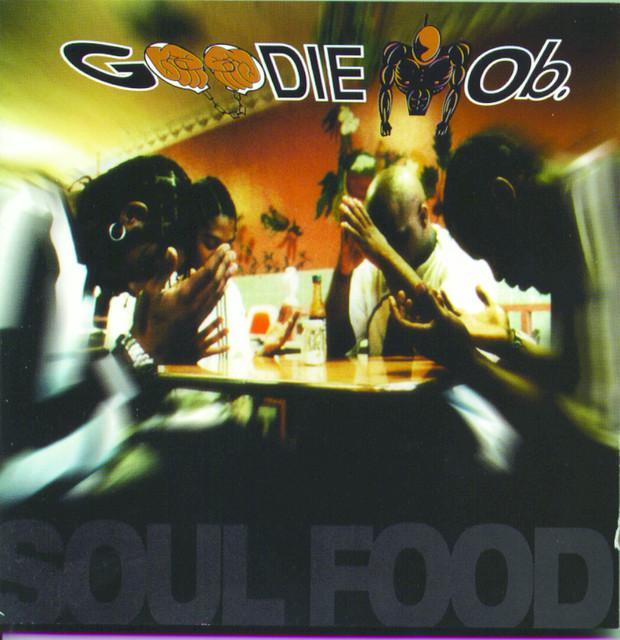
Cell Therapy by Goodie Mob
The meaning of Cell Therapy Goodie Mob starts with a feeling: danger is close, and nobody is fully safe. On the surface, the song sounds like a warning about conspiracy, surveillance, and social collapse. Under that surface, it is also about something more grounded—how Black communities live under pressure from drugs, poverty, policing, and political neglect.
"Cell Therapy" - Goodie Mob
Young girls thirteen years old
Expose themselves to any Tom, Dick, and Hank
Loading lyrics...
Unable to load lyrics
We're unable to display the lyrics at this time. Please try again later.
Released as Goodie Mob’s debut single from Soul Food in 1995, the track was produced by Organized Noize and became the group’s biggest crossover hit, even reaching No. 1 on Billboard’s Hot Rap Songs chart and the Top 40 of the Hot 100, according to available chart summaries and release data. That matters because the song did not become popular by chasing a pop formula. It broke through by sounding uneasy, local, and brutally alert.
A Warning Song Disguised as a Street Report
At its core, “Cell Therapy” is about people trying to read signs of control all around them. The verses move from neighborhood scenes to large-scale fears about government power, race conflict, and social engineering. They are not telling one neat story. They are building a worldview where small details and huge systems feel connected.
That is why the song keeps shifting between ordinary life and extreme imagery. A gate at an apartment complex, bills piling up, drug use, and heavy policing all become clues. The song suggests that what looks like safety may really be containment. When they wonder whether a barrier is there to keep trouble out or keep residents in, they turn a local image into a political one.
Interpretation: Even when some images sound conspiratorial, the emotional point is clear. The group are expressing how it feels to live in a society where control often arrives dressed as protection.

Watch the official Cell Therapy
music video
Why the Chorus Feels So Paranoid
The hook is simple and unforgettable: Who's that peekin' in my window?
They follow it with Pow, nobody now
, which turns fear into sudden self-defense. The chorus does not explain the threat in detail. That is exactly why it works.
A window should mark the line between private and public life. Here, that line is broken. The repeated question suggests constant watchfulness, while the answer sounds like panic, retaliation, or imagined escape. In other words, the chorus turns paranoia into a lived environment.
Three Voices, One Shared Pressure
One reason the song feels so rich is that each verse brings a different angle. Instead of one speaker, Goodie Mob build a collective warning.
- One verse zooms out to global systems, race conflict, and the
new world order
idea. - Another stays close to the apartment complex and asks what neighborhood control really looks like.
- A later verse gets personal, tying addiction, grief, and self-critique to broader social danger.
That movement matters. The song argues that private pain and public systems are linked. Losing a friend, smoking too much, or feeling trapped are not treated as isolated failures. They are shown as part of a larger social cage.
The Title’s Double Meaning
“Cell Therapy” is one of the smartest titles in 1990s rap because the word “cell” can point in several directions at once.
First, it suggests prison. The song is full of confinement, surveillance, and the threat of being boxed in. Second, it suggests a mental cell—the mind becoming trapped by fear, pressure, or propaganda. Third, the closing spoken line points toward thought itself as medicine, telling listeners to use the mind as a tool.
Yeah, cell therapyThink about itUse that toolbetween your two shoulders
That short ending reframes everything. After all the dread and chaos, the song does not end in surrender. It ends by calling for awareness.
How the Sound Carries the Message
Organized Noize give the track a dark, slow-burning backdrop that fits the lyrics perfectly. The beat feels heavy without rushing, which makes every warning land harder. The production leaves space around the voices, so the verses sound like thoughts forming in a haze rather than neat declarations.
That atmosphere was central to the Dungeon Family sound in the mid-1990s: Southern, soulful, and strange at the same time. On “Cell Therapy,” the murky groove and tense repetition make the song feel like a late-night conversation where every rumor might contain a truth. The instrumental does not simply support the lyrics; it deepens their unease.
What the Song Says About Its Era
The meaning of Cell Therapy Goodie Mob also comes from its timing. In the mid-1990s, hip-hop was grappling with mass incarceration, the drug trade, state power, and growing distrust of institutions. Goodie Mob filtered those concerns through Southern Black life rather than the coastal perspectives that often dominated rap coverage at the time.
That helps explain why the song still resonates. Some references are specific to its moment, but the larger feelings are still familiar: being watched, being managed, and being told that control is safety. When the song imagines chipped bodies, scanners, and sealed spaces, it pushes those fears into near-future form.
Interpretation: The track is not strongest when judged as a literal prediction. It is strongest as a portrait of communities that already feel under siege.
Why “Cell Therapy” Still Matters
Goodie Mob made a song that is political without sounding academic and personal without becoming small. They move from neighborhood detail to apocalyptic vision because both scales belong to the same experience. A locked gate, a police presence, a lost friend, and a collapsing social order all live in the same mental map.
That is why “Cell Therapy” endures. It captures paranoia, but it also captures pattern recognition—the urge to connect what people see every day with forces they cannot fully see. The result is unsettling, but also deeply human.
In the end, the song argues that survival starts with attention. They cannot fully escape the pressure around them, but they can name it, question it, and warn others.
Disclaimer: This article offers an interpretation of the song based on its lyrics, historical context, and production. Meanings can vary from listener to listener.







