Why 'Pac-Man' Feels Like a Panic Spiral
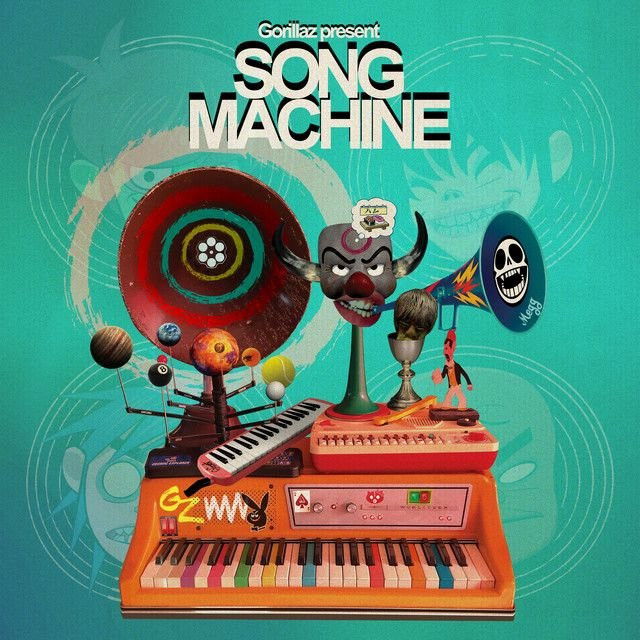
For listeners searching for the meaning of Pac-Man Gorillaz, ScHoolboy Q, the song lands somewhere between anxiety, fame fatigue, and survival instinct. Released on July 20, 2020 as a Gorillaz Song Machine episode and later included on Song Machine, Season One: Strange Timez, it also marked the 40th anniversary of the arcade game Pac-Man. That gaming tie-in matters, but the song is not just a novelty track. It uses the image of a maze game to describe a mind that feels trapped, overstimulated, and pushed from every side.
"Pac-Man" - Gorillaz ft. ScHoolboy Q
Let's go
Uh, ah
Loading lyrics...
Unable to load lyrics
We're unable to display the lyrics at this time. Please try again later.
Gorillaz often turn pop culture into emotional metaphor. Here, they use Pac-Man’s endless loops, pursuit, and pressure to show what stress feels like when it becomes a way of life.
The Core Message Hiding in the Maze
At its heart, the song is about disorientation. The speaker sounds overwhelmed by outside pressure and unsure of their place. When 2-D calls himself a mad Pac-Man
, the line shrinks a huge feeling into one vivid image: someone racing through levels, chased by danger, never fully at rest.
That idea deepens with I don't know where I am
. The phrase is simple, but it suggests more than being lost physically. It points to identity blur, burnout, and a world moving so fast that they cannot get their bearings.
Interpretation: The song reads like a portrait of modern mental overload. It is not only about one bad day. It is about living in a system where each level brings new pressure, and where even winning can feel empty because the chase never ends.
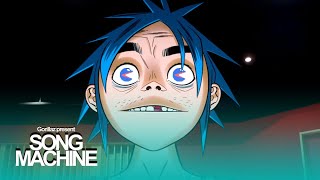
Watch the official Pac-Man
music video
2-D's Chorus Turns Anxiety Into a Hook
The chorus is catchy, but the words are uneasy. The repeated phrase stressin' out
is important because it acts like a thought loop. Instead of giving a clean explanation, Gorillaz let repetition do the emotional work.
That choice mirrors anxiety itself. Stress often does not sound poetic in real life; it sounds repetitive, circular, and hard to shut off. The song captures that by returning again and again to the same emotional state.
I'm a mad Pac-Man
livin' in a leveled world
Those two short lines carry the song’s central metaphor. Life becomes a video game with stages, threats, and constant movement. But unlike a game, there is no easy reset button.
ScHoolboy Q Changes the Song's Stakes
ScHoolboy Q’s verse gives the track its hardest edge. Where 2-D sounds foggy and distressed, Q sounds alert, scarred, and defiant. He moves from confusion to testimony.
He opens with distrust, asking how truth can be trusted when value is tied to performance and selling. From there, his verse becomes a statement about trauma, pressure, image, and survival. When he says my mind went trip
, he compresses mental strain into a quick, unstable phrase.
Later, he frames life as a climb shaped by danger rather than comfort. He talks about growth, fearlessness, and what it takes to keep moving after past pain. In that sense, his verse expands the meaning of the song: the maze is not just emotional confusion, but also the social systems around him—policing, reputation, neighborhood loyalty, and the demand to keep evolving.
Interpretation: Q turns the song from private anxiety into public survival. He suggests that stress is not only internal chemistry. It can be produced by the world around a person.
The Pac-Man Symbol Works So Well for Gorillaz
The Pac-Man image fits because the original game is built on a few basic feelings:
- being chased n- repeating patterns
- quick rewards
- sudden failure
- no real final peace
That structure mirrors the song’s emotional logic. The speakers are always moving, but movement does not equal freedom. Every direction leads to another wall, another threat, or another demand.
The title also fits Gorillaz as a project. They have long used cartoons, screens, media clutter, and pop references to talk about alienation. In Song Machine, each collaboration feels like a new room or episode. “Pac-Man” turns that fragmented style into part of the meaning.
How the Production Sounds Like a Digital Headspace
The music helps explain the meaning of Pac-Man Gorillaz, ScHoolboy Q just as much as the lyrics do. The track blends funk, hip-hop, downtempo, and glossy synth textures, with production credited to Gorillaz, Remi Kabaka Jr., and Prince Paul. Damon Albarn’s performance stays airy and detached, while the beat remains tight and slightly rubbery.
That contrast matters. The instrumental feels playable and cool on the surface, but there is tension underneath it. The groove moves forward without sounding fully relaxed. Synths and bass lines create a neon, game-like atmosphere, while the drums keep everything boxed into a loop.
ScHoolboy Q’s verse then cuts through that haze with a more grounded, percussive attack. His voice adds urgency and reality, almost like stepping out of an arcade and back into the street.
Video Context Adds Another Layer
The official animated video places 2-D in Kong Studios playing Pac-Man for hours while the rest of the band drifts through strange side scenes. That visual setup supports the song’s meaning: obsession, repetition, and detachment. By the end, Noodle simply unplugs the machine, which feels like the only possible escape from the loop.
Factually, the song was released as Song Machine Episode Five and peaked at No. 33 on Billboard’s Hot Rock & Alternative Songs chart. Those details do not define the meaning, but they show how the track sat at the center of Gorillaz’s 2020 multimedia world.
The Best Way to Read the Ending
In the end, “Pac-Man” is less about the arcade character than about what it feels like to be chased by life. One voice sounds dazed. The other sounds hardened. Together, they describe a world where stress becomes constant motion.
The song never offers a full solution. That is part of why it works. It understands that some people do not escape the maze; they learn how to move through it.
Disclaimer: This interpretation is based on the song’s lyrics, production, and release context. As with any art, other readings are possible.







