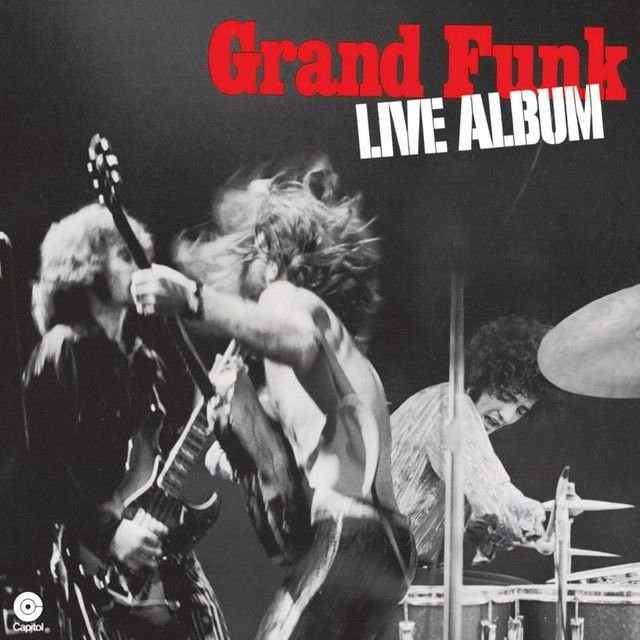
Why "T.N.U.C." Is Grand Funk at Their Rawest
A breakup song with a sneer
The meaning of T.N.U.C. Grand Funk Railroad comes down to a simple but forceful idea: this is a breakup song about self-respect. The speaker has been used, talked down to, and emotionally shut out. Instead of begging for love, they decide to leave with their pride intact.
"T.N.U.C." - Grand Funk Railroad
Knockin' at your door
I've known forever,
Loading lyrics...
Unable to load lyrics
We're unable to display the lyrics at this time. Please try again later.
That switch matters. Early in the song, the speaker sounds hurt, but not confused. They already know the relationship is over. When they say you don't love me no more
, the line is plain and blunt. There is no mystery left. The drama of the song comes from what happens next: they stop waiting for kindness and choose movement over humiliation.
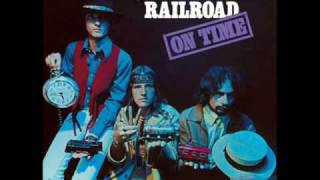
Watch the official T.N.U.C.
music video
The title’s joke sharpens the message
One reason the song sticks in memory is its title. “T.N.U.C.” is “C.U.N.T.” spelled backward, a rude and provocative joke that fits the band’s rough-edged image. Grand Funk Railroad came out of the late-1960s hard rock scene, and they were known for loud, heavy, no-frills music rather than polished subtlety. The band formed in Flint, Michigan, in 1969 and became one of the biggest American rock acts of the early 1970s, later breaking The Beatles’ Shea Stadium ticket-sales record in 1971, as drummer Don Brewer recalled in a Songfacts interview.
That title is not the song’s whole meaning, though. It works more like a frame. It tells listeners to expect anger, mockery, and a refusal to play nice. In other words, the title prepares the attitude before the first verse even starts.
Who is speaking, and why they sound done
The narrator speaks directly to an ex or soon-to-be ex. They are not trying to repair anything. They are taking inventory of disrespect.
Several lines build that case. First, they refuse to keep chasing the other person, captured by Knockin' at your door
. Then they describe emotional distance with mouth shut tight
, suggesting the partner is withholding honesty, warmth, or both. By the time the speaker says I'm leavin' tonight
, the song has moved from complaint to action.
A quick timeline of the story
- They admit the love is gone.
- They call out cold, closed-off behavior.
- They remember being treated badly.
- They decide to walk away laughing.
That last note is especially important. The song is not just sad. It is defiant.
Pride, humiliation, and the need to walk away
The emotional center of “T.N.U.C.” is wounded pride. The speaker believes they gave more than they got back. They even stress devotion and submission before saying they were treated like a fool. That contrast makes the breakup feel earned rather than impulsive.
I bend down on my knees,
You treat me like a fool
This is the song’s clearest statement of imbalance. The image is not subtle: one person lowers themselves, while the other person responds with contempt. In plain terms, the relationship has become degrading.
Interpretation: this may be why the final mood sounds almost joyful. When someone sees the pattern clearly, leaving can feel less like a loss and more like escape. That is why the ending idea, paraphrased as walking out with a laugh, lands so hard. It turns pain into power.
How the music carries the insult and release
Grand Funk Railroad were often described as a hard rock power trio in their early years, with long jams and a heavy live feel. Brewer said in the same Songfacts interview that the band came up in an era when FM radio still made room for long tracks and that they were essentially a “hard rock trio.” That context helps explain “T.N.U.C.”
The song’s meaning is not only in the words. It is in the grind of the guitars, the thick bass, and the aggressive pulse. The arrangement sounds like confrontation. Rather than dressing up the breakup in sadness, the band makes it feel physical, almost like a barroom argument turned into music.
Mark Farner wrote the song, and his style often mixed blues-based riffing with direct language. That matters here. The blues side gives the song its complaint and swagger, while the hard rock side gives it force. Together, they create a track that sounds less heartbroken than fed up.
Why the song still feels true to Grand Funk
The meaning of T.N.U.C. Grand Funk Railroad also reflects the band’s larger identity. Grand Funk often favored direct emotion over poetic fog. They were a band of big riffs, plain speech, and full-volume feeling. Even when critics were divided, audiences responded in huge numbers, as shown by their commercial peak and touring power in the early 1970s, documented by the Rock & Roll Hall of Fame.
“T.N.U.C.” fits that image perfectly. It is crude, catchy, and emotionally legible. The speaker is angry because they have been made to feel small. Their answer is not revenge. It is refusal.
One alternate reading
Interpretation: some listeners may hear the song less as a realistic breakup and more as a performance of macho bravado. The exaggerated title and taunting tone support that reading. Even then, the core point stays the same: the song is about reclaiming control after disrespect.
Final takeaway
In the end, “T.N.U.C.” is about drawing a line. The speaker realizes love is gone, sees the humiliation clearly, and leaves before more damage is done. That is the heart of the song.
For listeners wondering about the meaning of T.N.U.C. Grand Funk Railroad, the answer is not complicated: it is a loud, bitter, swaggering breakup anthem about dignity returning at the very moment affection disappears.
Disclaimer: This interpretation is based on the released lyrics, the band’s known style, and available historical context. As with most songs, listeners may hear meanings that differ from this reading.







