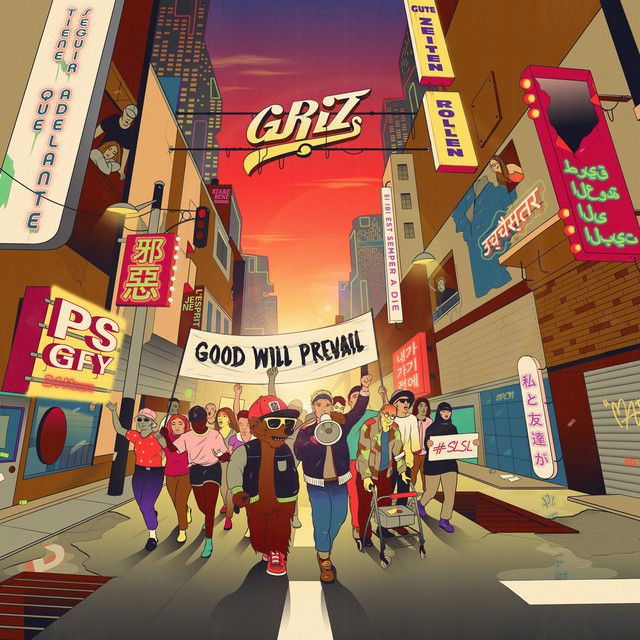
Why 'Wicked' Feels Like a Warning
The meaning of Wicked GRiZ, Eric Krasno starts with a world in crisis. The song sounds spiritual at first, but its message is darker and more skeptical. Instead of offering easy comfort, it asks what happens when people look for rescue in the wrong places.
"Wicked" - GRiZ, Eric Krasno
Looking for a sign
Walk between raindrops
Loading lyrics...
Unable to load lyrics
We're unable to display the lyrics at this time. Please try again later.
Written by Dave Gutter, Eric Krasno, and Grant Kwiecinski, the track pairs GRiZ’s genre-blending style with Krasno’s rootsy, soulful touch. That mix matters because the song sits between uplift and alarm. The music reaches upward, while the words keep pulling the listener back to human failure.
A Search for Help That Never Quite Arrives
At the center of the song is a desperate search. The speaker keeps looking for a guide, a miracle, or some proof that suffering has meaning. Phrases like looking for a savior
and looking for an angel
frame that need clearly.
But the song does not reward that search with peace. Instead, it shows people hoping that someone from above will intervene while disaster keeps spreading around them. The image of trying to walk between raindrops
suggests a wish to avoid damage without facing its source. They want escape, not transformation.
Interpretation: this makes the song less about one person’s prayer and more about a shared social panic. The voice feels collective, as if a crowd is waiting for redemption while the danger gets worse.
Watch the official Wicked
music video
When Faith Turns Into Violence
The sharpest turn in the song comes when it questions holy certainty. The lyric about a conflict believed to be sacred, only to be exposed as emptiness, gives the song its moral core. In plain terms, it suggests that people can dress hatred up as righteousness.
That idea becomes even stronger in the lines about the soldiers’ victory song sounding cruel rather than noble. The point is not just that war is ugly. It is that moral language can become a cover for harm.
We thought it was a holy war
It was just a lack of faith
This is the song’s one brief multi-line quote, and it captures the main reversal. What seemed pure turns corrupted. What seemed faithful turns hollow.
The Chorus as an Alarm Bell
The repeated word wicked
works less like a label for one villain and more like a diagnosis of the whole scene. It points to a condition: spiritual confusion, violence, denial, and fear all feeding each other.
The warning to run away
adds urgency, but it is not a complete answer. Running may be instinctive, yet the song keeps asking what they are fleeing from: disaster, guilt, false belief, or themselves.
Interpretation: the refrain sounds like an awakening. The phrase around “wake up” suggests that the real danger is not only evil out there, but moral sleepwalking. People may not notice how far they have drifted until the damage is already done.
Rain, Floods, and Washed-Away Sins
Water imagery runs through the song. Rain can symbolize cleansing in many spiritual traditions, but here it stays unsettled. The flood opens wide, and that makes water feel threatening before it ever feels healing.
Later, the song questions whether suffering automatically erases guilt. The idea that sins were washed away
sounds like something the speaker once wanted to believe. Yet the surrounding lines make that hope feel naive.
This is one of the smartest parts of the writing. It uses religious symbols people know well, then refuses to let those symbols stay simple. Water becomes both judgment and false comfort.
How GRiZ and Krasno Make the Message Land
The production style also helps explain the meaning of Wicked GRiZ, Eric Krasno. GRiZ is known for mixing electronic music, funk, and soul in a way that can feel both celebratory and heavy, as seen across his official catalog and artist materials. Krasno brings a bluesy warmth that gives the track human texture rather than cold distance.
That contrast matters. The arrangement likely feels big and driving, but the lyric content undercuts any easy triumph. Instead of sounding like a victory anthem, the song leans into tension. Groove and grit work together to create unease.
Interpretation: this balance may be the whole point. The music pulls listeners in with energy, then the words force them to confront the cost of blind certainty.
Two Strong Ways to Read the Song
There are at least two convincing readings of “Wicked.”
A critique of religious hypocrisy
In this reading, the song attacks the misuse of sacred language. Images of saviors, angels, holy war, and washed-away sins all point to people using faith as cover while avoiding truth and accountability.
A broader protest song
It can also be heard as a response to any system that turns fear into violence. The song never has to name a specific event for its message to land. That is why it feels broad and unsettling rather than narrowly political.
Both readings fit because the lyrics stay symbolic. They do not trap the song inside one news cycle.
Why the Song Still Sticks
What makes “Wicked” memorable is its refusal to offer neat closure. It understands the appeal of rescue stories, but it does not trust them. Instead, it asks listeners to look hard at what people believe, what they justify, and what happens when they confuse certainty with truth.
For many listeners, that is the real meaning of “Wicked”: a warning about the human urge to sanctify fear and call it justice. The song sounds urgent because it believes the stakes are real.
That interpretation is based on the lyrics, tone, and musical context, and other listeners may hear different shades of meaning.







