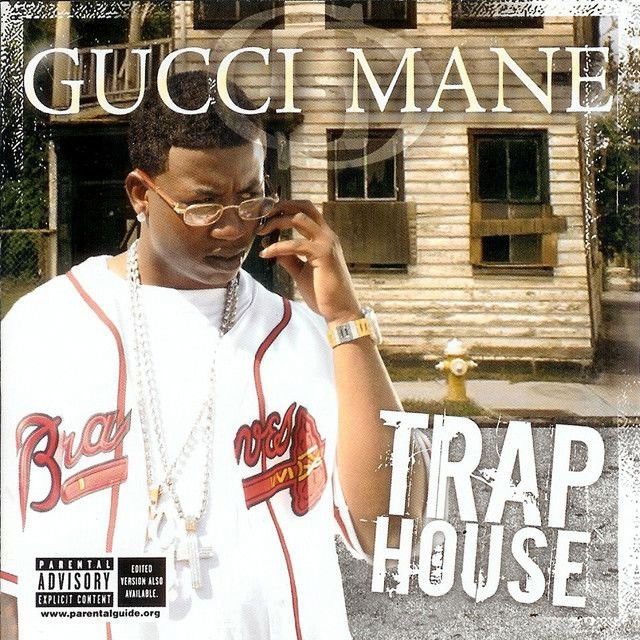
Trap House by Gucci Mane
The meaning of Trap House Gucci Mane starts with a simple idea: this is not just a song about money. It is a portrait of a place where hustle, danger, pride, and ambition all live together.
"Trap House" - Gucci Mane
Provided by LyricFindIn the trap house, in the trap house
In the trap house
Gucci Mane, check itLoading...Loading lyrics...
Unable to load lyrics
We're unable to display the lyrics at this time. Please try again later.
Where the Song Stands in Gucci Mane’s Story
Gucci Mane, born Radric Delantic Davis, is widely credited alongside T.I. and Jeezy with helping push trap music into the mainstream during the 2000s. His debut album Trap House arrived in 2005 and helped define his early image as an East Atlanta street narrator with a sharp ear for hooks and blunt detail. That bigger career context matters because this track sounds like a mission statement, not a side note.
Factual background comes from major reference sources covering his career and the 2005 album’s release and impact.[^1] The song also fits the period when Gucci was building his name independently, before the later major-label expansion and mixtape flood that made him one of rap’s most prolific figures.[^1]

Watch the official Trap House
music video
What the Song Is Really About
At its core, the meaning of Trap House Gucci Mane is about turning one location into an entire worldview. The trap house is a business site, a status symbol, and a trap in the emotional sense too. Gucci describes constant movement, cash flow, customers, and weapons, making the place feel busy and unstable at the same time.
When they repeat in the trap house
, the phrase works like a stamp. It keeps bringing the listener back to one room, one economy, one cycle. The hook is catchy, but its repetition also makes the setting feel inescapable.
Interpretation: The song is not simply bragging. It also shows how success in this world depends on staying inside a dangerous system. Even when Gucci boasts, they sound locked into routine.
The Hook Turns a House Into a System
The chorus is the song’s clearest statement. Gucci pairs images of weapons, traffic, and quick money to show a place where illegal business runs like a store. Short lines like junkies goin' in
and bricks goin' out
reduce people and products to movement. That makes the trap house feel mechanical.
This matters because the hook does two things at once:
- It sells the myth of street success.
- It reveals how impersonal and repetitive that success is.
The line about being hood rich
but without a bank account sums up the contradiction. There is cash, but not security. There is status, but not stability.
Pride, Weariness, and the Dream of Going Legit
One of the song’s most revealing moments comes when Gucci admits they are tired of selling drugs and want legitimacy. That thought interrupts the flexing. Suddenly, the speaker is not just a boss figure; they are someone imagining a different future.
I'm tired of sellin' bricksI wanna go legit
That is the article’s only multi-line lyric quote because it captures the song’s deepest tension in just a few words. After that admission, Gucci wonders whether rap success could replace street income. The reference to mainstream rap sales shows ambition beyond the block.
Interpretation: This is the song’s hidden center. The bravado is real, but so is the desire to escape the very image being performed.
Why the Details Feel So Cold and Vivid
Gucci’s writing style here is plain, fast, and image-heavy. They do not stop to moralize. Instead, they list objects, prices, cars, smoke, and customers. That style makes the song feel documentary-like, even when the lines are exaggerated for effect.
The recurring images matter:
- weapons suggest constant threat
- traffic in and out suggests business without rest
- cash talk suggests self-worth tied to income
- smoke and intoxication suggest escape or numbness
The domestic details are especially striking. A couch, a floor, a TV, a kitchen: these are normal household objects, but the song twists them into tools of the trap economy. Home and workplace become the same place. That collapse of boundaries helps explain why the song feels so tense.
How the Production Carries the Meaning
The production style is crucial to understanding the track. Early Gucci Mane records often relied on lean, hard Southern beats associated with Atlanta trap’s rise, including his important work with Zaytoven in that era.[^1] Even when credits are discussed separately, the sound world here is clear: sparse melody, heavy drums, and a looping structure that feels relentless.
That musical design supports the lyrics in three ways:
The beat feels repetitive on purpose
The loop mirrors the song’s daily grind. The same motions happen again and again, just like the hook returns to the same location.
The drums create pressure
The low-end thump gives the song physical weight. It makes the trap house feel crowded and heavy, not dreamy.
Gucci’s delivery stays blunt
They rap with a matter-of-fact tone, which makes extreme details sound routine. That is part of what gives the song its realism.
A Snapshot of Early Trap Music
The song also matters beyond its own plot. It captures a moment when trap music was becoming a recognized style rather than just a local scene. Gucci Mane’s debut album Trap House reached the Billboard 200, showing that this raw Atlanta perspective was already finding a wide audience.[^1]
That history sharpens the meaning. “Trap House” is not only about one person’s hustle. It is also about a genre inventing its central setting, language, and mood in real time.
Final Take on the Song’s Meaning
The meaning of Trap House Gucci Mane comes down to contradiction. The song turns the trap house into a symbol of power, but it also shows how that power is unstable, exhausting, and hard to leave behind.
Gucci Mane makes the place sound profitable, famous, and dangerous all at once. That mix is why the song lasts: it is a boast, a warning, and an origin story for trap music in the same breath.
Disclaimer: This interpretation is based on the song’s lyrics, performance, and historical context. As with any art, listeners may reasonably hear different meanings.
[^1]: See major career and album background in the referenced research source on Gucci Mane.







