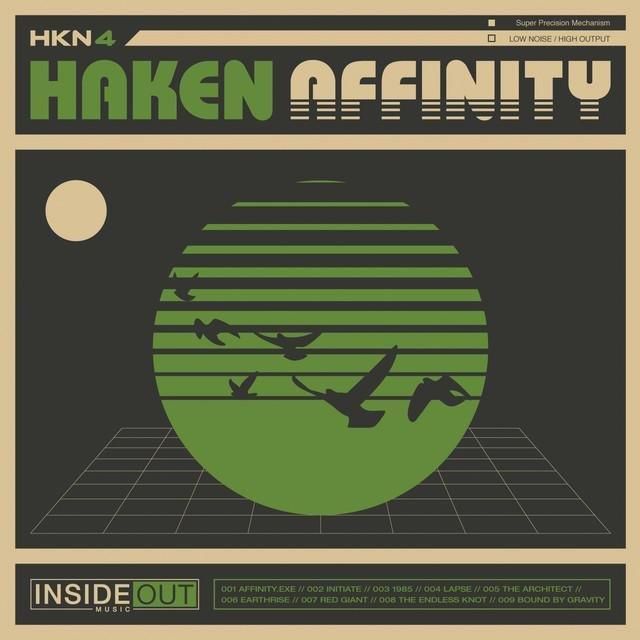
Why ‘1985’ by Haken Feels Predestined
The meaning of 1985 Haken comes down to a hard question: do people choose their path, or are they already moving through one set for them? The lyrics frame life as a mix of chance, pattern, and surrender. They follow a narrator who feels conscious enough to ask big questions, but not fully in control of the answers.
"1985" - Haken
I play my role with the cast of a die
It spins through the air, bound by gravity
Loading lyrics...
Unable to load lyrics
We're unable to display the lyrics at this time. Please try again later.
Even without long storytelling details, the song creates a strong inner drama. It starts with confusion, moves into self-examination, and lands on a bigger view of human life. That arc gives the song its emotional pull.
A Mind Caught Between Chance and Design
The opening images are simple but loaded. A map suggests direction, while a die suggests luck. When the narrator holds one and thinks about the other, the song immediately sets up its central conflict.
They know movement is happening, but they do not know who is guiding it. The line built around map in hand
shows a person trying to navigate. The phrase cast of a die
pushes the opposite idea: maybe life is random after all.
Interpretation: this is not just about a single decision. It sounds more like a crisis of agency. The narrator is asking whether life is driven by personal will, outside systems, or some mix of both.
Watch the official 1985
music video
The Real Tension: Free Will or a Script?
The most important question in the verses is whether the speaker chose their road. They wonder if desire shaped them, or if certainty forced them forward. In plain terms, the song turns philosophy into emotion.
That is why the repeated image of shifting frame by frame
matters so much. It suggests reality is moving like film, piece by piece, with a hidden editor behind it. Right after that, the song says the lines blur and the cycle restarts. This makes life feel recursive, as if the same patterns keep replaying.
Interpretation: the lyrics hint that identity is not fixed. If the frame is always shifting, then the self may also be unstable. The narrator is not only unsure where they are going. They are unsure who, exactly, is traveling.
The Chorus Turns One Person’s Doubt Into a Human Statement
The chorus widens the lens. Instead of staying inside one person’s confusion, it names the body, relationships, and life’s full path from start to finish. That shift gives the song more weight.
Blood, flesh and bone
Love, trust and hope
Those brief phrases reduce life to essentials. The body is temporary, but connection gives it meaning. Then the song moves toward destiny with all roads lead home
, which sounds comforting and unsettling at the same time.
Home could mean peace, death, origin, or spiritual return. The final appeal to divine will adds another layer. Interpretation: the chorus suggests that even if people do not control every step, life may still have shape and purpose.
Symbols That Unlock the Song
Several images do the heavy lifting:
- The map: intention, planning, human effort.
- The die: chance, risk, forces outside control.
- The code: hidden structure beneath experience.
- The road home: destiny, belonging, or mortality.
The command break the code
is especially interesting. It sounds like rebellion at first, as if the narrator wants freedom from the system. But the song pairs that with losing control and euphoria, which complicates things.
Interpretation: freedom here may not mean mastery. It may mean accepting uncertainty so completely that fear turns into release.
How the Sound Supports the Meaning
Haken are known for progressive metal that balances technical precision with strong melody, a style documented across the band’s official materials and press coverage, including their official site and InsideOut Music. That matters because this song’s ideas depend on contrast.
A Haken track can feel tightly engineered while also sounding emotionally open. For a lyric about design versus chaos, that kind of arrangement is perfect. Crisp rhythmic changes can mirror fate and structure, while soaring vocal lines can suggest longing, surrender, or transcendence.
The credited writers listed for the song—Charles Griffiths, Conner Green, Diego Tejeida Ledesma, Raymond Hearne, Richard Henshall, and Ross Jennings—show it as a full-band creation. That collaborative feel fits a song that keeps moving between the personal and the universal.
Two Strong Readings of “1985”
Reading One: A Spiritual Surrender
The strongest spiritual clue is the closing idea of divine will. In this reading, the song is about learning that life is not fully self-authored. The narrator resists that truth at first, then slowly accepts it.
Reading Two: An Existential Puzzle
A second reading is more secular. The song may describe the modern feeling of living inside systems—biology, habit, society, time—without ever fully escaping them. In this version, the search for a formula is really a search for meaning.
Both readings work because the song never locks itself into one doctrine.
Why the Meaning of 1985 Haken Sticks
The meaning of 1985 Haken stays powerful because it makes abstract questions feel personal. It asks what guides a life, what makes a self, and whether surrender is defeat or wisdom.
Rather than offering a neat answer, the song finds beauty in the tension. That is why it lingers: it sounds like a person thinking in real time, caught between choice and destiny, but still moving forward.
Disclaimer: This interpretation is based on the lyrics provided and publicly available artist context. As with many progressive songs, meaning can remain open to multiple valid readings.







