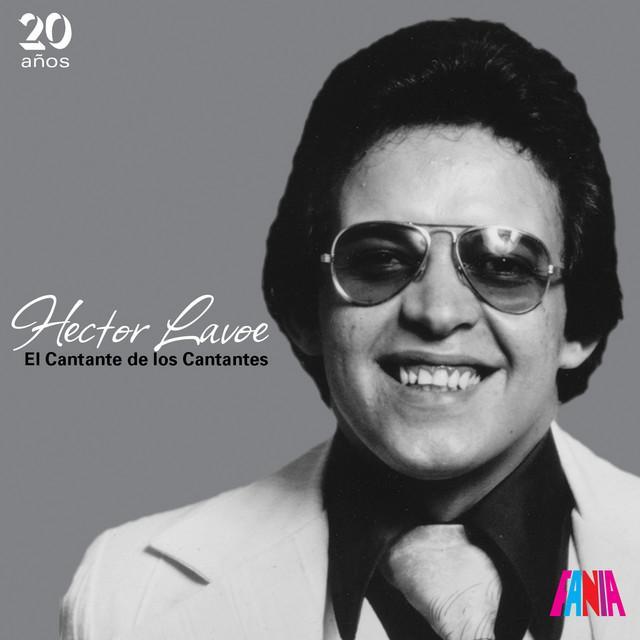
Why “Mi Gente” Became Héctor Lavoe’s People’s Anthem
The meaning of Mi Gente Héctor Lavoe starts with a simple idea: this is not a love song or a private confession. It is a public embrace. Héctor Lavoe turns the stage into a meeting place where singer and crowd lift each other up.
"Mi Gente" - Héctor Lavoe
Mi gente ¡Ustedes!
Lo más grande de este mundo
Loading lyrics...
Unable to load lyrics
We're unable to display the lyrics at this time. Please try again later.
Released on La Voz and issued as a single in 1975, the song is widely seen as one of Lavoe’s signature performances. According to [Wikipedia](https://en.wikipedia.org/wiki/Mi_Gente_(H%C3%A9ctor_Lavoe_song), it was composed by Johnny Pacheco and produced by Willie Colón. Those facts matter because the song joins three major forces in salsa: Lavoe’s voice, Pacheco’s instinct for crowd-moving songs, and Colón’s sharp sense of arrangement.
More Than a Greeting, It’s a Declaration
At its core, “Mi Gente” means “my people.” That phrase is affectionate, but it is also political and cultural. Lavoe is not singing down to an audience. They place themselves among them.
Early lines praise the crowd as lo más grande
and describe a orgullo profundo
. In plain terms, the singer says the people give them pride. That flips the normal star system. Instead of asking the crowd to admire the artist, the artist admires the crowd.
Interpretation: This is why the song feels so durable. It presents fame as a shared event, not an individual victory. Lavoe’s persona was often charismatic and vulnerable at once, and this song captures the warm side of that image.

Watch the official Mi Gente
music video
How the Lyrics Build a Collective Story
The lyric moves in a very direct sequence, and that directness is part of its strength.
First, the people are honored
The song opens by praising the audience. The message is not abstract. It says they matter, they inspire pride, and they are the reason the moment feels important.
Then, they answer the call
A key idea comes when the singer says they called the people and mi gente siempre responde
. Paraphrased, the crowd does not hesitate or demand explanations. They show up.
That makes the song about loyalty. Community here is active, not symbolic. Real belonging means answering when called.
Finally, celebration becomes participation
The song then shifts from praise into invitation. The people came to hear the singer, but the singer invites them to sing, dance, and enjoy the night together.
Yo los invitaré a cantar
Conmigo sí van a bailar
This brief moment captures the whole song. Performance stops being one-way entertainment. It becomes exchange.
The Chorus Turns the Crowd Into the Star
The repeated call Que cante mi gente
is the emotional center of the song. Paraphrased, Lavoe is asking the people themselves to raise their voices. That is the key to the meaning of Mi Gente Héctor Lavoe.
In many pop songs, a chorus sums up private feelings. Here, the chorus creates a public action. It tells the audience what to do, but it also gives them permission to take over the space.
Interpretation: That command is loving, not controlling. The song suggests that joy is fullest when it is shared out loud. In that sense, “Mi Gente” is about dignity through participation. Singing together means being seen together.
Why Héctor Lavoe Was the Perfect Voice for It
Lavoe was one of salsa’s defining vocalists, known for phrasing that sounded both effortless and emotionally sharp. In “Mi Gente,” they do not need a complex lyric to make a deep point. Their voice carries ease, swagger, gratitude, and invitation all at once.
That is one reason the song became so closely tied to them. It was first performed in 1973 at the inauguration of the Coliseo Roberto Clemente in San Juan, and it later reached a huge international audience when Lavoe performed it with the Fania All Stars at Zaire ’74 before roughly 80,000 people. A song about “my people” naturally grows larger when sung before massive crowds.
Those performances also deepen its meaning. The song is rooted in salsa, but its message travels beyond one room, one city, or one nation. It speaks to diaspora, pride, and collective identity.
How the Salsa Arrangement Carries the Message
The production helps explain why the song feels so open and inviting. Salsa thrives on call-and-response, percussion drive, horn punches, and rhythmic momentum. “Mi Gente” uses those tools not just for excitement, but for meaning.
The rhythm section pushes forward with dance-floor certainty. The brass adds celebration and authority. The chorus responses widen the sound, making the record feel populated rather than solitary.
Interpretation: Even if a listener does not speak Spanish, the arrangement tells them what the song means. The groove says this is communal music. The energy says no one is supposed to stand still. The structure says the singer needs the crowd to complete the song.
A Cultural Anthem, Not Just a Hit
Calling “Mi Gente” an anthem is not an exaggeration. It has lasted because it expresses a relationship many listeners want from music itself: connection, pride, and release.
It also avoids heavy ornament. The words are plain, but that simplicity gives them reach. A line about pride, a call to sing, an invitation to dance—those ideas are easy to understand and easy to inhabit.
For U.S. listeners, especially those interested in Latin music history, the song shows how salsa can function as both party music and social language. It celebrates movement, but it also names belonging.
The Lasting Meaning of “Mi Gente”
So what is the meaning of Mi Gente Héctor Lavoe? Most clearly, it is a love letter to community. The singer thanks the people, trusts the people, and then hands the moment back to them.
That is why the song still feels alive. It does not ask listeners only to observe greatness. It invites them to become part of it.
Disclaimer: This article offers interpretation based on the lyrics, performance history, and production context. As with all song analysis, some meanings remain open to listener experience.








