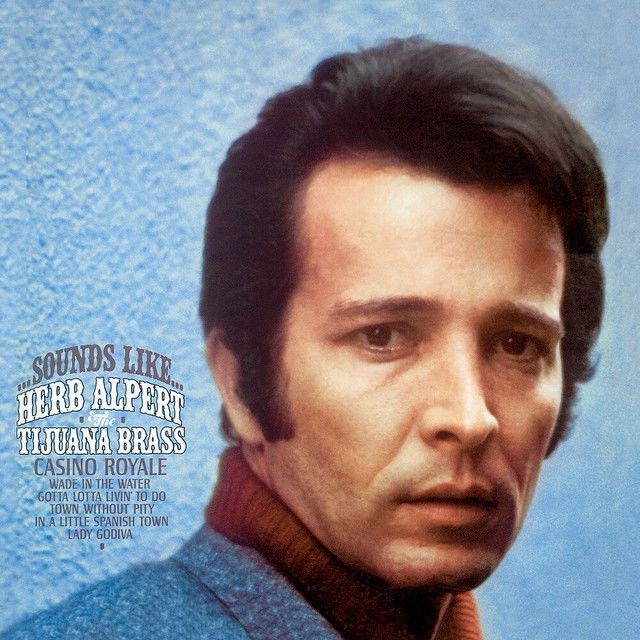
Why 'Casino Royale' Turns Bond Into a Joke
The meaning of Casino Royale Herb Alpert & The Tijuana Brass becomes clearer once they place it next to the 1967 film it came from. This is not the cool, hard-edged Bond world of the main series. It comes from a chaotic spy spoof, a movie sold with the idea that it was “too much... for one James Bond,” and that joke sits at the center of the song’s message.
"Casino Royale" - Herb Alpert & The Tijuana Brass
They came to save the world and win a gal at Casino Royale!
Six of them went to a heavenly spot,
Loading lyrics...
Unable to load lyrics
We're unable to display the lyrics at this time. Please try again later.
Rather than building mystery, the lyric races through action, romance, and danger like a movie trailer. It presents Bond as a legend, but also as a punchline. That balance—admiration mixed with parody—is what gives the song its charm.
A Theme Song That Sells the Movie’s Joke
Factually, Casino Royale (1967) was a loose, comic take on Ian Fleming’s novel, with music by Burt Bacharach and lyrics by Hal David. The film used the idea of several agents all being called James Bond, and Herb Alpert & The Tijuana Brass performed the famous title theme version linked to the soundtrack. The movie was released in April 1967 and became a commercial success despite mixed reviews.
The lyric mirrors that odd setup right away with Seven James Bonds
. In plain terms, it tells listeners that this version of Bond is deliberately excessive. There is not just one super-spy. There are many, which turns the hero into a running gag.
Interpretation: The song is less interested in a deep character portrait than in selling an atmosphere. It says: here comes Bond, but bigger, stranger, and sillier than before.
Watch the official Casino Royale
music video
What the Words Are Really Doing
At the story level, the lyric is simple. Bond and company face danger, protect a key secret, and move through a world of women, weapons, and villains. Phrases like save the world
and Bond is here
reduce the plot to its most recognizable Bond parts.
That simplicity matters. The song does not describe emotions in detail because it is not trying to. It works like a flashy poster. The words turn Bond into a symbol of rescue and confidence, someone who appears just when things look hopeless.
There is also a comic streak running through it. The lyric mentions a romance, a stolen formula, and life-or-death danger in almost the same breath. That quick switching creates a cartoon rhythm. Bond is a hero, yes, but he is also an overstuffed fantasy machine.
The Chorus Turns Fear Into Camp
The repeated cry of Have no fear
is the emotional hook. Paraphrased, the song keeps telling listeners that no matter how wild the threat becomes, Bond can handle it.
That is the fantasy every Bond theme needs. But here, it is pushed to a playful extreme. The danger sounds real—there are pursuers, weapons, and survival at stake—yet the reassurance comes so boldly that it becomes funny.
Have no fear
look who's here
James Bond
save the world
Interpretation: This refrain is the key to the song. It turns fear into entertainment. Instead of suspense, they get a wink. Instead of realism, they get camp.
Sound First, Meaning Second
Because this is Herb Alpert & The Tijuana Brass, the arrangement carries as much meaning as the lyric. The sharp brass, fast pulse, and dramatic accents give the theme swagger. Even before the words say Bond is in control, the music already suggests it.
That is one reason the theme lasted beyond the film. Bacharach’s writing combines spy cool with pop brightness, and Alpert’s trumpet gives it a confident, polished shine. The result feels glamorous, slightly dangerous, and very performative.
Interpretation: The production tells listeners not to take the story too literally. It is stylish danger, not tragic danger. The brass almost smiles while it charges forward.
Why the Film Context Changes the Meaning
The song makes the most sense when heard as part of the 1967 movie’s identity. That film had five credited directors across different segments and a famously messy production history. Critics often called it disorganized, even while later viewers admired its ambition and surreal humor.
That matters because the lyric sounds like it is trying to hold the whole thing together. It gives the audience one clear idea: James Bond, in any form, still means action, seduction, and escape.
The line about the formula being safe with double-oh seven
turns Bond into a guardian of order. At the same time, the reference to a woman in his arms keeps the familiar Bond fantasy alive. Heroism and romance are treated as inseparable parts of the brand.
A Few Key Symbols Inside the Song
Several motifs do most of the heavy lifting:
- Multiple Bonds: identity becomes a joke instead of a fixed myth.
- The formula: a classic spy-object, standing in for world-threatening stakes.
- The redhead in his arms: romance as performance and reward.
- Fear vs. rescue: the basic promise that Bond restores control.
Together, these symbols make the song feel less like a confession and more like a sales pitch for the Bond idea itself.
So What Is the Meaning of Casino Royale Herb Alpert & The Tijuana Brass?
In the end, the meaning of Casino Royale Herb Alpert & The Tijuana Brass is not about inner heartbreak or hidden trauma. It is about turning James Bond into pop spectacle. The lyric celebrates the spy hero while also lightly mocking how oversized that hero had become by the late 1960s.
They present Bond as invincible, romantic, and absurd all at once. That is why the song still works. It catches the thrill of Bond without pretending the whole myth is serious.
For casual listeners, that is the takeaway: this theme is a bright, brassy wink at a cultural icon. It says Bond can save the world—but it also knows that saying so is part of the joke.
Disclaimer: This interpretation separates documented film and songwriting facts from critical reading. Meaning can vary by listener, especially with a satirical soundtrack piece like this one.








