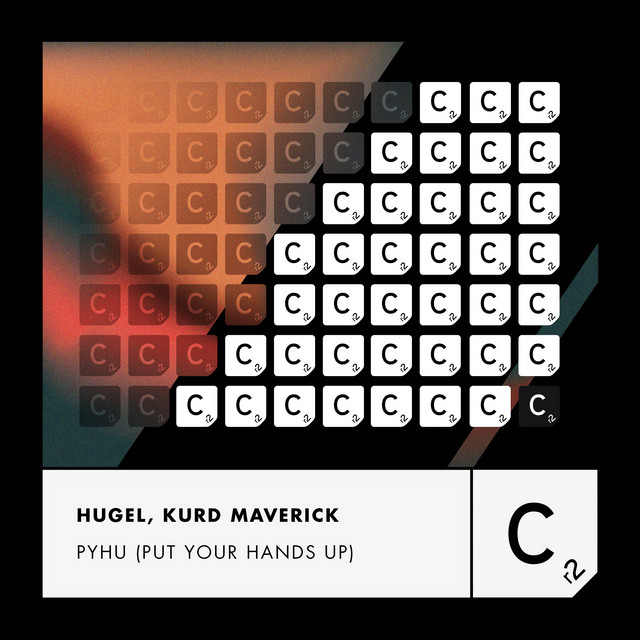
Why “PYHU” Works With Almost No Words
The meaning of PYHU (Put Your Hands Up) HUGEL, Kurd Maverick is simple on the surface and smart in practice: it turns one direct command into a full club experience. This is not a song that tells a story with verses, characters, or emotional detail. Instead, it uses repetition, rhythm, and crowd psychology to create a feeling of instant release.
"PYHU (Put Your Hands Up)" - HUGEL, Kurd Maverick
Put your hands up, put your hands up, put your hands
Put your hands up, put your hands up, put your hands
Loading lyrics...
Unable to load lyrics
We're unable to display the lyrics at this time. Please try again later.
HUGEL is known for sleek, dance-floor-focused production, while Kurd Maverick has long worked in house and electro spaces. In that context, “PYHU” feels designed less as a private listen and more as a public moment—something built for DJs, festivals, and packed rooms. The song’s power comes from how little it says and how clearly it says it.
One Hook, One Purpose, Total Clarity
At the center of the track is a repeated instruction: put your hands up
. That phrase is not poetic in the usual sense, but it is highly functional. In dance music, a command like that works as both lyric and choreography. It tells the listener what to do, but it also signals what kind of space they are in: a shared, high-energy crowd moment.
Because the words repeat over and over, the line stops feeling like plain speech and starts acting like percussion. The voice becomes part of the beat. That matters for the meaning of PYHU (Put Your Hands Up) HUGEL, Kurd Maverick, because the track is less about explanation and more about participation.
Interpretation: the song is about surrendering to collective energy. Rather than asking listeners to think through a message, it asks them to join one.
How Repetition Becomes the Message
Some songs use repetition because they lack ideas. “PYHU” uses repetition as the idea. The nonstop return of put your hands
and hands up
creates a loop that mirrors the structure of a DJ set, where tension and release often come from small elements pushed to maximum effect.
There is no narrative progression in the lyrics. Still, the track does move emotionally. It goes from command to hype, from hype to momentum, and from momentum to a near-hypnotic state. That is why such a minimal vocal can still feel big. The listener is not waiting for new information; they are waiting for the next surge of energy.
Put your hands up
Put your hands up
Even in that tiny fragment, the point is clear. The repetition is not there to deepen the wording. It is there to deepen the physical response.
The Crowd Is the Real “Narrator”
This track does not have a traditional speaker. There is no detailed first-person voice and no clear personal backstory. Instead, the vocal functions like an MC call or a DJ cue. It points outward toward the audience.
That makes the song’s implied voice close to second person, even though the emotional center is really the crowd itself. The command put your hands up
only works if people answer it. In that sense, the real subject of the song is not the vocalist. It is the room.
Interpretation: “PYHU” is about group identity. For a few minutes, individual thoughts matter less than shared motion. Everybody hears the same phrase, follows the same cue, and becomes part of the same event.
Why the Production Matters So Much
With so few words, the production has to carry most of the meaning. That is where HUGEL and Kurd Maverick’s dance background becomes important. Both artists are associated with club-ready music and DJ culture, and that helps explain why the track leans so hard into utility as art. HUGEL’s broader profile in dance music can be traced through his official artist page, while Kurd Maverick’s long-running house identity is reflected on his official site.
The likely effect of the arrangement is straightforward:
- a firm, steady beat creates physical drive
- the repeated vocal acts like a rhythmic sample
- the build-and-drop structure turns a basic phrase into a live trigger
- sparse wording leaves room for the crowd to fill the space
That last point is key. In many dance tracks, vocals compete with the groove. Here, the vocal supports it. The phrase is short enough to be remembered instantly and blunt enough to cut through loud speakers.
More Than a Party Command
On one level, “PYHU” is exactly what it sounds like: a party record built to lift the room. But that does not mean it is empty. Dance music often communicates through function. A track can mean something by what it makes people do.
In this case, the command suggests release, permission, and confidence. Raising hands in a club can signal celebration, freedom, and belonging. It can also mark a temporary escape from stress outside the venue. The song does not describe those feelings in detail, but it activates them.
That is why the meaning of PYHU (Put Your Hands Up) HUGEL, Kurd Maverick goes beyond its tiny lyric set. Its message is embodied rather than explained.
A Minimal Lyric With Festival Logic
The song also fits a larger tradition in electronic music: tracks built around a single chantable phrase. These songs work across languages, attention spans, and settings because they do not depend on complex storytelling. They depend on timing.
“PYHU” belongs to that tradition. Its simplicity is a strength, not a weakness. The lyric can be heard from far away, shouted back instantly, and understood without context. That makes it ideal for big stages and quick impact.
Final Take
“PYHU” is not trying to be confessional, literary, or emotionally detailed. Its meaning lives in motion, repetition, and shared energy. By reducing the lyric to one unforgettable command, HUGEL and Kurd Maverick turn a basic phrase into a tool for unity and release.
That is the real appeal of the song: it does not ask listeners to decode a hidden story. It asks them to become part of one.
Disclaimer: This interpretation is based on the released track, its lyrics, and the artists’ dance-music context. As with any song, listeners may hear a different meaning in the same moment.








