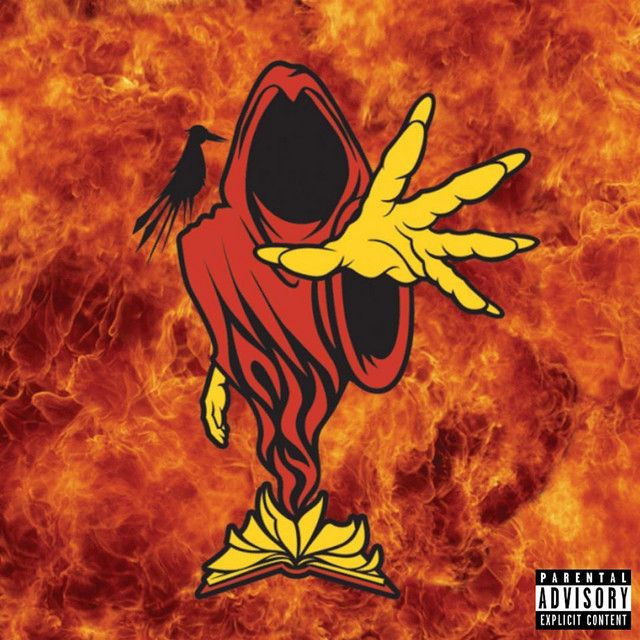
Why "In My Room" Turns Love Into Horror
The meaning of In My Room Insane Clown Posse starts with a simple tension: a person who feels cut off from everyday life builds a private world that feels more comforting than reality. In this song, that private world takes the shape of a ghostly lover, but the deeper subject is loneliness curdling into obsession.
"In My Room" - Insane Clown Posse
Thank god, many people think I'm odd
But I talk with no one and I walk alone
Loading lyrics...
Unable to load lyrics
We're unable to display the lyrics at this time. Please try again later.
Insane Clown Posse are known for horrorcore, a rap style that leans on gore, dark comedy, and shock. That matters here. The song is not subtle, but it is focused. It uses extreme scenes to show what happens when fantasy becomes more important than other people.
A Love Song With Rot Underneath
On the surface, the hook sounds devoted. The narrator frames the figure in the room as a true love, someone they would do anything for. But the verses quickly show that this is not healthy romance. It is dependence.
Early lines paint a person who feels isolated at school, avoids others, and rushes home to be alone. The room becomes a refuge. When the nightly tap tap
arrives, the song shifts from social alienation into supernatural desire.
Interpretation: the ghost is less important than what she represents. She may be a literal horror figure inside the story, but she also works as a symbol of escapism. She appears only in darkness, offers comfort without challenge, and disappears with daylight. That makes her feel like a fantasy built to replace messy human contact.
Watch the official In My Room
music video
The Story Moves From Withdrawal to Violence
The narrative unfolds in a clear downward spiral:
- The narrator feels odd and disconnected.
- A dead girl visits at night and becomes their only source of intimacy.
- They begin acting violently to protect that bond.
- The fantasy collapses anyway, leaving only blood and waiting.
That arc is why the song hits harder than a random shock track. The horror grows out of emotional need. When the narrator says never alone
, the phrase sounds comforting at first, but the rest of the song turns it into a warning.
There is one crucial moment where the song reveals how unstable this attachment is. The narrator claims they would commit terrible acts to keep the lover near. The point is not realism. The point is escalation: once obsession becomes the center of life, every boundary starts to look disposable.
Why the Chorus Feels So Disturbing
The chorus matters because it wraps ugly material in a strangely warm, sing-song frame. That contrast is key to the meaning of In My Room Insane Clown Posse. The hook keeps returning to adoration while the verses become more grotesque.
This creates a split effect. One part of the track sounds like craving and comfort; the other sounds like paranoia and slaughter. ICP often use this kind of tonal collision. It lets them turn a simple horror premise into something more psychologically sticky.
Interpretation: the chorus may be showing how obsession edits reality. In the narrator’s mind, this is still a love story, even when everything around it has become monstrous.
The Room, the Night, and the Knock
The song’s main symbols are simple but effective:
- The room: a sealed inner world, cut off from judgment.
- Darkness: the condition that lets fantasy live.
- The knock on the window: desire arriving from outside, but only on the narrator’s terms.
- Morning: reality returning and breaking the spell.
The repeated tap tap
is especially important. It is catchy, but it also works like a trigger. Each time it appears, hope returns. By the end, that same sound becomes painful because it never comes.
A short late refrain drives that home:
I waitedand hated this
I created a bloody mess
Those lines compress the whole song. Waiting shows dependence; the “bloody mess” shows the cost. The narrator has built their life around a fantasy and is left with ruin when it fails.
How the Sound Carries the Meaning
Musically, the track fits ICP’s horrorcore lane, a style widely associated with violent storytelling and theatrical grotesque imagery. The beat gives the song a creepy but approachable frame rather than a fully chaotic one. That matters because the steadiness makes the narrator’s fantasy feel routine, almost domestic, which is more unsettling than pure noise.
The vocal delivery also sells the concept. The performance flips between conversational detail and manic emphasis, making the story sound half-confession, half-slasher movie. That blend keeps listeners close to the narrator’s point of view, even when the actions become absurd.
Because the chorus is smoother than the verses, the production underlines the central contradiction: emotional softness wrapped around moral collapse. The song does not just tell that story; it sounds like it.
Artist Context Helps Explain the Extremes
Insane Clown Posse built their reputation on exaggerated characters, gore, and outsider identity within horrorcore. This track fits that larger persona. The violence is deliberately over-the-top, and the emotional themes are broad enough to connect with listeners who hear the song as a dark cartoon about rejection and fantasy rather than a literal confession.
Factual note: the provided credit lists writer M. Riley Jr., and the song is identified here as hardcore rap/horrorcore-adjacent. Without a confirmed source for album and production details, it is safer not to overstate those specifics.
Final Reading: Obsession as a Private Trap
The best way to read the song is as a horror tale about what happens when loneliness becomes a closed system. The narrator wants love without risk, a lover who appears on command, and a world without daylight. Instead, they end up trapped inside their own fixation.
That is the real engine behind the meaning of In My Room Insane Clown Posse: not just gore, but the collapse that follows when fantasy replaces reality and devotion turns into possession.
Disclaimer: This interpretation is an informed reading of a fictional song narrative. Meanings can vary by listener, and some details remain open to interpretation.









