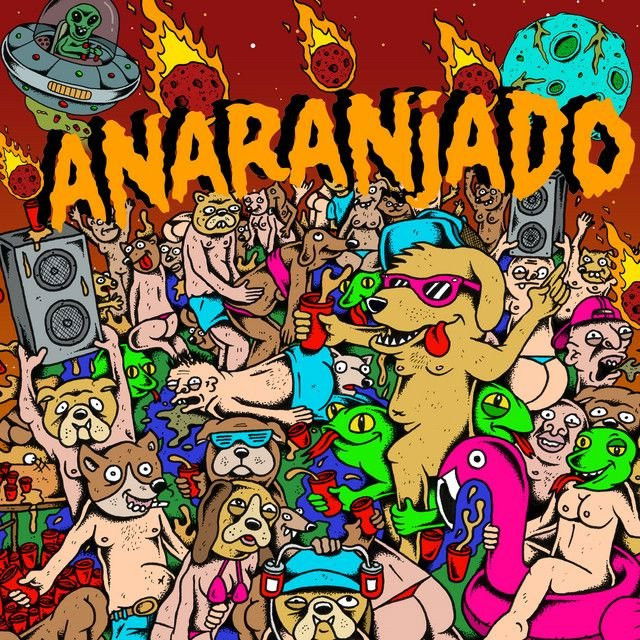
Why ‘Anaranjado’ by J Balvin, Jowell & Randy Glows
They don’t call it “Orange” for nothing. In this club-ready collab, desire burns hot and hangs in the air like a neon sunset. The hook circles one idea: an irresistible fling that no one can shake off.
"Anaranjado" - J Balvin ft. Jowell & Randy
Jowell y Randy
Leggo
Loading lyrics...
Unable to load lyrics
We're unable to display the lyrics at this time. Please try again later.
Heat in a Hook: the meaning of Anaranjado J Balvin, Jowell & Randy
At its core, the song is about obsession and afterglow. The narrators are stuck pensando en ti
and admit they can’t stop replaying the last encounter. When they add no te saco de mi mente
, it turns the feeling into a loop—memory as a beat that won’t quit.
Interpretation: The chorus doesn’t just describe longing; it mimics it. Repetition makes the fixation feel real-time, like thoughts circling at 3 a.m. The mood is celebratory, not conflicted—desire is something to chase, not resist.

Watch the official Anaranjado
music video
Voices in the Night: Who’s Speaking to Whom
Multiple voices—J Balvin and the legendary duo Jowell & Randy—take turns addressing the same woman. Each verse is first-person, but their swagger varies. One offers status and speed with en la Mercedes te monto
. Another leans into recognition and intimacy with me acuerdo de tus lunares
.
Interpretation: They form a composite narrator. Instead of one character, listeners get a collage of male desire—confident, playful, and direct. The “you” feels powerful too; the woman’s effect is so strong it bends the men’s schedules, attention, and night plans.
From Memory to Motion: What Happens in the Lyrics
A simple story unfolds:
- They hooked up before and can’t forget it.
- They text, wait, and plan a discreet meetup.
- There’s talk of travel and cars, signaling access and privacy.
- The ask is clear:
hagamos lo de la última vez
.
Interpretation: The timeline is less linear than cyclical. The song keeps returning to the last time, turning nostalgia into momentum. Memory becomes a pickup line, then a promise.
Color Theory: Why “Orange” Fits This Fantasy
“Anaranjado” evokes heat, sunset hours, and nightlife glow. Orange is between day and night—the hinge where plans turn physical. The imagery backs that up: Lentes oscuros
suggests secrecy in public spaces; cars and city names hint at movement under cover of darkness.
Interpretation: Orange is not just a hue; it’s a temperature setting. Warmth equals desire, twilight equals privacy, and the color frames the whole track as an evening ritual—when feelings and bodies both run hot.
Beats and Glow: How the Production Sells the Desire
The track rides a perreo-ready dembow, rubbery low end, and crisp percussion. Vocals stack in call-and-response, letting each artist carve a lane without breaking the groove. Ad‑libs tag Mosty and Tezzel, whose sleek mix choices keep the hook up front and sticky.
Short melodic phrases mirror the lyrical economy. The chorus lands fast, repeats often, and leaves space for breathy details. That elegant simplicity makes the hook hard to shake—just like the encounter they’re describing. When the crew shouts Viva el perreo
, it’s both a mission statement and a genre marker: this is built for bodies in motion.
Interpretation: Production choices echo the theme. Tight drums and looping motifs create the mental “replay” effect, while polished vocals signal control amid impulse. The sound gives the desire a clean, glossy frame.
Other Ways to Read It—and the Takeaway
Interpretation 1: It’s pure hedonism. The song celebrates lust and confidence; status symbols simply oil the gears of consent and fun.
Interpretation 2: It’s memory as performance. By repeating the hook and mixing perspectives, the track shows how stories of past nights become part of seduction itself.
Takeaway: The meaning of Anaranjado J Balvin, Jowell & Randy is simple but potent—after one intense night, desire lingers like a warm-orange glow. It’s a soundtrack for chasing that heat again, engineered to loop in your head until you do.
Disclaimer: Song interpretations are subjective and reflect one reading of the music and lyrics.








