
Why ‘J’aime les filles’ Is More Than Flirting
The meaning of J'aime les filles Jacques Dutronc is easy to miss if they only hear the hook. On the surface, it sounds like a light, cheeky pop song about a man who likes women of every kind. But the song’s real spark comes from how exaggerated that idea becomes. Its long list of women from different jobs, places, and social worlds turns desire into comedy—and maybe into satire too.
"J'aime les filles" - Jacques Dutronc
J'aime les filles de chez Régine
J'aime les filles qu'on voit dans Elle
Loading lyrics...
Unable to load lyrics
We're unable to display the lyrics at this time. Please try again later.
Jacques Dutronc became one of the defining voices of 1960s French pop, often pairing cool delivery with clever writing by Jacques Lanzmann, his frequent lyricist and collaborator, as widely noted in summaries of their work such as AllMusic and Encyclopaedia Britannica. That context matters here. This is not just a love song. It is a performance of attitude.
A Catalog Song With a Wink
The basic move of the lyric is simple: the speaker keeps saying J'aime les filles
and then adds one group after another. They mention fashionable women, working women, rich women, provincial women, intellectual women, and women in awkward situations. Because the categories are so broad and so mixed, the song stops sounding like a confession and starts sounding like a bit.
Interpretation: the list suggests that the singer is less interested in any one person than in the idea of desire itself. He likes variety, surfaces, and the thrill of naming types. That gives the song a playful, slightly mocking tone.
The humor grows because the categories do not stay romantic for long. One moment the song gestures toward glamour and nightlife; the next it turns to assembly-line labor or women on strike. That jumpy structure gives the lyric its comic rhythm. It keeps widening the frame until the claim becomes absurdly inclusive.
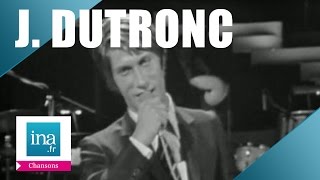
Watch the official J'aime les filles
music video
What the Refrain Really Does
The refrain sharpens the joke. After all those descriptions, the singer says Téléphonez-moi
and then the deliberately odd Téléphonez-me
. In plain English, he is inviting any woman who fits his broad list to call him.
That invitation matters because it makes the speaker sound like he is advertising himself. Instead of intimate feeling, they offer a public pitch. The refrain makes the whole song feel like a flirtation broadcast to the world.
Si vous êtes comme ça
Téléphonez-moi
This little call-and-response style is catchy, but it also undercuts sincerity. Interpretation: the speaker is posing—part seducer, part clown. The humor depends on that balance.
Women as Types, Society as Backdrop
One reason the song still stands out is the way it maps social life through female “types.” The lyric moves through elite spots, consumer media, car factories, beach towns, inherited wealth, protest culture, and old-fashioned respectability. It is almost a social inventory disguised as a flirt song.
That is why the meaning of J'aime les filles Jacques Dutronc goes beyond simple admiration. The women are not presented as full characters. They are labels, scenes, and symbols. That can feel dated to modern listeners, especially in the United States, because the song reflects a male gaze common in 1960s pop culture.
Still, the lyric’s self-awareness is part of its design. The piling up of labels hints that the singer is not being asked to be trusted. He is being watched as he performs desire in a stylish, comic way. When he says he likes women from magazines or women who make him laugh, the song seems to ask whether attraction is personal at all—or shaped by fashion, class, and fantasy.
The Sound Keeps It Light and Sharp
Musically, the song works because the arrangement does not push for emotional depth. Instead, it rides on bounce, groove, and repetition. Dutronc’s style in this era often leaned on crisp beat-driven French pop with touches of rock attitude, a blend discussed in overviews of his catalog at AllMusic.
That matters for interpretation. A sad arrangement would make the lyric feel lonely or needy. This one does the opposite. The brisk rhythm and easy vocal delivery tell listeners not to over-dramatize the speaker. He is breezy, detached, and cool.
Interpretation: the production turns the lyric into social comedy. The music smiles while the words keep stacking categories. That contrast is what keeps the song charming instead of mean-spirited.
Two Strong Ways to Read It
There are at least two useful readings of the song:
- Playful flirtation. They can hear it as a carefree pop number about broad attraction and youthful confidence.
- Satire of masculine appetite. They can also hear it as a joke about men who claim to love “all women” while only seeing stereotypes.
Both readings fit the text. The lyric says qui travaillent à la chaîne
in one breath and moves to wealth, leisure, and status in the next. That range feels too extreme to be purely earnest.
A modern listener might also hear a third layer: a portrait of consumer-era desire. The song mixes magazines, brands, nightlife, labor, and travel, suggesting that attraction is entangled with modern image culture.
Why the Song Endures
Part of the song’s staying power is its efficiency. In a small space, it creates a character, a joke, and a snapshot of a social moment. It sounds effortless, but the writing is carefully built. Lanzmann and Dutronc knew how to make wit feel casual.
For American listeners coming to French pop for the first time, this song is a good example of how style and irony can carry as much meaning as plot. Nothing dramatic happens. The singer just keeps naming women he likes. Yet by the end, that repetition reveals a lot about charm, performance, and shallow desire.
Final Take on the Song’s Meaning
So what is the meaning of J'aime les filles Jacques Dutronc? Most likely, it is a witty song about attraction as performance. It celebrates variety on the surface, but it also pokes fun at the man doing the celebrating.
That double effect is why it still works: it is catchy enough to enjoy casually, yet sharp enough to reward a closer listen.
Disclaimer: This interpretation is based on the lyrics, performance style, and historical context. As with many pop songs, some meanings remain open to listener interpretation.







