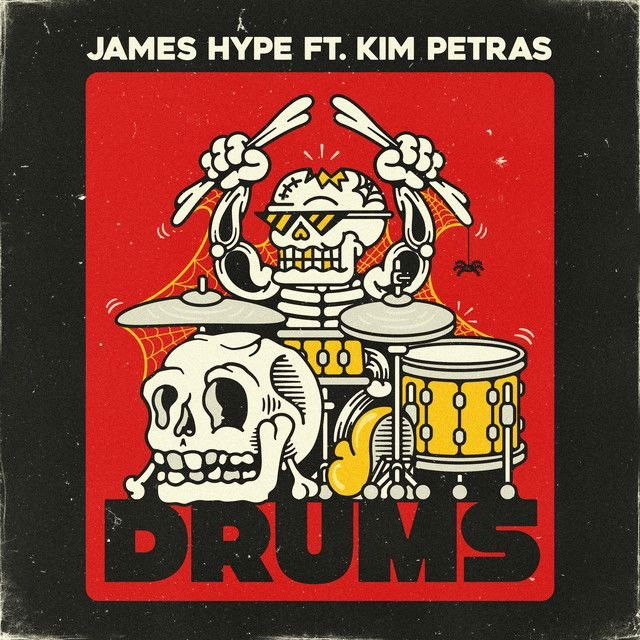
Drums by James Hype, Kim Petras
They build a whole story from a few words and a pounding groove. If you’re searching for the meaning of Drums James Hype, Kim Petras, it’s this: desire feeds on denial, and the club turns that tension into movement.
"Drums" - James Hype ft. Kim Petras
The less you give to me
The less you give to me, the more I want it
Loading lyrics...
Unable to load lyrics
We're unable to display the lyrics at this time. Please try again later.
A chase you can dance to
At its heart, Drums is about craving that grows when it’s not met. The narrator admits that limited attention only makes them lean in harder—summed up by the hook’s pull, the more I want it
. Instead of resolving the craving, the song stretches it, using repetition to make the feeling feel endless.
This framing fits the dancefloor, where anticipation is everything. The song invites listeners to live inside the chase for three minutes, then go again.
Who’s speaking—and why it matters
The lyrics use first person to address a withholding “you.” When they say You push me back
and two steps forward
, they sketch a push‑pull power game. They see the “signs,” so it isn’t naïve; it’s willful—choosing the thrill of almost-getting rather than getting.
That choice aligns with Kim Petras’ vocal persona: glossy, playful, and knowingly flirtatious. Her delivery turns frustration into tease. James Hype’s arrangement answers by making space for her lines to land before the drums reassert control.
The hook that locks the room
The less you give to me, the more I want it You push me back until I’m two steps forward
This is the song’s thesis. Holding back creates heat; progress comes in jolts, not a straight line. Each time tension spikes, the track drops back to percussion and the title word—Drums
—as if the beat is the only stable thing. Emotion surges, then the groove resets the system.
Symbols that keep time: drums, steps, dreams
- Drums: More than instrumentation, they’re a body metaphor—the heartbeat of lust, the metronome of control. When the vocal calls
Drums
, it’s a surrender signal. - Steps:
two steps forward
reads like relationship geometry. You move, they counter-move. In a club, that’s also literal footwork. - Dreams:
I used to dream about this
carries nostalgia. The fantasy is realized, but not how they pictured it. The track turns that twist into fuel, not regret.
How the production sells the story
James Hype is known for precision builds, bass-forward drops, and surgical breakdowns designed for DJ utility. Here, the drums are dry, punchy, and central—four-on-the-floor kick, tactile claps, and teasing fills that pull the drop just out of reach. That near-miss feeling mirrors the lyric’s withheld affection.
Kim Petras’ topline is economical and sticky. She leans on rhythm more than melody, almost chanting the hook so it becomes part of the percussion. When she hits the more I want it
, the mix often strips back to let the phrase punch through, then the low end floods back in—tension, release, repeat.
The official credits list James Marsland (James Hype), Kim Petras, Joshua Grimmett, Michele Carmine, Justin Timberlake, Pharrell Williams, Chad Hugo, and Terrence and Gene Thornton. Those legacy names hint at rhythmic lineage and possible interpolation choices, reinforcing why the beat feels instantly familiar even as the record is modern and club-hardy.
What the chorus really says
On paper, it’s simple. In practice, it’s strategy. The chorus positions withholding as the engine of attraction and sets a rule: less equals more. Interpretation: the song isn’t just describing desire; it’s instructing the dancefloor to live in suspense. DJs do this with timing; the lyric does it with language.
Alternate reads worth your replay
- Interpretation—Romantic obsession: It’s about someone who gives only crumbs, and the narrator loves the chase as much as the person.
- Interpretation—Career hunger: Swap romance for industry gatekeepers; rejection fuels grind. The “steps” become literal progress markers toward a stage moment.
- Interpretation—Pure hedonism: The object of desire is the drop itself. The “you” is the crowd, and the payoff is that communal kick.
Each lens works because the writing leaves space. Repetition isn’t lack of content—it’s an invitation to project your own story onto the beat.
The meaning of Drums James Hype, Kim Petras, in one line
Craving grows when payoff is delayed, and rhythm turns that craving into motion. That’s why the hook loops and why the percussion gets center stage: the beat is both the problem and the cure.
Takeaway
Drums captures the psychology of wanting what resists you, then transforms that friction into a physical release. It’s clever, efficient pop-dance writing built for clubs and for the loop button.
Disclaimer: Song interpretations are subjective; this reading blends lyrical analysis with production context and may differ from the artists’ intent.









