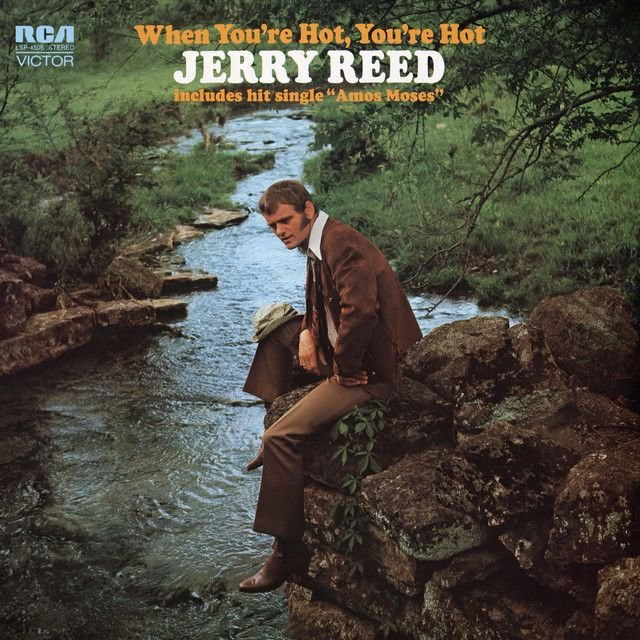
Why Jerry Reed Turns Luck Into a Joke
The meaning of When You're Hot, You're Hot Jerry Reed comes down to one sharp idea: a lucky streak can feel like destiny right up until life flips the table. Jerry Reed turns that idea into a funny country story about gambling, swagger, and the sudden collapse of confidence.
"When You're Hot, You're Hot" - Jerry Reed
Had a big crap game goin' back in the alley
And I kept rollin' them sevens , winnin' all them pots
Loading lyrics...
Unable to load lyrics
We're unable to display the lyrics at this time. Please try again later.
Released in March 1971, the single became Reed's biggest country hit, spending five weeks at No. 1 on the U.S. country chart and reaching No. 9 on the Billboard Hot 100. It was also certified gold for one million sales. Those facts help explain why the song still lasts: it is catchy, easy to follow, and built around a phrase people can use in real life. Reed also wrote it himself, and it was produced by Chet Atkins and Jerry Reed, which places it firmly inside Nashville's polished but playful early-1970s sound.
A Funny Story With a Serious Point
On the surface, the song is simple. The narrator is winning an alley dice game and feels untouchable. The hook, when you're hot, you're hot
, sounds like a celebration of momentum.
Then the song twists. A police officer breaks up the game, takes the money as evidence, and sends the men to court. Later, a judge who knows the narrator still gives him the worst outcome. The same saying returns, but now it means the opposite. What started as bragging becomes a shrug about bad luck.
Interpretation: That reversal is the whole point. Reed is laughing at the idea that success means control. For a moment, the narrator believes he has special powers. By the end, he learns that luck is not character, and confidence is not protection.

Watch the official When You're Hot, You're Hot
music video
How the Plot Builds the Meaning
The song works because each verse raises the stakes in a clean, almost comic sequence.
- They start in a back-alley crap game.
- The narrator keeps winning and gets cocky.
- A cop appears and changes the mood.
- Court seems like a chance for rescue.
- The judge flips the catchphrase back on him.
That structure makes the song feel like a short film. Reed does not need deep symbolism to make it land. The humor comes from timing, escalation, and the growing gap between what the narrator expects and what really happens.
A few short phrases show that shift. Early on, they are winnin' all them pots
and feeling unbeatable. Soon after, the officer plans to haul you all in
. By the courtroom scene, the narrator hears ninety days, Jerry
, and the old slogan becomes a punchline aimed at him.
The Chorus Is More Than a Catchphrase
The chorus is memorable because it sounds like common wisdom. It has the plain, repeatable feel of a saying passed around at bars, ball games, and card tables. That makes it feel bigger than the specific story.
But Reed uses that familiar sound in a clever way. At first the phrase means luck is running high. Later it suggests that fortunes change without warning. The line is funny because everyone in the song uses it as if it explains everything, even when it explains almost nothing.
Interpretation: The chorus is really about how people talk themselves through chaos. When things go well, they call it magic. When things go badly, they call it fate. Reed sees the comedy in both reactions.
Jerry Reed's Persona Drives the Song
Part of the song's meaning comes from who Jerry Reed was as a performer. He was known for quick wit, rhythmic delivery, and a style that mixed country picking with comedy and storytelling. This song fits that image perfectly.
They sing the narrator as charming, mouthy, and just a little too sure of himself. That matters because the listener does not hear a tragic outlaw. They hear someone entertaining himself right into trouble.
The ending sharpens that image. After the sentence, the narrator keeps talking back and digging deeper. He cannot stop performing, even when performance is clearly making things worse. That is one reason the song stays funny instead of turning dark.
How the Sound Supports the Joke
The production matters too. Reed and Chet Atkins give the song a bright, bouncy country arrangement that keeps the tone light. The groove moves quickly, and the vocal phrasing feels half-sung, half-told, which suits a story song built on dialogue and reaction.
The instrumental feel is key to the meaning of When You're Hot, You're Hot Jerry Reed. Nothing in the track sounds heavy or tragic. Even when the narrator gets arrested and sentenced, the music keeps smiling. That contrast tells listeners not to hear the song as a moral lecture. It is a wink.
There is also a strong sense of momentum in the performance. The rhythm rolls forward like dice across a table. That musical motion mirrors the plot: once the streak begins, everything keeps tumbling into the next scene.
Why the Song Connected So Widely
Its chart success makes sense. The story is easy to picture, the chorus is instantly repeatable, and the humor is broad without being confusing. It could work for country listeners, pop radio, and anyone who enjoys a good one-liner.
It also taps into a familiar American theme: the dream of beating the odds. For a moment, the narrator feels blessed, clever, and unstoppable. Then the system closes in. That arc gives the song a little bite beneath the comedy.
Final Take on Reed's Big Hook
In the end, the song is about the rise and crash of confidence. It turns a simple phrase into a running joke about luck, ego, and how fast winning can become losing.
Interpretation disclaimer: This reading is an informed interpretation based on the lyrics, performance, and historical context. Like many story songs, it can also be heard simply as a comic tale meant to entertain as much as it means.








