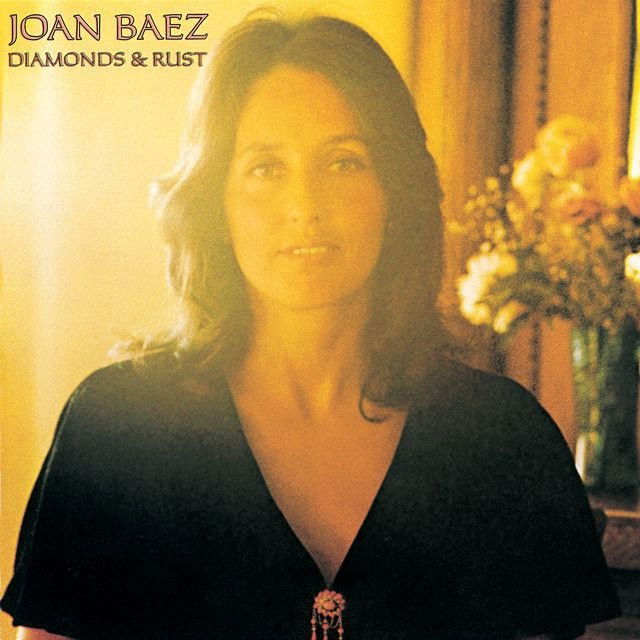
Why "Diamonds and Rust" Still Hurts
The meaning of Diamonds And Rust Joan Baez comes down to one hard truth: some old loves never fully leave. Joan Baez turns a simple event—an unexpected call from a former partner—into a meditation on memory, desire, and the price of looking back.
"Diamonds And Rust" - Joan Baez
Here comes your ghost again
But that's not unusual
Loading lyrics...
Unable to load lyrics
We're unable to display the lyrics at this time. Please try again later.
Released in 1975 as the title track of her album Diamonds & Rust, the song is widely seen as one of Baez’s finest originals and one of her most personal works. It arrived after years in which she had been known mainly as an interpreter of folk songs, making this confessional writing feel especially important in her catalog.
A Love Story Reopened by Sound
The song begins with surprise. A voice returns, and with it comes a whole emotional world. The opening image of your ghost again
does not mean a literal haunting. It suggests that this person has remained present in memory, always close enough to reappear.
From there, the song captures how memory works. One detail leads to another. A voice on the phone opens the door to faces, places, gifts, weather, and old conversations. Baez shows that the past is not dead material; it can feel immediate, even physical.
Interpretation: The speaker is not only remembering a relationship. They are reliving the confusion of loving someone brilliant, magnetic, and difficult to hold onto.

Watch the official Diamonds And Rust
music video
The Title Says Everything in Two Images
The chorus gives the song its central idea: memories bring both treasure and damage. When Baez sings diamonds and rust
, she pairs beauty with corrosion. That contrast is the heart of the song.
“Diamonds” suggest what was rare and dazzling in the relationship. “Rust” suggests what time has done to it, and what the relationship may have done to the speaker. The song never claims the past was either purely wonderful or purely harmful. It insists it was both.
That balance is why the title has lasted. It gives a plain, memorable shape to a complicated emotional state: gratitude mixed with hurt.
The Portrait of the Former Lover
One reason the song feels so vivid is its sketch of the man at its center. Baez describes a figure who arrived already a legend
, someone charismatic enough to attract attention wherever he went. Many listeners have connected the song to Bob Dylan, a reading supported by long-standing biographical context and reporting around Baez’s life and work.
Still, the song works even without attaching it to one famous person. The lover is presented as gifted, restless, and elusive. He is also verbally skilled, maybe too skilled. Late in the song, the speaker pushes back against his emotional fog, noting that he is good with words and with staying unclear.
That detail matters. The song is not simply romantic memory. It is also a record of imbalance—one person reaching for honesty while the other hides inside style, charm, or ambiguity.
Scenes That Feel Like Memory Flashbacks
Baez structures the lyric as a series of snapshots. Instead of explaining everything directly, she lets moments accumulate:
- the sudden call
- old praise and criticism
- gifts exchanged long ago
- city scenes and cold weather
- the emotional aftershock of hearing him again
One of the sharpest lines remembers how it’s all come back
too clearly. That is the problem at the center of the song. Nostalgia is often spoken of as warm and soft, but here it is almost too sharp to bear.
Yes, I loved you dearly
I've already paid
Those brief lines carry the song’s final sting. The speaker admits the love was real, but they also suggest the cost has already been absorbed. The past cannot be offered again as if it were a gift.
How the Music Carries the Meaning
Part of what makes the song so powerful is its restraint. The arrangement is rooted in folk, but it also has the smoother studio sound of the mid-1970s. Acoustic textures keep the performance intimate, while the fuller production gives it emotional sweep.
Baez’s voice is crucial. She sings with clarity rather than melodrama. That choice makes the song hit harder. Instead of sounding overwhelmed, she sounds alert—someone watching memory arrive in real time and measuring its impact carefully.
Interpretation: The calm vocal style mirrors emotional maturity. The speaker is not trapped in the past, but they are honest that the past still has power.
Why the Song Endures
The meaning of Diamonds And Rust Joan Baez still resonates because it refuses easy closure. Many songs about ex-lovers end in reunion, revenge, or total healing. This one does something truer. It admits that a person can understand a relationship, survive it, and still feel its force years later.
That is also why the song matters in Baez’s career. It shows her not just as a major singer, but as a writer who could turn private memory into a universal story. Listeners do not need her exact history to recognize the feeling.
In the end, “Diamonds and Rust” is about the mixed inheritance of love. The past leaves shine and stain. It gives beauty, but it also marks the one who carries it.
Disclaimer: This article offers a literary interpretation based on the released song, its imagery, and public context. Meaning can remain open, and different listeners may hear it differently.







