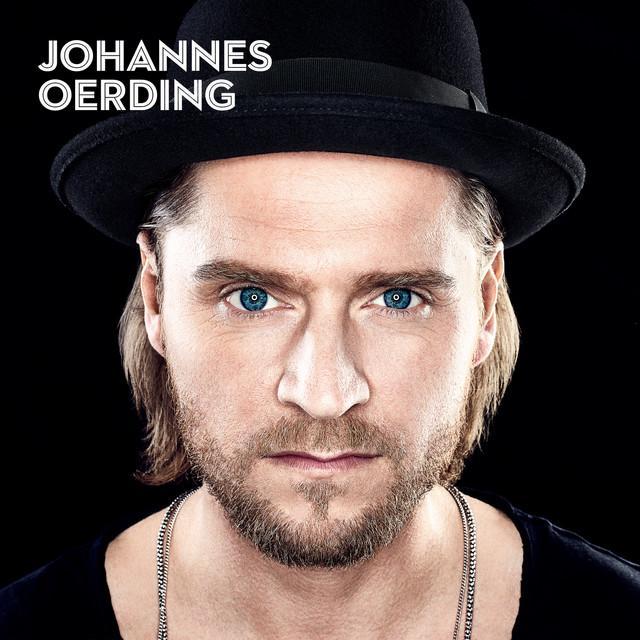
Kreise by Johannes Oerding
Why This Song Feels Bigger Than a Reunion
The meaning of Kreise Johannes Oerding comes down to a simple but powerful idea: some connections survive distance because life moves in cycles. The song does not deny separation. Instead, it treats distance as part of a larger pattern, one that can bring people back into each other’s lives.
"Kreise" - Johannes Oerding
Seit der Geburt das selbe Blut, das durch die Adern pumpt
Wir fangen jedes Jahr zur gleichen Zeit an zu frieren
Loading lyrics...
Unable to load lyrics
We're unable to display the lyrics at this time. Please try again later.
Johannes Oerding is known in German pop for songs that feel personal but broad enough for many listeners to enter. In “Kreise,” they build that feeling through images of seasons, smoke, the moon, and turning hands on a clock. Those images make the song feel less like a single breakup story and more like a reflection on how relationships bend, drift, and return.

Watch the official Kreise
music video
The Core Message Hides in Motion
At the center of the song is the repeated idea that everything moves in circles. The chorus frames two people taking different directions, yet still being part of the same motion. When the lyric says alles in Kreisen bewegt
, it turns life into a rotating system rather than a straight road.
That matters because the song is not really about control. It is about trust. One person goes left, the other goes right, but the emotional claim is that movement itself may create another crossing point. In plain terms, the song argues that parting does not always mean ending.
Interpretation: This can be heard as a love song after separation, but it also fits friendship, family, or any bond rooted in shared history.
Verses Full of Cycles, Not Accidents
The opening verse sets up circular thinking right away. It starts with the thought that beginning and end can be the same place. That gives the whole song its philosophy: what looks finished may actually be part of a return.
From there, the lyrics stack images of repetition. People grow cold at the same time each year. Smoke rings vanish. The earth spins and people hold on while it turns. Even the clock keeps rotating. Short phrases like Zeiger rotieren
and seasonal changes make time feel patterned, not chaotic.
These details are important because they move the song away from melodrama. Instead of saying only “they miss someone,” the writer shows a world where return is already built into nature. Day replaces night, then night replaces day. That makes the longing feel patient rather than desperate.
The Chorus Turns Distance Into Hope
The chorus is the emotional engine of the track. It repeats the image of two people moving apart: du links
and ich rechts
. On paper, that sounds like division. But the next idea changes the mood: eventually, kreuzt sich der Weg
.
That shift is why the chorus lands so strongly. It does not pretend the pair are standing still. In fact, it says the opposite. They keep moving, they keep living, and that is exactly what may lead to reunion. The line about not remaining still gives the song energy and dignity. It refuses self-pity.
Interpretation: The chorus suggests that healthy love may include letting go for a time, rather than forcing closeness.
One Key Image Explains the Song’s Heart
The second verse introduces one of the clearest ideas in the lyric: letting go rather than gripping too hard. The famous saying written on a bar bathroom wall is paraphrased as a lesson in release. In other words, if something truly belongs in a person’s life, forcing it is not necessary.
That idea connects with the song’s best late image: gleichen Mittelpunkt
. Even when two people are far apart, they may still share the same center. That is a strong metaphor because a circle can expand widely while still being organized around one point.
Egal wie weit wir uns entfernen
wir haben den gleichen Mittelpunkt
This brief moment gives the song its emotional summary. Distance is real, but so is the bond underneath it.
Sound and Production: Why It Feels Reassuring
Even without deep production notes, the arrangement can be heard as polished German pop with a warm, uplifting build. The verses feel measured and reflective, leaving room for the imagery to register. Then the chorus opens up with a broader, more anthemic push, which matches the song’s hopeful message.
That contrast matters. A heavy or dark production would make the lyric sound fatalistic. Instead, the steady pulse and rising melody make circular motion feel comforting. The music says: this is not chaos, this is pattern.
Oerding’s vocal approach also helps. They sing with clarity rather than theatrical excess, which keeps the emotion grounded. That delivery suits a song about endurance, memory, and trust.
Artist Context and Songwriting Lens
The lyrics provided credit David Vogt, Fabian Römer, Hannes Büscher, Johannes Oerding, Philip Böllhoff, and Sipho Sililo as writers. That team-based writing style fits a modern pop song that aims for both intimacy and wide relatability.
Within Oerding’s catalog, this kind of emotional directness makes sense. Their songs often balance everyday language with big feelings, allowing listeners to project their own story onto the track. “Kreise” does that especially well because its symbols are universal: circles, seasons, clocks, moon and sun.
Final Take on the Meaning of Kreise Johannes Oerding
The meaning of Kreise Johannes Oerding is ultimately about faith in recurring connection. The song accepts that people separate, change, and move through different phases. But it also suggests that real bonds are not erased by distance.
That is why “Kreise” feels comforting. It imagines life not as one line away from the past, but as a set of returns. What is lost may still come back into view, not because time stands still, but because everything keeps moving.
Disclaimer: This interpretation is based on the lyrics provided and commonly understood songwriting themes. As with any song, listeners may hear meanings that differ from this reading.







