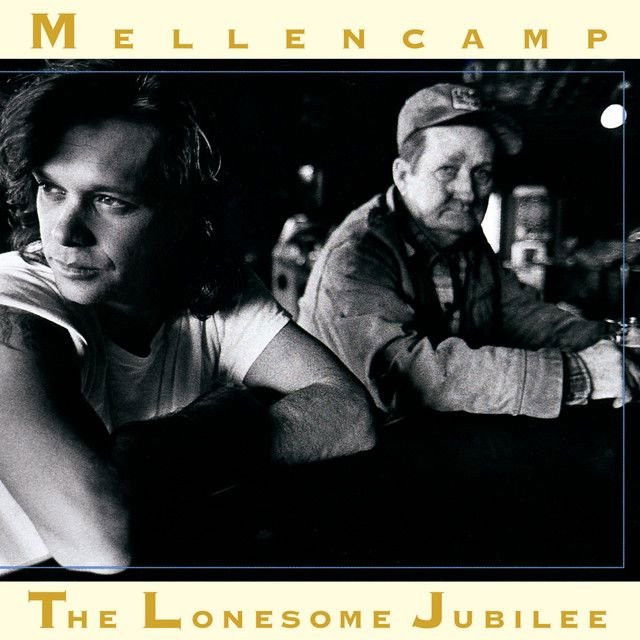
Cherry Bomb by John Mellencamp
Why This Song Still Feels So Alive
The meaning of Cherry Bomb John Mellencamp starts with memory, but it does not end there. The song looks back at youth with warmth, humor, and a little disbelief. It is about teenage nights that felt huge at the time, then became the stories adults tell when they realize life moved faster than expected.
"Cherry Bomb" - John Mellencamp
In an eight room farmhouse, baby
When my brothers and friends were around
Loading lyrics...
Unable to load lyrics
We're unable to display the lyrics at this time. Please try again later.
Released in 1987 as a single from The Lonesome Jubilee, the song became one of Mellencamp's best-known hits, reaching the Top 10 on the Billboard Hot 100 and No. 1 on the Mainstream Rock chart, according to [Wikipedia](https://en.wikipedia.org/wiki/Cherry_Bomb_(John_Mellencamp_song). Those facts matter because the song's broad success shows how many listeners recognized themselves in its small-town scenes.
At its core, the song is not simply saying the past was perfect. It is saying the past felt intense because they were young enough for ordinary moments to seem enormous.
Watch the official Cherry Bomb
music video
A Memory Piece, Not a History Lesson
Mellencamp frames the song as a return to teenage life on the edge of town. The opening details paint a lived-in picture: a farmhouse, siblings, friends drifting in and out, and early romances. When the singer remembers those days, they can only smile. That reaction matters. The song is less about facts than about the emotional glow left behind.
Interpretation: The narrator is not trying to prove that life used to be better in every way. They are showing how memory edits life. Hard winters, trouble with local guys, and confusion about adulthood all remain in the story. But the heart remembers the excitement first.
That is why the chorus turns simple actions into a whole worldview. Phrases like sport was a sport
and dancin' meant everything
sound almost playful, but they reveal a deeper point: back then, social rituals felt pure and direct. Playing, flirting, dancing, and holding hands carried emotional weight because everything was new.
What "Cherry Bomb" Represents
The club named in the song works as more than a place. It stands for a threshold between childhood and adulthood. Outside the club, their hearts were really pumpin'
; that image captures the nerves of first love, first freedom, and first public identity.
Research on the song often notes that Mellencamp drew on memories of teen clubs and church-basement dances, including the fictional Last Exit Teen Club, as part of the song's nostalgic setting, as summarized by [Wikipedia](https://en.wikipedia.org/wiki/Cherry_Bomb_(John_Mellencamp_song) and American Songwriter. In that context, "Cherry Bomb" becomes a symbol for any local spot where young people learned who they were.
Seventeen has turned thirty-five
I'm surprised that we're still livin'
Those lines shift the song from teenage snapshot to adult reflection. The speaker is older now, with children and responsibilities, but still connected to that younger self.
The Story Moves in Three Clear Stages
The song's timeline is simple, which helps its emotional force.
- Youthful freedom: home, friends, girlfriends, and a life that felt always in motion.
- Peak teenage energy: cruising around town, dancing, laughing, getting into minor trouble, and building memories around the club.
- Adult hindsight: they are now older, maybe wiser, but still unsure in some ways.
That last stage gives the song its bite. When the narrator says got a few kids of my own
, the song stops being a party memory and becomes a meditation on time. They are now the adult they once could barely imagine.
How the Chorus Turns Nostalgia Into Meaning
The chorus is catchy, but it does important work. Each return to the hook makes the past feel less like a scene and more like a shared belief system. The repeated yeah, yeah, yeah
is not just celebration. It sounds like a crowd remembering together.
Interpretation: The chorus suggests that youth is often recalled through rhythm before reason. People do not always remember every detail, but they remember the pulse, the excitement, and the feeling that something important was happening even if it was just a dance on a weekend night.
That is why the song has lasted. It captures a very American kind of nostalgia: small-town, working-class, social, musical, and rooted in places that may not look glamorous from the outside.
The Sound Makes the Memory Feel Real
Part of the meaning of Cherry Bomb John Mellencamp comes from its production. Mellencamp co-produced the track with Don Gehman, and The Lonesome Jubilee is known for blending rock with traditional instruments and an organic band feel, as noted by [Wikipedia](https://en.wikipedia.org/wiki/Cherry_Bomb_(John_Mellencamp_song) and American Songwriter.
That rootsy texture matters. Instead of sounding slick or distant, the song sounds communal. Fiddle, accordion-style textures, autoharp, and other folk-leaning colors make the music feel local and handmade. It matches the lyrics' focus on remembered places and real people.
The vocal arrangement also supports the theme. Mellencamp told GQ in 2022 that the trading voices were inspired by Sly and the Family Stone, praising the sudden switch between female and male voices. That choice makes the song feel like a group memory rather than one person's monologue.
Context Around the Video and Reception
The video added another layer to the song's legacy. It featured an interracial couple dancing by a jukebox, alongside performance and vintage-style footage. Mellencamp said in a 1987 MTV comment quoted by American Songwriter that race had long been a problem in the United States and that he did not like it.
That context matters because the song celebrates communal joy. The video pushed that idea further by showing music as a place where people meet, move, and belong.
Final Take on the Song's Message
In the end, "Cherry Bomb" is about more than missing the old days. It is about how people carry youth inside them, even after they become parents and even after certainty disappears. The song honors first freedoms, first romances, and the funny shock of getting older.
Interpretation: Its deepest message may be that growing up does not erase the teenager within; it just changes the tone of the conversation.
Disclaimer: This interpretation is based on the lyrics, recording context, and documented comments, but song meaning always leaves room for personal reading.








