The Dark, Tender Meaning of John Prine’s 'Lake Marie'
John Prine’s “Lake Marie” feels like a summer night that turns without warning. For many fans, it’s his most cinematic story-song—funny, homespun, and suddenly terrifying. This guide unpacks the meaning of Lake Marie John Prine and how its three strands braid into one unforgettable shoreline.
"Lake Marie" - John Prine
Standing by peaceful waters
Standing by peaceful waters
Loading lyrics...
Unable to load lyrics
We're unable to display the lyrics at this time. Please try again later.
Three Tales on One Shoreline
“Lake Marie” stacks three narratives: a folkloric naming story of two lakes on the Illinois–Wisconsin border; a relationship that begins in ease and ends in distance; and a murder discovered via television. The jump-cuts are deliberate. Prine sets up comfort and ritual, then collides them with panic.
He even lets the crime scene unfurl in a rhythmic chant:
The dogs were barking as the cars were parking
The loan sharks were sharking the narcs were narcing
That sing-song sprint sounds almost playful—until the report of “bodies” lands. The cheerful music and tongue-twister rhyme make the shock hit harder. Rolling Stone has noted that the lakes are real (and one is actually called Lake Mary), yet Prine tilts the facts into myth—because memory is a storyteller, not a journalist.
Watch the official Lake Marie
music video
Voice and Perspective
The narrator speaks in first person, grounded by ordinary detail. Early on, they recall a scene by the grill and a simple stance: We were standing
. That stillness frames the lake as an anchor for love, place, and identity.
As time passes, the tone shifts. A wry aside—trying to save our marriage
—admits trouble in a flash. When the refrain punctuates with Ahh baby, we gotta go now
, it reads like nervous laughter, a way to exit the scene before the fear fully breaks through.
Why the Chorus Feels Safe
The hook keeps returning to standing by peaceful waters
. It works like a self-soothing mantra. Every time the verse leans toward violence or regret, the chorus snaps the lens back to calm.
Interpretation: The refrain isn’t denial so much as refuge. The narrator clings to one true thing—the lake is still there—even if love fades and the news grows grim. The repetition suggests how people survive: by choosing what to remember first.
Symbols That Do the Heavy Lifting
- Water: The lake is memory itself—reflective, permanent, and ever-changing at the surface. It can’t stop events, but it holds them.
- Shadows: On the TV report, blood appears as
shadows, shadows
. That word choice captures how media flattens horror into grayscale and how the mind blurs what it can’t bear. - Everyday Americana: Grills, parking lots, barking dogs, even a hummed “Louie Louie”—these small comforts make the rupture more haunting. The world doesn’t stop for tragedy; it idles at the curb.
- Mythmaking: The naming tale at the start signals that stories give places their power. By song’s end, the couple’s love and the crime have also become part of Lake Marie’s legend.
How the Band Colors the Story
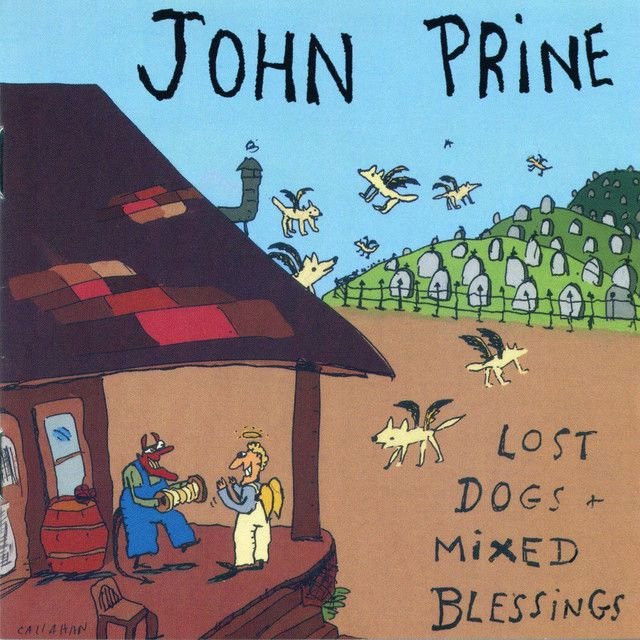
On Lost Dogs & Mixed Blessings (1995), producer Howie Epstein shapes a chugging, folk-rock groove. The verses are half-spoken, half-sung—Prine the front-porch narrator—while the band swells on the refrain. Guitars ring and the backbeat stays steady, projecting warmth even as the lyric turns cold.
That contrast is the trick. When the narrator tightens, the rhythm seems to grin, making the darkness feel even darker. The “whoa-wah” vocables function like a bonfire chant—ritual sound to keep the night at bay.
Other Ways to Hear It
- Interpretation: An American myth in miniature. The opening legend, the backyard romance, and the TV crime form one folklore—how communities turn private joy and public fear into a single place-name.
- Interpretation: A memory collage. The narrator isn’t moving linearly; they’re sorting snapshots by emotion. The lake is the folder that holds them all.
- Interpretation: Media critique. By describing the footage as “shadows,” the song hints at how sanitized images can distance people from real pain—even the narrator’s own.
The Meaning of Lake Marie John Prine, Explained
At heart, “Lake Marie” is about the fragile peace we build beside darker currents. They stand by the water to bless a love, then watch that love and a town’s safety shatter. Still, the chorus insists on the calm image because humans need one clear picture that says: this place mattered; we were here.
Takeaway
Prine fuses humor, horror, and tenderness without picking a side. That’s why “Lake Marie” lingers: it’s the sound of someone holding two truths—beauty and dread—and refusing to drop either.
Disclaimer: Song interpretations are subjective. This article offers one informed reading based on lyrics, context, and production.








