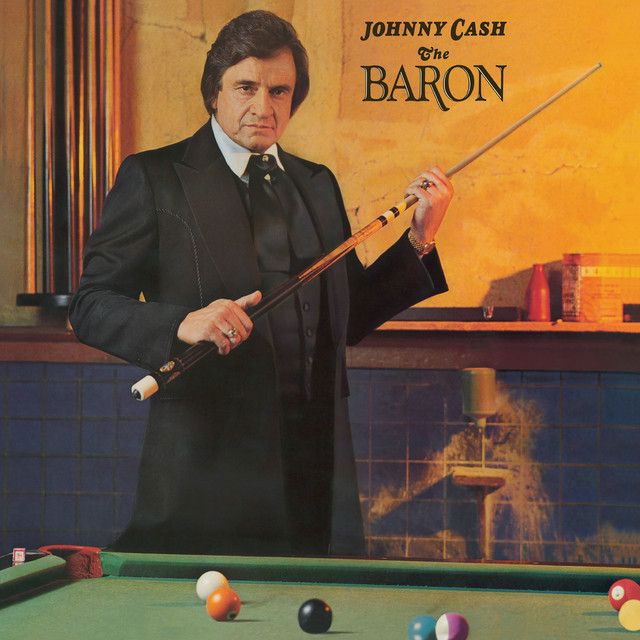
The Baron by Johnny Cash
A Pool Game That Turns Into a Family Reckoning
The meaning of The Baron Johnny Cash starts with a simple setup: a pool-hall contest between an older master and a younger challenger. But the song does not stay a sports story for long. It becomes a drama about missed years, hidden family ties, and a man who chooses grace over victory.
"The Baron" - Johnny Cash
When you were a little younger
Around me you might have learned
Loading lyrics...
Unable to load lyrics
We're unable to display the lyrics at this time. Please try again later.
Johnny Cash released “The Baron” in 1981 as the title track of The Baron album. It became the record’s biggest country hit, reaching the Top 10. That matters because the song shows one of Cash’s long-running strengths: turning a tight narrative into a moral tale without making it feel like a sermon.
Watch the official The Baron
music video
The Plot Beneath the Felt Table
At first, the scene is all style and tension. The Baron enters the room looking wealthy and controlled, while Billy Joe looks nervous and hot-headed. The contrast is important. One man has polish, routine, and status. The other has pride, anger, and something to prove.
The song frames the Baron as almost legendary. His hands are calm, and he plays like a veteran commander. Each time he sinks a key shot, he repeats the cutting refrain about how Billy Joe might shoot straighter
if he had learned from him earlier. On the surface, it sounds like trash talk. Underneath, it sounds oddly personal.
That refrain is the song’s first clue. It is too intimate for a normal hustle. The older man is not just mocking the younger one. He is speaking as if he feels he should have helped shape him.
Why the Chorus Hurts More Than It Boasts
The hook is the emotional center of the song. The Baron says he wishes he had known Billy Joe when you were a little younger
and that he might have taught him a thing or two
. Before the twist, listeners may hear that as arrogance.
After the twist, the line changes meaning. It becomes a father’s regret. He is not only saying the younger man lacks skill. He is grieving the years he missed.
If I had known you longer
You might be a little stronger
Those lines broaden the song beyond pool. Interpretation: “Stronger” does not just mean better at the table. It points to character, patience, and the steadiness that comes from having guidance. The song suggests that absence leaves a mark.
The Ring Changes Everything
The turning point arrives when Billy Joe, already losing, throws down his mother’s wedding ring for one last bet. This is more than desperation. It is a reckless act loaded with family history, even if Billy Joe does not fully understand it.
When the Baron sees the ring, the story opens up. He recognizes it as the ring his wife wore, and he realizes the truth: Billy Joe is his son. In one object, the song moves from competition to revelation.
This is why the ring works so well as a symbol. It represents marriage, memory, and a life interrupted. The Baron had left long ago without knowing a child was coming. The son grew up without his father. The ring physically rolls back into his life and forces him to face what he lost.
Mercy Wins the Game
The final moments matter more than the contest itself. The Baron lines up the last shot, but he does not finish. Instead, he picks up the eight ball, returns the ring, and gives Billy Joe his fancy cue.
That choice is the song’s real ending. He gives up the chance to prove he is still the best. In exchange, he accepts a different role: father instead of champion. The game remains unfinished because winning no longer matters.
Interpretation: The unfinished eight ball symbolizes a broken past that cannot be neatly resolved. There is no perfect ending, no easy repair. But there is a first step toward healing. By laying down his pride, the Baron does the one thing he failed to do years earlier: he acts like a parent.
How Johnny Cash’s Style Deepens the Meaning
Cash was uniquely suited to this material. They built a career on story songs, moral crossroads, and characters carrying guilt. Even outside his biggest hits, Cash often sang with the authority of someone who had seen hard consequences and second chances. That public image helps “The Baron” land with extra weight. Readers of Cash’s career know he was famous for storytelling across country, folk, gospel, and spoken recitation, as outlined in his career overview.
Production also shapes the song’s meaning. Billy Sherrill co-produced the track, and his countrypolitan style adds polish: strings, dramatic pacing, and a smoother Nashville finish than Cash’s rougher early work. Some critics thought that style was too glossy for him, but here it fits the tale. The elegant arrangement mirrors the Baron himself: formal, controlled, maybe even emotionally armored.
When the revelation comes, that smooth surface cracks. Cash’s deep voice carries the shift from swagger to pain without overacting. The performance makes the story believable.
What the Song Is Really Saying
At its core, the meaning of The Baron Johnny Cash is about the cost of absence and the possibility of mercy. It says skill, money, and reputation are small next to lost family time. It also says redemption may not come through grand speeches. Sometimes it comes through surrender.
There is also a strong theme of inheritance. Billy Joe has the Baron’s competitive fire but not his discipline. By tossing him the cue, the Baron passes down more than an object. He offers identity, recognition, and perhaps a late start at belonging.
Final Take on Cash’s Hidden Tearjerker
“The Baron” works because it hides a family tragedy inside a pool-hall showdown. What begins as bravado ends as confession. What sounds like ridicule turns out to be sorrow.
That is why the song still sticks. It gives listeners a twist, but it also gives them an emotional truth: people cannot recover lost years, yet they can choose what they do with the next moment.
Interpretation disclaimer: Song meanings can vary by listener. This reading is based on the lyrics, the song’s narrative details, and documented context around Johnny Cash’s 1981 recording.








