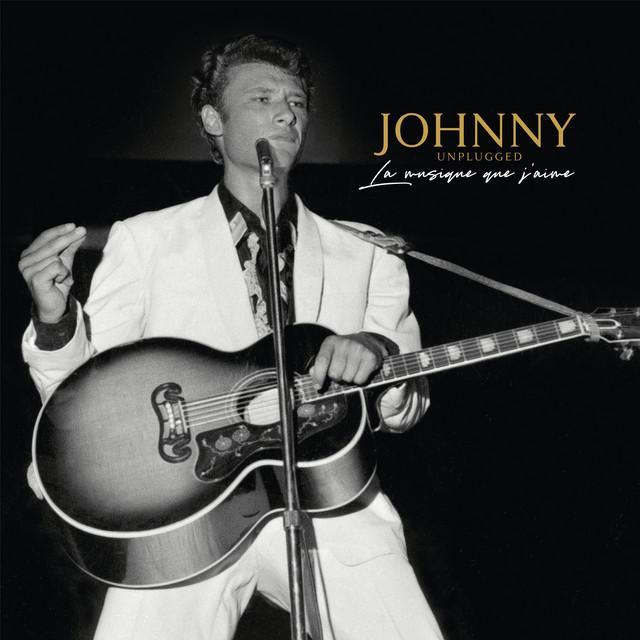
Why 'J'ai oublié de vivre' Still Hits Hard
The meaning of J'ai oublié de vivre Johnny Hallyday comes down to one painful idea: success can become a trap. The song sounds like a confession from someone who gave their body, voice, and identity to the public until they woke up and saw what was missing.
"J'ai oublié de vivre" - Johnny Hallyday
Sur des scènes violentes, sous des lumières bizarres
À force de forcer ma force à cet effort
Loading lyrics...
Unable to load lyrics
We're unable to display the lyrics at this time. Please try again later.
Released on C'est la vie in 1977 and issued as a single in 1978, the track became one of Johnny Hallyday’s biggest French hits of the era, selling more than 500,000 copies in France and reaching No. 2 there, according to available chart and discography summaries in the song’s reference history. It was written by Pierre Billon and Jacques Revaux, with Revaux also credited for the music and production.[1]
A Confession Hidden Inside a Pop Ballad
At the center of the song is a speaker who measures life by damage done in public. They talk about smashed guitars, harsh lights, sweat, speed, and noise. All of that builds toward the simple refrain J'ai oublié de vivre
.
In English, that means they “forgot how to live.” The line is not really about memory. It is about losing touch with ordinary human life while chasing performance, image, and survival.
Interpretation: The song frames fame as a machine. The singer is not only busy; they are being consumed. Every verse lists another cost of the job, and the chorus finally names the result.
Watch the official J'ai oublié de vivre
music video
How the Verses Build the Song’s Theme
The lyric works through repetition. Several lines begin with the same idea: doing something “so much” or “to such an extent” that damage becomes normal. That structure matters because it turns burnout into a process, not a single breakdown.
Early images like briser... des guitares
and lumières bizarres
place the listener on a loud, unreal stage. Then the song gets more physical. Sweat burns the eyes, the body is forced to keep going, and the heart is thrown into a microphone. Even that image suggests emotional labor becoming entertainment.
One of the sharpest metaphors compares stage lighting to a burden carried behind the back, almost like punishment. The public sees glamour; the singer feels weight.
Portant les projecteurs
Comme une croix dans le dos
That brief image says a lot. The spotlight brings fame, but it also becomes something heavy, painful, and impossible to set down.
The Chorus Turns Achievement Into Loss
Many songs celebrate the road, the crowd, and the thrill of performance. This one reverses that story. The chorus does not say the singer failed in public. It says public success may have erased private life.
That is why the hook lands so hard. It is not dramatic in a complicated way. It is direct. By repeating J'ai oublié de vivre
, the song makes emptiness sound inescapable.
Interpretation: The chorus can be heard as regret, but also as self-accusation. The singer is not only tired of fame; they are disturbed by what they accepted in order to keep it.
Fame, Identity, and the Masks of Performance
Another key part of the meaning of J'ai oublié de vivre Johnny Hallyday is identity. The lyrics move through roles and labels rather than a stable self. The speaker becomes godlike, rebellious, romantic, guilty, even monstrous depending on what the world wants to see.
Phrases like être un Dieu
and the contrast between love in one hand and hate in the other show a divided self. The performer is both adored and attacked. They are expected to embody contradictions all at once.
Later, the song suggests society itself keeps pulling the artist back to work. That detail makes the story bigger than personal weakness. It hints at celebrity as a system where audiences, media, and business all demand more.
Why Johnny Hallyday Was the Right Voice
The song is often read as autobiographical because Hallyday’s public image matched its themes: giant concerts, physical intensity, and a career built on spectacle. That context helps explain why listeners connected the song so strongly to him.
But the full story is slightly more complicated. According to the song’s documented history, Hallyday rarely kept it in his live set for long. He even said in an interview that although it was a beautiful song on record, it bored him onstage and felt somewhat too soft there.[1]
That is revealing. It suggests the song worked best as reflection, not pure performance. On record, its sadness could breathe.
Philippe Labro also reportedly remarked that the song was not the complete truth, because Hallyday had given a lot to his public without literally forgetting to live.[1] That comment matters too. It reminds listeners to separate a song persona from a full biography.
How the Sound Supports the Lyrics
Musically, this is a polished pop chanson rather than a raw rock explosion. That choice is important. The arrangement does not simply imitate chaos; it reflects on it.
The melody is broad and emotional, giving Hallyday space to sound worn, proud, and wounded at once. The production carries a grand, dramatic feel, but not a reckless one. Instead of glorifying destruction, the music underlines the sadness after the adrenaline fades.
Interpretation: That contrast between a smooth pop setting and harsh imagery may be the song’s secret strength. The stage life looks huge from the outside, but inside it leaves a quiet ache.
Why the Song Still Connects
Even for American listeners who do not know every detail of Hallyday’s career, the song’s message travels easily. It is about overwork, public pressure, and becoming so busy performing a version of oneself that real life slips away.
That is why the meaning of J'ai oublié de vivre Johnny Hallyday still feels current. It speaks not only to stars, but to anyone who has chased success until it stopped feeling like living.
Final Take
The song turns celebrity into a warning. Its speaker has applause, motion, and myth, but they realize too late that those things are not the same as a life.
This article offers an interpretation based on the lyrics, recording context, and documented commentary; like all song meaning pieces, some readings remain open to debate.
[1] https://fr.wikipedia.org/wiki/J%27ai_oubli%C3%A9_de_vivre








