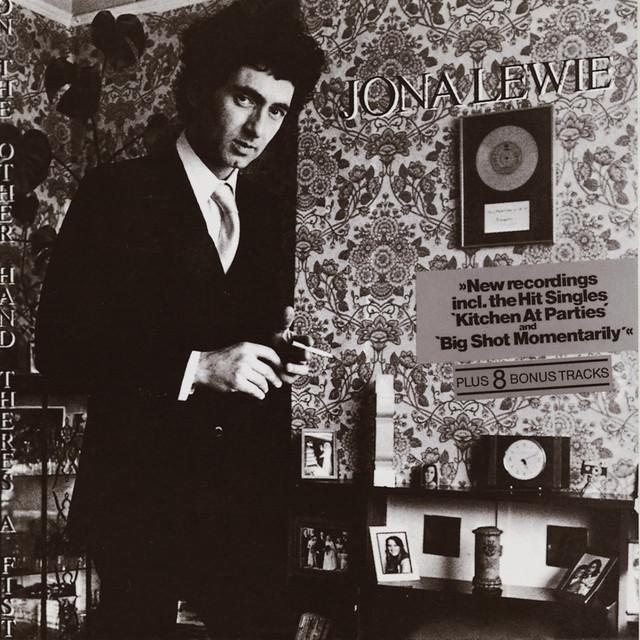
Why Jona Lewie Hid in the Kitchen
The meaning of You'll Always Find Me In The Kitchen At Parties Jona Lewie starts with a funny image and ends somewhere more human. On the surface, the 1980 hit is about a man who avoids the main room at a party. But under the joke, it is really about awkwardness, class nerves, loneliness, and the small spaces people choose when they do not feel they belong.
"You'll Always Find Me In The Kitchen At Parties" - Jona Lewie
Enough to drive a man to drink, I don't do no washing up
I always reached the stuff piled up, piled up in the sink
Loading lyrics...
Unable to load lyrics
We're unable to display the lyrics at this time. Please try again later.
Jona Lewie released the song in 1980 on Stiff Records. It was written by Lewie and Keith Trussell, reached No. 16 in the UK, and later returned to the charts after an IKEA ad in 2010, according to the song’s chart history and release notes on Wikipedia. Those facts matter because the song has lasted far beyond its first joke. People keep coming back to it because the feeling is timeless.
A Comedy Song With a Nervous Center
At first listen, the hook sounds like a punchline: kitchen at parties
. The song paints a person who is bad at small talk, unlucky in romance, and more comfortable beside the sink than the dance floor. That is the comic setup.
But the humor protects something tender. The narrator is not only being silly; they are also admitting social failure. Early lines describe getting brushed off in conversation and feeling defeated. In plain terms, the kitchen becomes a shelter. It is a place with a job to do, a reason to stand still, and fewer people to impress.
Interpretation: the kitchen is not just a room. It stands for the edge of social life, where shy or self-conscious people watch the party rather than join it.

Watch the official You'll Always Find Me In The Kitchen At Parties
music video
How the Story Moves From Isolation to Escape
The song works because it tells a quick story instead of staying with one gag. In order, it shows:
- A man who cannot charm anyone.
- A breakup that leaves him alone.
- A failed attempt to connect with a stylish woman.
- A final meeting that changes everything.
That shape gives the chorus emotional weight. When the song repeats always find him
, it sounds less like a boast than a label he cannot shake. He has become the person everybody recognizes but nobody fully sees.
Later, the song introduces a social mismatch. He meets a debutante and tries to impress her, but their tastes do not line up. Her polish makes his insecurity sharper. Even the reference to food and cultural taste suggests he feels out of his depth.
Then comes the turn. He meets someone who laughs with him, not at him, and they leave the kitchen to dance.
done my time
in the kitchen at parties
That brief ending changes the whole song. The kitchen was once a hiding place; now it feels like a sentence he has served.
The Chorus Is About Identity, Not Geography
The hook is catchy because it sounds specific, but its meaning is broad. Most listeners do not hear only a kitchen. They hear that one place where they go when they feel out of place: the hallway, the porch, the bathroom mirror, the phone screen.
That is why the song has lasted. The chorus turns embarrassment into identity. The phrase done my time
suggests he sees his awkward years as a phase, almost like emotional detention. Once he finds a real connection, the room loses its power.
Interpretation: the chorus says that loneliness can look permanent until one good moment breaks the pattern.
Sound, Style, and Why the Joke Lands
The production helps sell the meaning. Wikipedia notes that Lewie wrote the melody on a Polymoog in his home eight-track studio, and that the single was produced by Lewie and Bob Andrews. That synth-based setup gives the song a stiff, quirky, slightly artificial feel that fits its socially awkward subject.
The performance is tight and dry rather than grand. That matters. A huge emotional vocal would have pushed the song into self-pity. Instead, Lewie sounds controlled, observant, and faintly deadpan. The beat moves briskly, as if the narrator is trying to laugh off rejection before anyone notices it hurts.
There is also a contrast between the bright melody and the sad situation. That mismatch is central to many great pop songs. Here, it mirrors party behavior itself: people often look cheerful while feeling uncomfortable inside.
Artist Context Makes the Song Sharper
This song fits Jona Lewie’s wider style. They were known for witty, eccentric songwriting, including the later holiday hit Stop the Cavalry
. In that context, this track is not just novelty. It uses wit to talk about ordinary weakness.
A key factual detail from the research also deepens the reading: Lewie reportedly added a new storyline ending to Keith Trussell’s original lyric idea. That final escape from the kitchen is important because it stops the song from being cruel. Without it, the narrator would stay trapped in the joke.
The song’s 2010 revival through an IKEA kitchens campaign also makes sense. Advertisers used the title because it is instantly memorable, but the comeback also proved the image still connects across generations.
A Few Stronger Readings of the Lyrics
There are at least two useful ways to hear the song.
Reading One: Social Anxiety in Pop Form
This is the clearest reading. The narrator dreads conversation, fears rejection, and gravitates toward a safer room. The kitchen offers cover through practical tasks and physical distance.
Reading Two: Class and Cultural Insecurity
The references to a debutante, food knowledge, and trying to fit in suggest more than shyness. They hint at a person who feels less polished than the crowd around them. In this reading, the kitchen is also a class marker: the service area, not the glamorous center.
Both readings can be true at once. That layered feeling is part of what makes the song smart.
Why the Song Still Feels Familiar
The meaning of You'll Always Find Me In The Kitchen At Parties Jona Lewie is ultimately about people who survive social life through observation, humor, and luck. It captures the moment before belonging arrives.
That is why the song still lands in the United States as well as the UK. Even if the setting feels very British, the emotion is universal. Most people know what it means to stand near the snacks and hope somebody kind walks in.
Disclaimer: This interpretation separates documented facts from critical reading. Meanings in songs can vary from listener to listener, and some ideas above are informed interpretation rather than confirmed artist intent.







