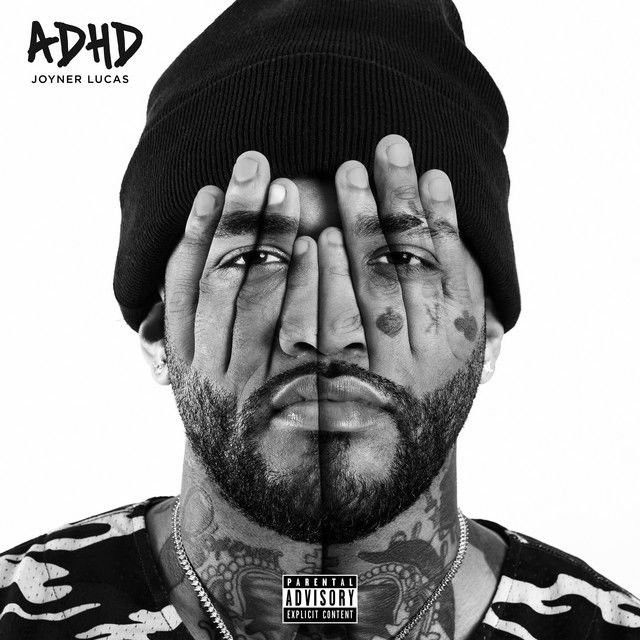
The Meaning of 'ADHD' by Joyner Lucas, Explained
If you’re searching for the meaning of ADHD Joyner Lucas, this track is a straight look at the push-pull between pain and purpose. Lucas puts a clinical label against lived reality, showing how a racing mind can feel like both a curse and a creative engine.
"ADHD" - Joyner Lucas
It kinda feels like, I been tryna get by
And I been this way since day one
Loading lyrics...
Unable to load lyrics
We're unable to display the lyrics at this time. Please try again later.
A confession that rejects the stigma
The song’s heart is a confession of overwhelm and isolation. When he repeats I'm dying inside
, he names the private exhaustion behind the public grind. Right after, he frames it as cause and context: It's my ADHD
.
Interpretation: Lucas isn’t asking for pity; he’s demanding understanding. He wants listeners to see how symptoms—impulsivity, racing thoughts, insomnia—shape his days. In interviews, he has credited his childhood diagnosis with inspiring the broader ADHD album concept and said music became his therapy and voice. That background helps explain why this single sits like a mission statement on the record.

Watch the official ADHD
music video
The narrator’s voice: open, raw, and self-protective
Lucas speaks in first person but guards himself with pride and precision. Lines like I don't need no medication
push back on being pathologized or sedated into silence. He’s not denying treatment exists; he’s rejecting being reduced to a prescription.
Interpretation: The defiance is armor. He’s worn out from being misunderstood, so he builds a stance that says, “I’m not broken—I’m different.” That stance lets him own the narrative while still showing vulnerability.
How the story moves: from panic to self-claim
Across the verses, they sketch a timeline many with ADHD will recognize:
- The churn:
My mind racin'
captures intrusive thought loops. - The social fog: feeling cut off, unheard, and late to sessions.
- The sleeplessness:
too many things on my head
explains why rest won’t come. - The shield:
You can't blame me
is not excuse-making; it’s context-setting.
Interpretation: The chorus resets the cycle—anxious buildup, brief clarity, then another wave. That loop mirrors how symptoms crest through a day. The repetition also makes the label “ADHD” feel like a drumbeat he can’t turn off.
The hook as diagnosis and shield
The hook works on two levels. First, it’s a cry: I'm dying inside
lands as a gut-check, building empathy. Second, the refrain It's my ADHD
is a shield against moral judgment. He refuses shame and insists on complexity.
Interpretation: The phrase functions like a truth he keeps coming back to—less an alibi than a map. It’s how he explains sudden mood swings, missed cues, and bursts of brilliance.
Sounds that mirror a racing brain
Produced by Highself, the track leans on a minor-key pad, tight 808s, and stuttering hi-hats. The mix leaves space around Lucas’s voice so each thought hits hard and fast, like a mind pinging from task to task. His flow toggles between clipped bursts and stretched melodies, imitating lapses of focus followed by hyperfocus.
Notice the chant-like ad-libs and layered vocals. They crowd the edges of the beat the way distractions crowd the edges of attention. The tempo isn’t breakneck; it’s midtempo but relentless, which keeps tension simmering without release. That choice underscores the lyric loop—there’s no big catharsis, only management.
Context that sharpens the message
Lucas has said his ADHD diagnosis as a kid shaped how teachers and even family treated him. That history fueled the album ADHD, released March 27, 2020, which became his first U.S. top-10 debut. The single “ADHD” arrived earlier, on September 12, 2019, setting the tone for the project. Knowing this, the song reads less like a one-off and more like a thesis chapter.
Interpretation: When he refuses medication in the lyric, he’s really refusing erasure. The bigger claim is agency—he decides how to cope, and he turns the restless buzz into art.
Other ways to hear it
- Interpretation: A mental health PSA. Heard this way, the track educates by translating symptoms into feeling. The hook’s plain language makes the inner weather legible to listeners who don’t share the diagnosis.
- Interpretation: A branding statement. In hip-hop, artists often turn perceived flaws into signatures. Lucas flips ADHD into a creative identity, aligning volatility with ambition and craft.
Both readings can be true at once, which is why the song resonates beyond the album cut.
Quick takeaway for listeners
The meaning of ADHD Joyner Lucas boils down to this: a restless mind can hurt and help at the same time. Lucas refuses to be flattened by a label, and he finds a way to make noise into music.
Note: This interpretation draws on public statements and the officially released track; individual meanings may vary.








