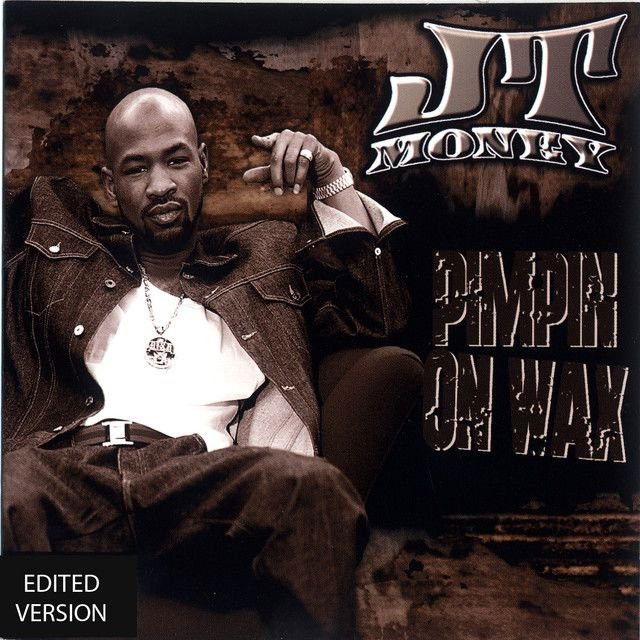
Who Dat by JT Money
The core meaning behind the challenge
The meaning of Who Dat JT Money centers on protection, status, and distrust. The song is built around a simple question: who is trying to enter the circle, and have they earned that right?
"Who Dat" - JT Money
Put em up! Put em up!
Yo yo.. JT Money!
Loading lyrics...
Unable to load lyrics
We're unable to display the lyrics at this time. Please try again later.
Rather than welcoming new faces, the track treats attention as suspicious. The repeated hook, tryin' to get up in my crew
, turns the whole song into a test of loyalty. JT Money and the other voices are not just asking who someone is. They are asking whether that person is authentic, useful, or dangerous.
That makes the song feel bigger than a single confrontation. It becomes a statement about survival in rap, in street culture, and in any scene where image can be faked.

Watch the official Who Dat
music video
A posse record about boundaries
At the verse level, the song keeps drawing a line between insiders and outsiders. JT Money presents the crew as a unit with rules, memory, and consequences. People who only copy the style or chase the shine are treated as weak links.
Short phrases like real niggas run the yard
and tell me who you wit
show that reputation matters more than talk. The point is not subtle: in this world, belonging is proven through action, not performance.
Interpretation: The song is less about one enemy and more about a whole type of person. That includes imitators, opportunists, clout chasers, and people who attach themselves to success after it is already visible.
Why the hook matters so much
The hook is catchy, but it also does the song's real work. By repeating Who 'dat?
over and over, the record creates a public interrogation. Every repeat sounds like pressure.
This call-and-response style gives the track a group energy, almost like a chant. That matters because who dat
has a long history in American vernacular and performance, with documented use going back to the 19th century and later becoming famous through Louisiana sports culture and crowd chants, as outlined by Wikipedia's overview.
Still, JT Money's song uses the phrase in a more local and competitive rap sense. Even though the words may remind some listeners of the New Orleans Saints chant, the available reference material suggests JT Money's 1999 single was likely not meant as a Saints song. Here, the phrase works as a challenge, not a cheer.
Who 'dat?
tryin' to get up in my crew
In that short refrain, the song captures its full idea: identity must be checked before trust is given.
Sole's verse sharpens the social angle
Sole's appearance changes the focus in a smart way. Instead of only talking about fake toughness, her verse targets false claims, rumor, and men trying to gain status through association with women.
When she pushes back against people pretending closeness, she exposes another kind of fraud. This is not just about who belongs to the crew. It is also about who lies to look important.
Her verse makes the song broader and more interesting. JT Money attacks impostors at the level of street credibility, while Sole attacks impostors at the level of gossip, sexual boasting, and image theft. Together, they show how identity can be exploited from more than one angle.
JT Money's veteran stance
Later, JT Money shifts from defense to authority. He describes himself as established, tested, and still active. Phrases like paid your dues
help frame the song as a veteran speaking to imitators.
That perspective fits JT Money's place in Southern rap. He was already known from Poison Clan before his late-1990s solo breakout, including work connected to the album Pimpin' on Wax. In that context, "Who Dat" sounds like an artist guarding hard-won position.
Interpretation: This section gives the song a second meaning. It is not only about street trust. It is also about rap industry survival. New artists, hangers-on, and rumor-driven personalities all become part of the same threat.
How the production carries the message
The production helps sell that paranoia and swagger. The beat is built to feel stripped down, repetitive, and forceful. That leaves room for the chant to dominate.
Instead of emotional melody, the track leans on rhythm, vocal repetition, and attitude. The repeated background responses create a crowd effect, making the listener feel surrounded by the crew's point of view.
That matters because the song's meaning depends on tension. A warmer beat might have made the track playful. This beat makes it feel watchful. The sound says that every approach from the outside has to be checked.
Final takeaway on the meaning of Who Dat JT Money
So, what is the meaning of Who Dat JT Money? At its heart, it is a warning record. It challenges anyone trying to gain access, borrow status, or fake connection.
The song's power comes from its simplicity. One repeated question becomes a full philosophy: protect the circle, doubt appearances, and respect earned credibility.
That is why the song still lands. Even with its late-1990s Southern rap setting, its message about gatekeeping, loyalty, and image remains easy to understand.
Disclaimer: This interpretation is based on the lyrics, performance, and available context. As with most rap songs, some lines can support more than one reading.








