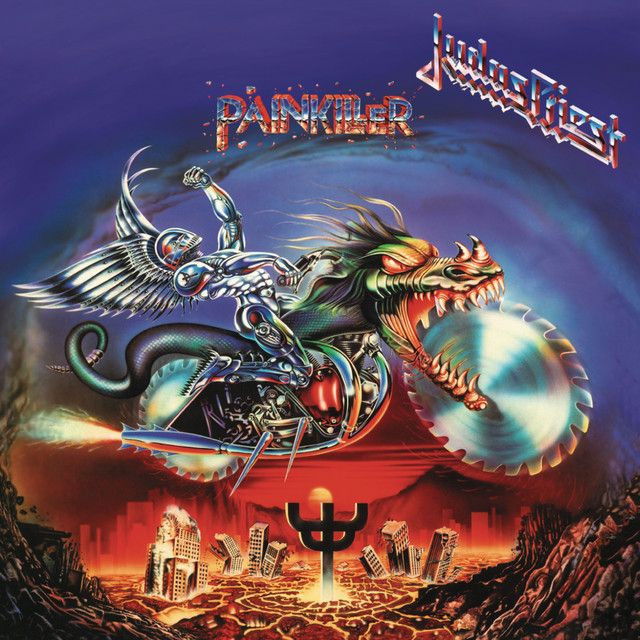
All Guns Blazing by Judas Priest
The meaning of All Guns Blazing Judas Priest starts with pure attack. This is not a story song in the usual sense. It feels more like a burst of force, speed, and aggression turned into music. Released on Judas Priest's 1990 album Painkiller, the track arrives in the middle of one of the band's heaviest eras.
"All Guns Blazing" - Judas Priest
Won't give no mercy
Feeling those tendons rip
Loading lyrics...
Unable to load lyrics
We're unable to display the lyrics at this time. Please try again later.
Rather than describe a realistic battle, they build a larger-than-life machine-beast of violence and survival. The song uses combat imagery, body imagery, and mythic language to create a mood of unstoppable power. Its main idea is simple: when pressure peaks, the answer is total intensity.
A Metal Assault, Not a Literal War Report
At the most basic level, the song is about overwhelming force. The repeated hook all guns blazing
does not have to mean actual weapons. In context, it works as a metaphor for going all out with no hesitation and no restraint.
The verses stack up images of tearing, crushing, and charging forward. Phrases like won't give no mercy
and bent on survival
suggest a world where softness is impossible. Everything in the song pushes toward action.
Interpretation: they are presenting a fantasy of extreme power under pressure. The enemy is less important than the feeling of being locked into a life-or-death struggle. That is why the lyrics sound more symbolic than specific.
Watch the official All Guns Blazing
music video
How the Lyrics Build the Song's Theme
The opening images are physical and brutal. The song talks about strain, ripped tendons, and a grip that tightens. That language makes aggression feel bodily, not abstract. Violence here is not distant. It is close, muscular, and immediate.
Then the song expands from the body to machines and monsters. Full throttle hammers down
turns the attack into a speeding engine. Forced into overdrive
adds the idea of being pushed past normal limits. The speaker is not calm or strategic. They are driven by rage and momentum.
Later, the imagery becomes almost supernatural. The song combines metal, weather, and divine language into one giant force:
Flame throwing hurricane
Destroys the cage
That short moment matters because it suggests release. Whatever was trapped is now breaking out. The song's violence is ugly, but it also feels liberating. The cage can be fear, weakness, control, or repression.
The Chorus Turns Violence Into Identity
The chorus is very short, but that is part of its power. By repeating all guns blazing
, the song moves from description to identity. This is no longer just what the figure does. It becomes what the figure is.
In heavy metal, repetition often works like a chant. It gives the crowd something physical to grab onto. Here, the refrain acts like a mission statement: maximum force, no retreat.
Interpretation: the chorus can also be heard as a statement about performance itself. Judas Priest were not only singing about power; they were demonstrating it. The hook sounds like a band announcing their return at full strength.
Sound and Production: Why the Music Feels So Dangerous
A big part of the meaning of All Guns Blazing Judas Priest comes from sound, not just words. Painkiller is famous for its speed, precision, and attack, especially with drummer Scott Travis pushing the band into a more intense style. Rob Halford discussed the album's ferocity in a brief Louder feature, and that context fits this track well.
The guitars slash instead of groove. The drums do not simply keep time; they sound like artillery. Halford's vocal is high, sharp, and near the edge of control, which makes the lyrics feel more urgent.
This matters because the song's theme is escalation. Every musical choice supports that idea. Fast tempo, dense riffing, and a screaming vocal line all say the same thing: the pressure is rising, and the response is to hit harder.
Artist Context Makes the Song Clearer
Judas Priest had already helped define heavy metal by the time Painkiller came out. But this album was a statement. It sharpened their sound and answered a changing metal scene with even more speed and force.
That context helps explain why this song is so extreme. It is not only about a fictional destroyer charging into battle. It also reflects a veteran band proving they could still sound fierce, modern, and huge.
The credited writers are Rob Halford, Glenn Tipton, and K.K. Downing. Their writing here favors impact over narrative detail. Instead of a plot, they give listeners a chain of explosive images. That approach makes the song memorable because it feels immediate.
Two Strong Ways to Read It
There are at least two useful readings of the song:
- Battle fantasy: a metal epic about a destructive warrior or machine charging forward.
- Psychological release: a portrait of rage unleashed when someone is pushed too far.
Both readings fit the text. The words are full of combat language, but they never lock into one clear setting. That ambiguity gives the song its power. Listeners can hear warfare, personal anger, or even artistic intensity.
Why It Still Connects
The reason the song still hits is simple: it is committed. There is no wink, no apology, and no soft landing. Judas Priest take the language of power to the extreme and let the music carry it the rest of the way.
For many listeners, that makes the song exciting rather than literal. It becomes a heavy metal version of catharsis, where fear turns into force and restraint turns into motion.
In the end, the meaning of All Guns Blazing Judas Priest is about total release under pressure. It imagines power as something explosive, dangerous, and almost mythic. Interpretation disclaimer: this reading is an informed interpretation based on the lyrics, the album context, and the song's performance style; listeners may reasonably hear it differently.







