Why "Electric Eye" Still Feels So Modern
The meaning of Electric Eye Judas Priest comes down to one chilling idea: someone is always watching. On the surface, the song is a fast, exciting heavy metal track from Screaming for Vengeance. Underneath, it is a warning about surveillance, power, and the loss of privacy.
"Electric Eye" - Judas Priest
I'm looking down on you
My lasers trace
Loading lyrics...
Unable to load lyrics
We're unable to display the lyrics at this time. Please try again later.
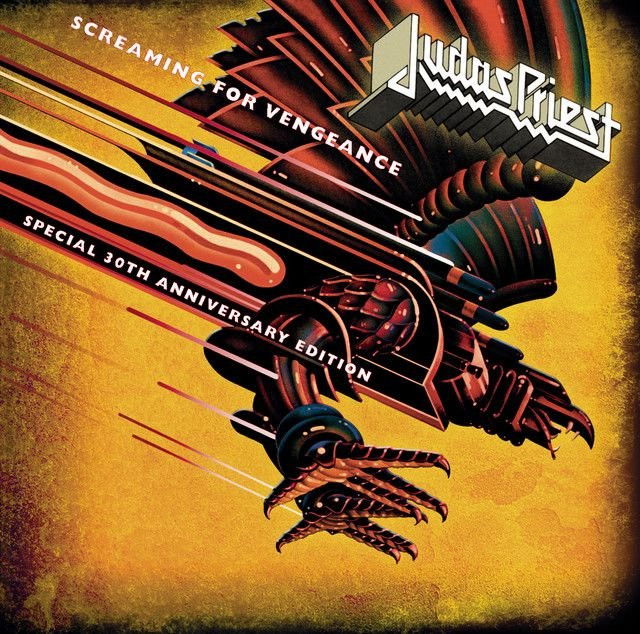
Judas Priest released the song on their 1982 album Screaming for Vengeance, with writing credited to Rob Halford, K. K. Downing, and Glenn Tipton, and production by Tom Allom. It has since become a live staple and is often used to open shows, a sign of how central it is to the band’s catalog.
A Metal Thriller About Watching Everyone
At its core, the song imagines a mechanical observer high above the world. The narrator is not a human being but a machine-like presence that sees everything and never rests. Early lines place that voice in space, looking down and tracking human behavior with cold precision.
That is why the song feels so unsettling. It is not just about one spy or one camera. It is about a system. When the narrator boasts I'm made of metal
, the lyric suggests a watcher without empathy, fatigue, or doubt. It is built to monitor, not to care.
Interpretation: The song turns surveillance into a character. Instead of talking about government control from the outside, Judas Priest lets the control system speak for itself. That choice makes the threat feel immediate.
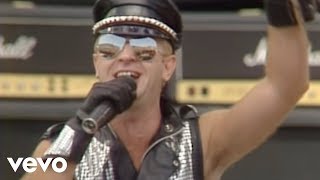
Watch the official Electric Eye
music video
The Narrator Sounds Proud, Not Guilty
One of the smartest parts of the lyric is the tone. The speaker does not apologize. It sounds proud of its job and treats intrusion as a public service. The claim that it will keep the country clean
gives the song a political edge, because it frames invasion of privacy as something righteous and necessary.
That detail is key to the meaning of Electric Eye Judas Priest. The song is not only saying that people are watched. It is saying that surveillance often justifies itself with safety, order, and patriotism.
This is also where critics have linked the theme to George Orwell’s Nineteen Eighty-Four, a connection noted in reference coverage of the song. The idea is similar: authority becomes strongest when it convinces people that constant observation is for their own good.
How the Chorus Turns Fear Into a Symbol
The chorus gives the watcher a name: electric eye
. That phrase is simple, catchy, and loaded with meaning. An eye usually suggests awareness or truth. Making it electric turns it into technology, machinery, and state power.
The line always in focus
deepens that image. The watcher never blurs, never looks away, and never misses evidence. In plain language, the song presents a world where privacy has been replaced by permanent recording.
Electric eye, in the sky
Feel my stare, always there
Those lines work because they are so direct. They sound like a taunt. The system is not hiding; it wants people to know escape is impossible.
The Lyrics Predict a Surveillance State
What makes the song feel ahead of its time is how clearly it imagines modern forms of monitoring. The narrator can zoom in, collect proof, and feed on private thoughts. Even in 1982, that sounded less like fantasy and more like a dark extension of real technology.
Today, the song hits even harder. Audiences live with cameras, satellites, data tracking, and digital records. So when the narrator insists there is no true escape
, the line feels less like science fiction and more like social commentary.
Interpretation: Judas Priest may be using exaggerated imagery, but the point lands because exaggeration reveals a real fear. The song asks what happens when observation becomes normal and power becomes invisible.
Why the Music Matches the Message
Musically, “Electric Eye” is as sharp as its subject. Reference sources identify it as a 1982 heavy metal track in E minor, and that darker key suits the lyric’s menace. The riffing is tight and aggressive, while the rhythm section keeps everything moving with machine-like force.
Halford’s vocal is crucial. They deliver the words with command rather than panic, which fits the perspective of an all-powerful watcher. Glenn Tipton’s lead guitar work also adds speed and precision, helping the song feel mechanical rather than loose or emotional.
The production by Tom Allom gives the track clarity and punch. Nothing feels soft. Everything is bright, metallic, and efficient, which mirrors the image of circuits, lenses, and relentless scanning.
Why Fans Still Return to It
“Electric Eye” has lasted because it works on two levels at once:
- It is a thrilling concert opener.
- It carries an idea that keeps growing more relevant.
AllMusic has called it a classic, and fans have long treated it as one of Judas Priest’s signature songs. That reception makes sense. Even listeners who do not study every lyric can feel the theme through the song’s pace, hook, and pressure.
Final Take on the Song’s Warning
The meaning of Electric Eye Judas Priest is not hard to hear once the song’s voice clicks into place. It is about surveillance presented as strength, protection, and order. Judas Priest packages that warning inside one of their most exciting performances, which is why the song remains both fun and disturbing.
In the end, “Electric Eye” is not just about a camera in the sky. It is about what people give up when power can watch everything.
Disclaimer: This interpretation mixes documented context with informed reading of the lyrics and sound. Songs can support more than one valid meaning.








