Grinder by Judas Priest
Why This Heavy Song Feels So Human
The meaning of Grinder Judas Priest starts with resistance. On the surface, the song sounds like a tough, swaggering heavy-metal statement from 1980. Under that surface, it is about a person who refuses to be processed, controlled, or made useful for somebody else’s machine.
"Grinder" - Judas Priest
I won't keep in time
Tend to burn the arrow out of the line
Loading lyrics...
Unable to load lyrics
We're unable to display the lyrics at this time. Please try again later.
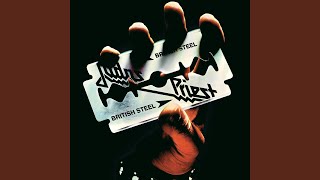
Judas Priest released “Grinder” on British Steel, the landmark 1980 album that helped make metal leaner, sharper, and more accessible. The song was written by Rob Halford, Glenn Tipton, and K.K. Downing. In context, it sits beside other British Steel songs that turn frustration into direct, chant-like power.
Watch the official Grinder
music video
The Core Meaning: Refusing to Be Used
At its heart, “Grinder” presents a speaker who rejects routine, obedience, and social traps. Early lines describe someone who is not straight and narrow
and prefers to wander away from accepted paths. That is not just about being rebellious for style points. It suggests a deeper need for freedom and self-definition.
The title image is the key symbol. A grinder is a machine that chews things up. In the song, that machine stands for systems that reduce people to raw material. Interpretation: this can mean government, work culture, social pressure, or any force that treats individuals as disposable.
The chorus sharpens that threat with looking for meat
and wants you to eat
. Paraphrased, the idea is that the machine is always hungry, and it wants people to accept their place inside it. The song’s tension comes from the speaker refusing that role.
How the Verses Build the Song’s Argument
The first verse sets up the outsider identity. They hear someone who does not move in step with others and does not trust the safe path. The mention of thunder and the wind “shouting back” makes freedom feel dangerous, but alive.
The second verse turns that attitude into plain refusal. The speaker has no use for routine and will not walk into a trap. When the lyric says got no use for routine
, it frames ordinary social order as deadening rather than comforting. This is one reason the song still connects: many listeners hear their own fight against dead-end work, social pressure, or stale expectations.
The third verse is even more direct. The line about having a birth license for self-reliance argues that independence is natural, not granted by authority. Then the song imagines a bullet with the speaker’s name on it. Paraphrased, the world has already prepared punishment for anyone who refuses the game.
I have my license
It came with birth
For self reliance
on this earth
This is the song’s clearest mission statement. The speaker does not ask permission to exist freely.
Social Commentary Beneath the Metal Surface
There is strong evidence that “Grinder” works as social commentary. According to Songfacts, Rob Halford explained the lyric as commentary on how governments and corporations can treat people like meat, grinding them up and spitting them out. That reading fits the album’s timing. As American Songwriter notes, British Steel emerged during industrial unrest in the U.K., when labor conflict and economic anxiety were part of daily life.
That context matters. British Steel is not a concept album, but it often sounds like one because so many songs deal with pressure, force, discipline, and revolt. “Grinder” turns those themes into one of the album’s most physical metaphors.
A Possible Personal Reading of the Lyrics
There is also a more private interpretation. Halford, who came out publicly in 1998, has been discussed by critics and fans as an artist whose early lyrics sometimes carried coded feelings about alienation, secrecy, and desire. Interpretation: in that light, “Grinder” can also reflect the experience of living outside accepted norms while trying to avoid getting trapped by them.
That does not reduce the song to one issue. Instead, it broadens it. The refusal to be caught
can speak both to political pressure and personal concealment. The power of the lyric is that it supports both readings at once.
Why the Sound Sells the Message
“Grinder” would not mean as much without its music. The riff is blunt and repetitive in a useful way: it feels like machinery, but machinery the band has seized and weaponized. The beat is steady and stomping, which helps the chorus land like a threat shouted across a factory floor.
K.K. Downing told Billboard that the British Steel approach used a straight 4/4 groove that helped shape 1980s metal. That simplicity is important here. Instead of clutter, Judas Priest chose impact. Halford’s vocal delivery is not pleading or reflective; it sounds commanding, almost like they are staring down the system that wants to consume them.
Why “Grinder” Still Connects
Part of the song’s staying power is how flexible its central image is. Listeners can hear it as:
- a protest against exploitation
- an anthem of individual freedom
- a portrait of working-class frustration
- a coded song about outsider identity
All of those readings fit the same core emotion: defiance. The final verse, with its image of the eagle needing room to breathe, makes the message plain. Human beings are not made for treadmills, cages, or grinding wheels.
The Takeaway on “Grinder”
The meaning of Grinder Judas Priest is the refusal to become fuel for somebody else’s system. Through its machine imagery, sharp chorus, and stripped-down metal attack, the song argues for self-reliance and resistance.
That is why “Grinder” still hits. It is not only about rebellion in a vague rock-and-roll sense. It is about the fear of being used up, and the fierce decision not to let that happen.
Disclaimer: This interpretation combines documented context with informed reading of the lyrics. As with most songs, some meanings remain open to the listener.








