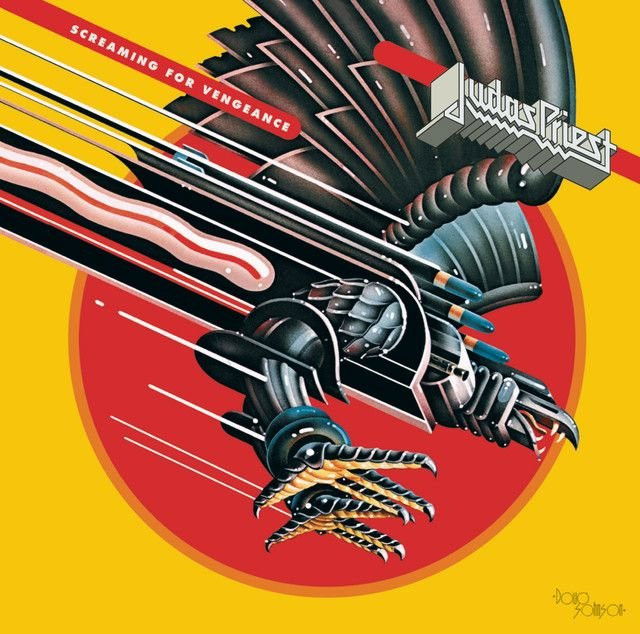
Riding on the Wind by Judas Priest
The meaning of Riding on the Wind Judas Priest starts with motion. This is a song about speed, force, and the thrill of feeling bigger than ordinary life. Judas Priest do not tell a detailed story here. Instead, they build a mood: a rush so intense that it feels cosmic, dangerous, and almost supernatural.
"Riding on the Wind" - Judas Priest
Cruise the speed of light
Glowin' God of Mars
Loading lyrics...
Unable to load lyrics
We're unable to display the lyrics at this time. Please try again later.
On the surface, the words describe flight and power. They reach for images of stars, light, thunder, and storms. Under that surface, the song captures a classic heavy metal idea: freedom through extreme energy. They turn movement into a kind of identity. The singer is not just going fast; they become the force itself.
What the Track Is Really Chasing
At its core, the song celebrates momentum. The opening image, Shooting for the stars
, immediately points upward. This is not about staying grounded or living carefully. It is about pushing beyond limits, whether those limits are physical, emotional, or social.
That is why the repeated hook matters so much. When they sing riding on the wind
, they are describing more than travel. Interpretation: the phrase suggests surrendering to raw power while also mastering it. Wind cannot be held, but they ride it anyway. That mix of control and chaos is central to the song’s appeal.
The verses keep raising the stakes. Images like speed of light
and a million miles an hour
make the song feel unreal on purpose. Judas Priest are not aiming for realism. They are turning velocity into fantasy, the way many great metal songs do.

Watch the official Riding on the Wind
music video
How the Lyrics Build a Metal Myth
Rather than moving from event to event, the song stacks images.
- First, they aim skyward and outward.
- Then they accelerate through life itself.
- Finally, they become a storming weapon in the sky.
This progression matters. The first verse feels like takeoff. The second feels like full-speed flight. The last verse turns that flight into destruction and spectacle. By the time the song reaches the line about a Thunderbolt from hell
, the character no longer seems human in any normal sense. They have become a symbol of violent energy.
That helps explain why the song has such a simple chorus. It acts like a mission statement. Every wild image in the verses feeds back into that one idea of riding an unstoppable current.
Well, I'm ridin', ridin' on the wind
Yes, I'm ridin', ridin' on the wind
Those two lines are plain, but that simplicity gives them weight. After all the cosmic and infernal imagery, the hook centers everything. It says the feeling itself is the point.
Freedom, Power, and a Hint of Danger
One reason the song still works is that it balances joy and threat. There is excitement in the language, but there is also violence. They describe blinding force, shattering noise, and demons screaming through clouds. This is not peaceful freedom. It is freedom with sharp edges.
Interpretation: that tension reflects a lot of Judas Priest’s style in the early 1980s. Their songs often turned power into theater. The goal was not to sound polite or safe. It was to make heavy metal feel larger than life, almost mythic.
In that sense, the song can be heard in two ways:
- as a literal fantasy of speed and aerial force
- as a metaphor for breaking out of ordinary limits
Both readings fit the text. The lyrics are broad enough to support either one.
Why the Sound Matters So Much
The meaning of Riding on the Wind Judas Priest is carried as much by sound as by words. The track appears on Screaming for Vengeance, the 1982 album that helped define Judas Priest’s sharpened, high-speed approach. The band is credited with writers Glenn Tipton, K.K. Downing, and Rob Halford, and the album was produced by Tom Allom.
Musically, the song surges forward with tight drumming, fast guitar work, and a bright, cutting metal tone. The riffs do not lumber; they race. That matters because the lyrics are all about propulsion. The band’s playing makes the listener feel the same rush the words describe.
Halford’s voice is also key. He does not sing these lines like private thoughts. He delivers them like commands or announcements from the sky. His high, piercing style gives the song its sense of altitude. The guitars and vocals work together to create the feeling of lift, speed, and attack.
The Judas Priest Context
By 1982, Judas Priest were moving from influential metal band to mainstream metal force. The album’s chart success helped expand their audience in the United States. Songs like this one show why: they were refining heavy metal into something sleek, aggressive, and instantly memorable.
“Riding on the Wind” is not their most emotionally complex song, and it does not need to be. Its strength is concentration. They strip the message down to a few huge sensations: movement, power, danger, release. That directness is part of the craft.
It also fits the band’s image. Judas Priest often used leather, chrome, motorcycles, and machines as visual shorthand for force and control. This song takes that same spirit and launches it into the sky.
Final Take on Its Meaning
So what is the song about? The simplest answer is that it is about ecstatic power. The singer feels unstoppable, almost transformed, by speed and motion. The imagery of stars, storms, and hellfire turns that feeling into heavy metal fantasy.
Interpretation: beneath the spectacle, the song suggests that freedom can feel overwhelming as well as thrilling. To ride the wind is to give oneself to a force that cannot be fully contained. That is why the song still lands: it turns pure adrenaline into a myth.
Disclaimer: This interpretation is based on the lyrics, recorded performance, and known album context. As with most songs, listeners may hear different meanings in the same images.







