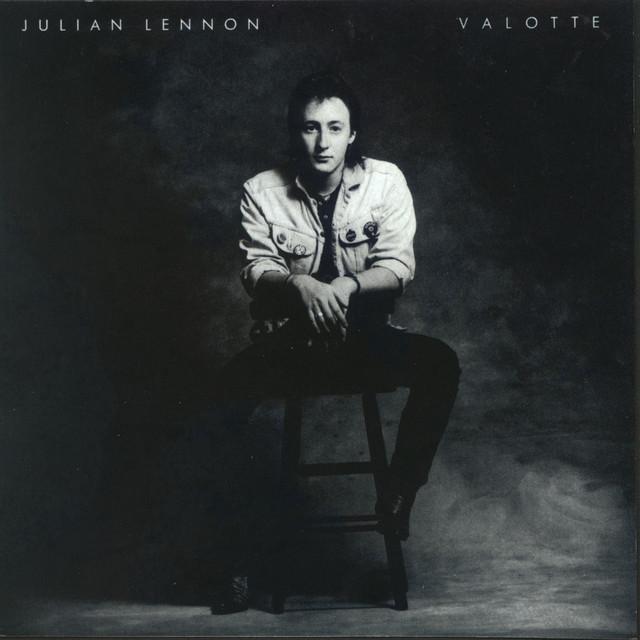
Valotte by Julian Lennon
For anyone searching the meaning of Valotte Julian Lennon, the heart of the song is fairly direct: it is about love that feels real, close, and worth fighting for, even when the relationship seems unstable.
"Valotte" - Julian Lennon
I can feel you there
Thinking of a reason, well, it's really not very hard
Loading lyrics...
Unable to load lyrics
We're unable to display the lyrics at this time. Please try again later.
Julian Lennon wrote the song with Justin Clayton and Carlton Morales, and it became the title track of his 1984 debut album, produced by Phil Ramone. Factually, the title comes from Manoir de Valotte in France, where Lennon spent time writing and demoing songs for the album, as noted by Wikipedia and Songfacts.
A Love Song Built on Near-Loss
At its core, "Valotte" is a relationship song about devotion under pressure. The narrator does not describe a perfect romance. Instead, they describe a bond that has already been tested.
Early in the song, the singer admits love remains strong even after the other person almost caused lasting hurt. That idea appears in the brief phrase nearly lost my heart
. In plain terms, the relationship has come close to breaking, but affection still survives.
That tension matters because the song keeps balancing two feelings:
- emotional closeness
- fear of drifting apart
- hope that love can still hold
When the narrator says the bond fits closer than a glove
, the song presents intimacy as something natural and tight. But it never stays in that comfort for long.

Watch the official Valotte
music video
The Places in the Song Are Emotional Maps
One of the most interesting parts of the meaning of Valotte Julian Lennon is how the song uses simple places to show changing emotional states.
The lyric begins on a doorstep, then moves to a river, then to a valley at sundown. These are not just scenic details. Interpretation: each setting reflects a stage in the relationship.
Doorstep, River, Sunset
The opening image, sitting on the doorstep
, suggests pause and hesitation. A doorstep is a threshold. They are not fully inside a secure life yet. That fits the line about a house they cannot afford, which adds the idea of wanting a future that still feels out of reach.
Later, the river scene introduces motion and doubt. In the phrase playing guitar
by the water, the narrator looks reflective rather than certain. They wonder whether the couple will really get that far
. The river becomes a symbol of time moving forward, with no guarantee the relationship will stay steady.
By the final valley scene, sunset adds both ending and hope. The day is fading, but the song does not collapse into despair. Instead, it looks for change and renewal.
When the change is gonna come
coming from the sun
This is the article's only multi-line lyric quote, and it captures the ending's emotional turn. The singer seems to believe healing may still arrive.
The Real Conflict Is Emotional Distance
Even though the song sounds warm, the lyric keeps returning to emotional separation. The narrator feels something is wrong before it is openly spoken. They sense trouble in advance, which gives the song a quiet ache.
There is also a striking line about not being as smart as people think they are. That moment gives the song humility. Rather than blaming only the other person, the narrator admits both people are flawed, confused, and trying to cope.
Another revealing detail is the image of solving problems at the bar. That suggests ordinary, human messiness. This is not a grand fantasy romance. It is a song about a couple trying to survive real life, with misunderstandings, habits, and emotional wear.
How Julian Lennon's Context Shapes the Song
"Valotte" was written during a writing period in France and recorded for Julian Lennon's debut album, Valotte, which was released on October 15, 1984. The album reached No. 17 on the Billboard 200, while the single "Valotte" hit No. 9 on the Billboard Hot 100, according to Wikipedia and the song page at Wikipedia.
That success mattered because early listeners constantly compared Julian to his father, John Lennon. Critics were divided, but many noticed the resemblance in vocal phrasing and melody. Still, Julian explained that the album's songs came from "experience or feelings or relationships" in real life, as summarized by Wikipedia.
That makes a difference in interpretation. "Valotte" is best understood not as imitation, but as a young songwriter using familiar classic-pop language to describe uncertainty in love.
Why the Music Feels So Gentle
Produced by Phil Ramone and recorded in part at Muscle Shoals Sound Studio, the track has a polished soft-rock sound that supports its meaning. The arrangement is smooth, melodic, and unhurried, which keeps the emotional conflict from turning harsh. Facts about the recording locations and production are documented by Wikipedia and Songfacts.
Songfacts also notes that the river image was inspired by the Tennessee River near Muscle Shoals. That real-world detail helps explain why the song feels so grounded. Its romance is dreamy, but its scenery comes from lived experience.
Interpretation: the calm production mirrors the narrator's attitude. They are worried, but they are not giving up. Even when the lyric admits drift and confusion, the music stays tender.
The Best Way to Read "Valotte"
The simplest reading is still the strongest one: this is a song about loving someone through uncertainty and trying to imagine a shared future before it disappears.
What makes the meaning of Valotte Julian Lennon last is that it avoids big drama. Instead, it uses small scenes, honest doubt, and gentle melody to show how love can feel strongest when it is most fragile.
That is why the song remains memorable. It is romantic, but not naive. It is hopeful, but it knows how close heartbreak can be.
Disclaimer: This interpretation is based on the released recording, documented background, and lyrical analysis. As with any song, some meanings remain open to listener interpretation.








