
Why KA$HDAMI Turns the Insult Around
The meaning of Look N The Mirror! KA$HDAMI comes through fast: this is a diss-heavy flex track about calling out fake toughness, fake status, and fake identity. KA$HDAMI builds the song around confrontation, but the deeper point is not just aggression. They are drawing a line between people who perform power and people who claim to actually have it.
"Look N The Mirror!" - KA$HDAMI
Bee, fah, fah
Your bitch see the racks and she do a handstand
Loading lyrics...
Unable to load lyrics
We're unable to display the lyrics at this time. Please try again later.
The title gives away the song’s key move. When someone throws an insult, KA$HDAMI flips it back with look in the mirror
. In plain terms, they are saying the critic is guilty of the very weakness they point out. That makes the track feel less like random trash talk and more like a statement about hypocrisy.
A Threat, a Flex, and a Test
At its core, the song is about status under pressure. KA$HDAMI stacks together money talk, street talk, and mockery to show that image matters—but only if it is real. They ridicule people who act dangerous, successful, or respected without actually living up to that image.
That is why the song keeps moving between luxury and menace. A phrase like you don't got no bands
is not just about cash. It becomes proof, in the song’s logic, that the other person lacks rank and influence. In the same way, threats in the verses are not framed as random violence; they are framed as consequences for pretending to be something you are not.
Interpretation: The song’s real target may be insecurity. KA$HDAMI sounds less interested in proving they are nice than in proving they cannot be doubted.
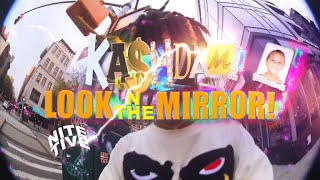
Watch the official Look N The Mirror!
music video
The Title Line Is the Whole Song in Miniature
The title phrase matters because it condenses the track’s worldview. KA$HDAMI describes rivals as dependent, weak, and dishonest, then answers their criticism with look in the mirror
. That comeback reframes everything before and after it.
Instead of defending against insults, they make the rival defend themself. The song says, in effect, that these enemies borrow credibility from friends, older figures, or group identity. That idea appears again when the lyrics suggest some people are only bold when backed by others.
Image Versus Reality
One of the strongest themes is the gap between appearance and truth. KA$HDAMI mocks people who seem active or dangerous but are, in their telling, restricted, sheltered, or unserious. The insult about needing to be home before dark is especially cutting because it reduces supposed street power to childish rules.
A short phrase like y'all tryna be somethin' you not
sums up that theme clearly. They are accusing others of costume behavior—wearing the signs of toughness without the substance.
How the Verses Build Their World
The song works in three main steps:
- It establishes wealth and movement as proof of success.
- It tears down rivals as fake, weak, or dependent.
- It turns criticism back on the critic.
That structure gives the track momentum. It starts with visual flexes, then moves into warnings, then lands on the mirror line as a final reversal. Even the repeated hook helps by making the insults feel less like passing thoughts and more like a repeated judgment.
There is also a strong sense of territory and ranking. When KA$HDAMI says what I say is law
, they are not making a legal claim. They are presenting themself as the one who sets the rules in their circle. Whether listeners take that literally or symbolically, the point is authority.
The Sound Makes the Message Colder
KA$HDAMI is part of a younger rap wave associated with internet-era rage and melodic trap textures, as noted in artist coverage by outlets like Pitchfork and The FADER. In a song like this, the production tag and sparse beat design matter because they create a hard, stripped backdrop for direct taunts.
The instrumental does not need to be busy. In fact, its emptiness helps. Heavy low end, sharp percussion, and space in the mix make each line hit more like a stare-down. The repeated opening ad-lib also works like a siren: it announces mood before the argument even starts.
Interpretation: The cold beat mirrors emotional distance. KA$HDAMI does not sound wounded by hate; they sound amused by it.
A Young Artist’s Persona at Full Volume
KA$HDAMI emerged as part of a teenage rap scene shaped by online virality, fast-moving aesthetics, and strong self-branding, documented by platforms such as Our Generation Music and Genius. That context helps explain why this song is so focused on identity.
For artists in that lane, reputation moves quickly. A track like this protects persona. It says they are no longer the same person from the past, and anyone still treating them like that is behind. The line about not being the same from the block is important because it mixes growth with threat: they have advanced, but they have not softened.
The Strongest Reading of the Song
The best way to understand the meaning of Look N The Mirror! KA$HDAMI is as a song about exposure. KA$HDAMI is trying to expose frauds, expose envy, and expose the gap between online bravado and real-world standing. Money, women, cars, and threats are all part of that performance, but the central idea is simpler: stop pretending.
That is why even a phrase like this shit is a warnin'
matters. It tells listeners the song wants to function as both entertainment and boundary-setting. It is a record meant to embarrass rivals before anything else.
Final Reflection
In the end, the song is less about conversation than correction. KA$HDAMI speaks as if they are grading everyone around them and finding most of them fake. The title line becomes the perfect summary because it turns judgment outward and inward at once.
That is the most useful takeaway: the track is built on reversal. Every challenge gets thrown back, every insult gets mirrored, and every claim of toughness is tested.
Disclaimer: This interpretation is based on the lyrics, performance, and available artist context. As with any song, meaning can vary from listener to listener.









