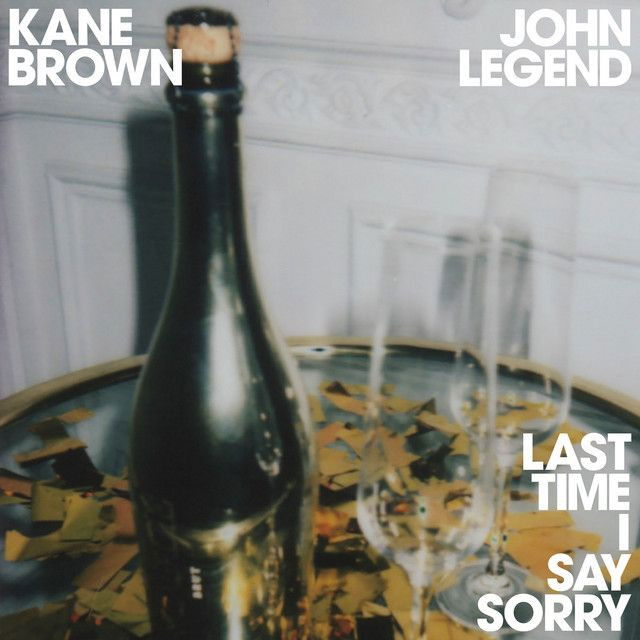
Last Time I Say Sorry by Kane Brown, John Legend
They take one of love’s hardest moments—messing up and asking forgiveness—and flip it into a promise to change. If you’re looking for the meaning of Last Time I Say Sorry Kane Brown, John Legend, think of it as a blueprint for accountability: words matter, but actions seal the deal.
"Last Time I Say Sorry" - Kane Brown, John Legend
Can't just say I'm sorry, I've gotta show you
I won't do it again, I'll prove my love is true
Loading lyrics...
Unable to load lyrics
We're unable to display the lyrics at this time. Please try again later.
A Promise Bigger Than an Apology
At its core, the song argues that real love shows up in behavior. The singers admit that saying sorry, again and again, can become cheap. They insist that change only counts when it can be seen. In other words, apologies are necessary, but they aren’t the finish line—they’re the starting gun.
They drive that point home with the chorus declaration:
I won't say I'm sorry over and over
Can't just say I'm sorry, I've gotta show you
That simple contrast—speak vs. show—frames the entire track.

Watch the official Last Time I Say Sorry
music video
Two Voices, One Confession
The duet format feels like a conversation between two men who’ve learned the same lesson. They share the mic, but they also share the blame. The perspective is first-person and intimate, as if they’re talking straight to their partners after a fight.
Moments like slept on the couch
signal a familiar domestic scene. They are not saints; they are spouses trying to do better. By singing together, they turn a private apology into a universal confession many couples recognize.
The Night It Went Wrong: A Simple Timeline
- A holiday argument gets out of hand, ending with
shattered champagne
and a night on the couch. The image blends celebration and regret. - An initial apology doesn’t land. The partner says no, not yet. Trust isn’t a switch.
- The singer chooses humility—he’ll
see it from your side
—and decides to change what he does next time. - The pledge becomes specific:
I’ve gotta show you
andI’m gonna do better
. Behavior is the proof.
Each beat moves from damage to repair, and from words to action.
Why the Chorus Hits Hard
The hook re-centers the question: What’s the value of an apology without different choices tomorrow? By aiming for the last time
they say sorry, the singers don’t promise perfection—they promise consistency. Interpretation: The chorus matters because it sets a measurable goal. It asks listeners to hold them to it.
Symbols You Can Feel
- The couch: a soft place that feels hard. It stands for distance and consequence.
Broken hearts and shattered champagne
: joy interrupted by reckless words. Glamour meets reality.- “Hang the stars, the sun and moon”: a tender fantasy of giving everything. It admits the wish to fix it all, then undercuts it with
I’ll never be perfect
. Interpretation: The contrast makes the vow more honest—no magic fix, only daily effort.
How the Sound Carries the Promise
This is a piano-led ballad with country-pop and R&B DNA. The arrangement leaves space for confession; you can hear the breath between lines. Kane Brown’s lower tone brings warmth and steadiness, while John Legend’s tenor and tasteful runs add lift and ache. Their stacked harmonies feel like agreement: two people co-signing the same promise.
The release arrived in 2020, and they first performed it from their homes during a televised special when touring paused. The black-and-white, at-home visuals matched the song’s honesty. Stripped staging, no spectacle—just two voices and a piano underlining a simple idea: show up better.
What the Writers Are Owning
Written by Andrew Goldstein, John Legend, Kane Brown, and Matthew McGinn, the lyrics aim for plain speech. That’s part of the effect. Instead of clever metaphors, they use recognizable moments—like the New Year’s blow-up—to build trust with the listener. Interpretation: The writing avoids drama for drama’s sake; it chooses clarity so the promise feels real.
Alternate Readings Worth Considering
- Relationship repair: Most directly, it’s a man vowing to rebuild trust after hurting his partner. The domestic images support this.
- Self-discipline mantra: Interpretation: Swap the partner for your future self. The refrain becomes a personal contract—no more repeating the same mistake and excusing it with a quick apology.
Both readings share the same moral center: apology without change is just repetition.
Takeaway They’ll Stand By
The song lands on a believable middle ground. They won’t be flawless, but they’ll be accountable. That’s why the closing mood is hopeful, not sugary. The promise is simple, and it’s hard—do better next time and every time after.
Disclaimer: Song meanings are subjective. This piece blends reported facts with critical interpretation.









