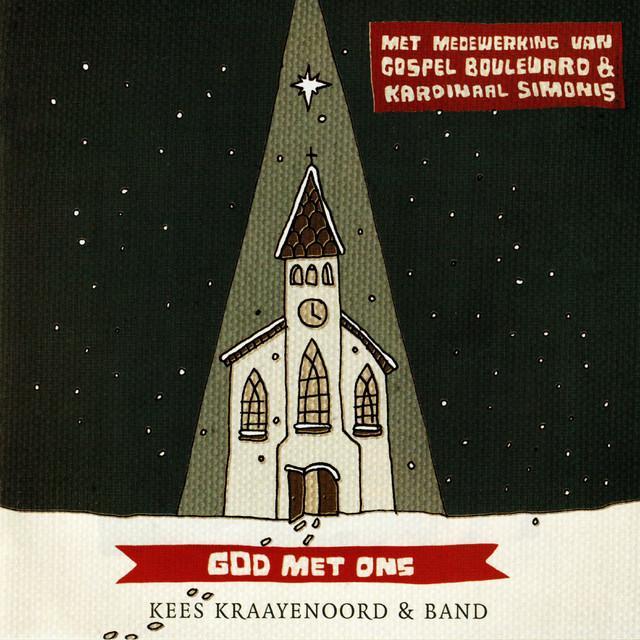
Why 'Ere zij God' Still Resonates Through Kees Kraayenoord
The meaning of Ere zij God Kees Kraayenoord begins with something very simple: praise that turns outward. This is not a story song with characters, conflict, and a twist. It is a short worship text that points attention away from the singer and toward God, peace, and goodwill among people.
"Ere zij God" - Kees Kraayenoord
In de hoge
Vrede op aarde
Loading lyrics...
Unable to load lyrics
We're unable to display the lyrics at this time. Please try again later.
In English, the title is often understood as “Glory be to God.” That helps explain why the song feels so direct. Rather than describing faith from a distance, it speaks in the language of worship itself. Kees Kraayenoord, a Dutch worship leader known for congregational music through ministries such as Mozaiek, performs it in a way that keeps that purpose intact: communal, reverent, and accessible.
A Short Hymn With a Big Message
At its core, the song restates the Christmas message from the Gospel tradition: glory above, peace below, and divine favor toward humanity. The repeated opening, Ere zij God
, acts like a call to lift the eyes upward. Then the line Vrede op aarde
brings the focus back down to earth.
That movement matters. The song connects heaven and human life in just a few phrases. It says worship is not only about honoring God in the abstract. It is also tied to a hope for peace among people here and now.
In de hoge
Vrede op aarde
In de mensen
Those short lines summarize the full arc: God above, peace on earth, people held within that blessing.
Where the Words Come From
Factually, this song draws on a well-known Dutch Christmas carol tradition, with credits often given to Traditional, Jacobus van Raaijen, and Joop Baggen. Its wording echoes Luke 2:14, the angelic announcement surrounding the birth of Jesus. That biblical backdrop is essential to the song’s meaning.
For U.S. listeners, the nearest comparison may be a hymn or liturgical chorus rather than a modern pop single. The text is compact because it is built to be repeated by a group. That is why the song can feel powerful even though it says very little in literal terms. Its strength comes from shared recognition, not narrative detail.
How Kees Kraayenoord Shapes the Meaning
Kees Kraayenoord has built a reputation around worship music that invites participation rather than spotlighting technical flash. On his official site, that mission is clear in how his work is framed: songs meant for churches and collective singing.
That context changes how they hear this piece. In their performance, the song is less a private meditation than a public act of praise. The repetition is not filler. It creates a space where a congregation can join in, reflect, and internalize the message.
Production and instrumentation
Even when arrangements vary, songs like this usually lean on familiar worship textures: piano or keys, sustained chords, acoustic support, and steady vocals. That musical setting reinforces the lyric’s purpose. Nothing in the structure fights for attention because the words themselves are already functioning like a refrain or benediction.
Interpretation: This restraint is part of the meaning. A more dramatic arrangement could turn the song into spectacle. A simpler one lets the message land as worship.
The Main Themes in Plain Language
The meaning of Ere zij God Kees Kraayenoord can be broken into three central themes:
- Praise — The song begins with honor directed toward God.
- Peace — It immediately links worship to the longing for a healed world.
- Goodwill — It frames humanity as the object of divine care, not divine rejection.
That last point is important. The phrase welbehagen
is old-fashioned Dutch, but the idea points to favor, delight, or goodwill. The song does not dwell on fear. It emphasizes blessing.
Why Repetition Matters Here
Many listeners who do not speak Dutch still respond to the song because its emotional logic is easy to grasp. It keeps circling the same ideas until they begin to feel less like information and more like proclamation.
The repeated Amen
at the end matters for the same reason. It closes the song not with explanation, but with agreement. In worship language, “amen” means more than “the song is over.” It means the singers are affirming what has just been declared.
Interpretation: That gives the piece a ritual quality. They are not only singing about peace; they are joining themselves to a hope for it.
A Christmas Song, but Not Only a Christmas Song
Because the lyric comes from the nativity story, many people hear it mainly in December. That is fair, and historically accurate. Still, its message reaches beyond Christmas.
Praise, peace, and goodwill are not seasonal ideas. In Kraayenoord’s worship setting, the song can function as a year-round reminder that faith should move in two directions at once: upward in adoration and outward in compassion.
That double movement is why the song endures. It is devotional without becoming private. It is celebratory without becoming shallow.
Final Take on Its Enduring Power
So what is the meaning of Ere zij God Kees Kraayenoord? In the clearest terms, it is a song of worship that ties the glory of God to the hope of peace among people. Its few words carry weight because they come from sacred tradition, communal memory, and a melody designed to be shared.
Kees Kraayenoord’s role is not to reinvent that message, but to deliver it in a form listeners can enter together. That is why the song continues to resonate: it says little, but what it says is foundational.
Disclaimer: This interpretation is based on the lyrics, known Christian and Christmas context, and Kees Kraayenoord’s worship background. As with any song, listeners may hear personal meanings beyond this reading.








