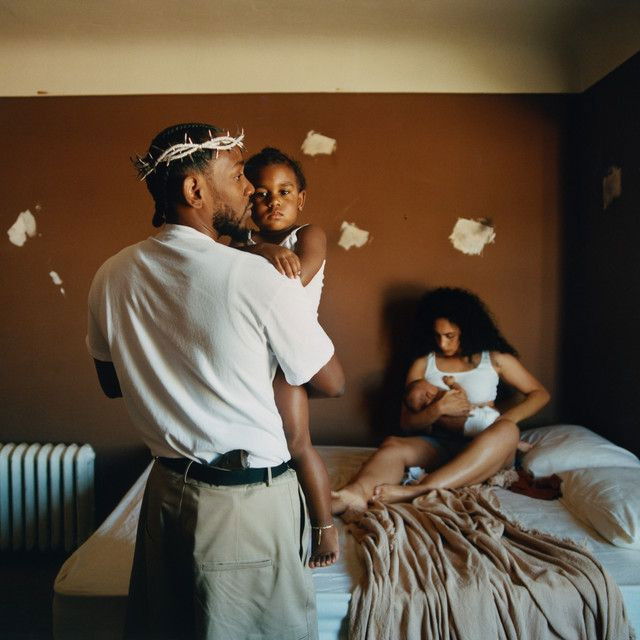
The Heart Part 5 by Kendrick Lamar
Why This Song Feels Bigger Than a Single
The meaning of The Heart Part 5 Kendrick Lamar starts with perspective. The song opens like a statement of purpose: age brings a wider view, and no one person sees life the same way. From there, Kendrick Lamar builds a track about pain, survival, guilt, and empathy.
"The Heart Part 5" - Kendrick Lamar
And my perspective may differ from yours
I wanna say thank you to everyone that's been down with me
Loading lyrics...
Unable to load lyrics
We're unable to display the lyrics at this time. Please try again later.
Released in May 2022 ahead of Mr. Morale & the Big Steppers, the song arrived with a striking video directed by Kendrick and Dave Free, featuring deepfake transformations into public figures including O.J. Simpson, Kanye West, Jussie Smollett, Will Smith, Kobe Bryant, and Nipsey Hussle, as reported by Complex and NPR. That visual choice matters because the song is already about seeing through other people’s eyes.

Watch the official The Heart Part 5
music video
The Core Meaning: Pain Is Inherited, But So Is Grace
At its core, the song argues that violence in America, especially in Black communities, cannot be reduced to simple moral failure. Kendrick describes a world shaped by trauma, poverty, prison, and revenge. He keeps returning to the culture
, but not as a celebration. He uses the phrase like a challenge.
In the first half, they present a cycle where pain becomes normal. Murders, jail, betrayal, and mourning all blur together. When Kendrick says people are trained to accept what follows violence, he suggests numbness has become a survival skill.
Interpretation: The song is not attacking Black culture itself. It is criticizing the way people excuse harm by hiding behind the word culture. That is why one of the sharpest moments is hurt people hurt more people
. In plain terms, the track says trauma can spread unless someone breaks the pattern.
A Song in Two Voices
One reason the song feels so powerful is its structure. The first sections sound like Kendrick speaking as himself: a witness, survivor, and public figure trying to represent where he came from. He wants the neighborhood to see what he has done, which comes through in the hook’s plea: I want the hood
to want him back.
That refrain is vulnerable. Beneath the confidence, there is a fear that success creates distance. He has made it out, but he is still asking for belonging.
Then the song shifts. After the beat strips back, the final verse is voiced from Nipsey Hussle’s perspective. Kendrick imagines Nipsey speaking from beyond death to his family, fans, and even his killer. This is the emotional center of the song.
I forgive you
your soul's in question
Those lines are brief, but their meaning is huge. Kendrick imagines forgiveness without pretending the crime was small. The verse holds grief and judgment at the same time.
How the Verses Build the Theme
The first verse: survival without romance
The opening verse is packed with street detail. Kendrick mentions small causes leading to deadly outcomes, damaged families, and prison routines. These are not there for shock. They show how random and repetitive violence can feel.
By repeating the culture
, he exposes a hard truth: language can hide responsibility. If every tragedy is explained away as just how things are, then nothing changes.
The second verse: fame cannot solve the wound
In the next section, Kendrick contrasts his success with the problems back home. He can be far away physically, yet still be emotionally pulled into fresh losses. That split matters. Wealth, status, and travel do not erase the grief of community trauma.
Interpretation: This verse also shows Kendrick wrestling with his role. Is he a spokesperson, a critic, or still one of the people living the story? The song never gives a simple answer.
The final verse: empathy as moral risk
The Nipsey verse changes the whole record. Instead of ending in anger, Kendrick imagines a dead man offering guidance, blessing, and a form of mercy. This does not erase accountability. It does suggest that healing may require a deeper compassion than revenge allows.
How the Music Carries the Message
The production leans on Marvin Gaye’s “I Want You,” a classic soul track built around longing and tenderness, with songwriting roots credited to Leon Ware and Arthur Ross. That sample source has been widely noted by outlets like Rolling Stone. The warm bass, soft keys, and floating vocal textures create an uneasy contrast with the lyrics.
That contrast is the point. The beat feels intimate and beautiful while the verses describe damage. The result is not confusion but depth: even in brutal circumstances, there is still love, memory, and spiritual hope.
When the drums drop out near the end, the song opens into reflection. The quieter space makes the imagined Nipsey voice feel almost sacred. Kendrick’s performance also shifts from sharp, crowded phrasing to calmer, more open delivery.
Why the Video Changes the Reading
The video expands the song’s meaning by placing Kendrick’s words inside the faces of famous Black men whose lives were turned into public symbols. According to The New York Times, the clip uses digital face-swapping to move across celebrity, scandal, triumph, and tragedy.
Interpretation: The visual suggests that identity in modern America is unstable and projected onto. People become stories before they can stay human. That makes the song’s push toward empathy even more important.
Final Take on Its Meaning
The meaning of The Heart Part 5 Kendrick Lamar is about perspective shaped by suffering, and about the difficult choice to answer pain with truth instead of myth. Kendrick looks at cycles of violence, questions easy uses of the culture
, and ends by imagining forgiveness as a radical act.
They turn a personal rap song into something wider: a meditation on community, fame, death, and responsibility. That is why the track feels both intimate and public at once.
Disclaimer: This interpretation is based on the lyrics, official video, and documented release context. As with any art, listeners may reasonably hear different meanings.
Sources
- https://www.complex.com/music/kendrick-lamar-the-heart-part-5-video-deepfakes
- https://www.npr.org/2022/05/09/1097675209/kendrick-lamar-the-heart-part-5
- https://www.rollingstone.com/music/music-news/kendrick-lamar-the-heart-part-5-listen-1348833/
- https://www.nytimes.com/2022/05/09/arts/music/kendrick-lamar-the-heart-part-5.html








