
How Key Glock Turns Hustle Into Karma
The meaning of What Goes Around Comes Around Key Glock starts with motion. The song keeps circling the same ideas: money coming in, danger staying close, and success changing a person without fully changing their world. On the surface, it sounds like a hard-edged flex record. Underneath, it is also about routine, cause and effect, and the code Key Glock believes got him this far.
"What Goes Around Comes Around" - Key Glock
(Let the band play) Ayy
Young nigga juiced up, uh
Loading lyrics...
Unable to load lyrics
We're unable to display the lyrics at this time. Please try again later.
Key Glock built his name through independent momentum and mostly solo releases, a lane he has spoken about clearly in interviews with Billboard when explaining why he usually does not put guest features on his own projects. They said that approach helps define his self-reliant image and focused brand. That context matters here, because this song feels like one person defending the life they built.
The Hook Makes the Whole Song Turn
The chorus is the key to the track. When Glock repeats sun up to sun down
and says money goes round and 'round
, he is describing more than a busy day. He is sketching a cycle. Hustle is constant, not occasional. Cash moves, people move, and the pressure never really stops.
Then the title phrase lands: what goes around comes around
. In plain terms, that can mean karma. But in this song, it also sounds like a street-economy truth. Money circulates. Reputation circulates. Violence and loyalty do too. The hook turns the record from a list of boasts into a statement about how life keeps returning what people put into it.
Interpretation: Glock may be using the phrase in two ways at once. One is practical: the grind keeps repeating every day. The other is moral: actions eventually come back.
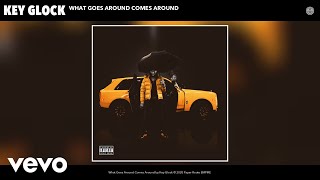
Watch the official What Goes Around Comes Around
music video
Brag Rap With a Warning Label
A lot of the verses are built from classic rap status symbols: jewelry, cash, weapons, and sexual power. But Glock does not present those things as calm luxury. He presents them as part of a tense lifestyle. Even when he celebrates success, there is always a threat nearby.
That is why lines about being rich sit next to lines about being ready for conflict. He treats survival and wealth as linked. In his world, prosperity is not soft. It comes with paranoia, readiness, and the need to prove others wrong.
One of the clearest examples is when he says you gon' do what?
The phrase is short, but it reveals the song’s attitude. He is not just showing off. He is daring doubters, rivals, or opportunists to test him. The confidence is real, but so is the insecurity of a life where power has to be defended over and over.
One Family Lesson Changes the Song
The most revealing moment comes when Glock mentions his grandmother’s advice that hidden actions will eventually be exposed. He paraphrases a lesson many listeners already know: wrongdoing done in darkness comes to light.
That single idea gives the song depth. Suddenly, the title is not only about money looping through the trap. It is about consequences catching up with everyone. The record still celebrates success, but it also admits that nothing stays buried forever.
This family reference fits Glock’s public comments about being shaped by the women who raised him. In Billboard, they noted how he has spoken about his grandmother, great-grandmother, and aunt helping form his self-reliance and drive. That background makes the grandmother line feel less decorative and more central to the song’s meaning.
Sound That Feels Circular
Production matters a lot here. The beat, tagged Let the band play
, has the steady, rolling feel often heard in Memphis rap. Rather than chasing big emotional swings, it locks into a repetitive groove. That matters because repetition is the theme.
The instrumental gives Glock room to rap in a blunt, unfussy style. His delivery is controlled and heavy, which helps every flex sound like a fact instead of a fantasy. The beat’s looped structure also mirrors the chorus. Everything feels like it is spinning in the same orbit: money, danger, pride, and work.
Interpretation: The production makes the song feel trapped in motion. It moves forward, but it also keeps circling back, just like the title suggests.
Success Did Not Erase the Streets
Another major theme is that fame has not fully changed Glock’s mindset. He talks like someone who made it out financially but still lives by the rules of where he came from. There is pride in that, but also limitation.
When he says he came from the bottom and brought his team, he frames success as collective, not purely personal. Loyalty matters. So does memory. He is rich now, but the song insists he has not forgotten the hustle that made him.
That attitude lines up with how his career has been discussed publicly. Billboard described his rise from projects like Glock Season to later releases as built on consistency, independence, and raw street storytelling. This song fits that pattern. It is less about reinvention than reinforcement.
The Real Meaning in One Sentence
So what is the meaning of What Goes Around Comes Around Key Glock? It is a song about how hustle becomes identity, and how identity lives inside a cycle of reward and consequence.
Glock celebrates money, status, and toughness. But he also hints that every action leaves a trail. The grind pays off, yet it also locks people into a loop where pressure never ends. That is why the song feels both triumphant and tense.
Final Take
At its best, the track works because it says two things at once. It is a victory lap for someone who outworked doubt, and it is a reminder that life always sends something back. In Glock’s version of success, cash, loyalty, danger, and karma all travel together.
Disclaimer: This article offers interpretation based on the lyrics, performance, and available artist context. Song meaning can vary from listener to listener.








