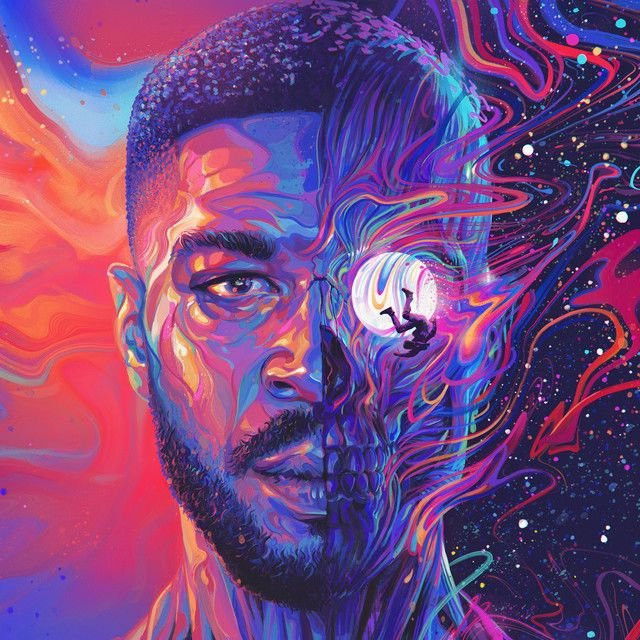
Why Kid Cudi’s ‘Sad People’ Feels Like a Midnight Lifeline
There’s a reason “Sad People” lands like a hand on the shoulder at 2 a.m. Kid Cudi turns inner turmoil into a map, tracing how fear and doubt can lead to a quiet, stubborn hope. The track feels intimate and cinematic at once—like a small voice echoing through a big night sky.
"Sad People" - Kid Cudi
Mm-mm
In the dead of the night I have these dreams
Loading lyrics...
Unable to load lyrics
We're unable to display the lyrics at this time. Please try again later.
What the Song Is Really Saying
At its core, the meaning of Sad People Kid Cudi is a confession and a pep talk. He names the anxiety that surfaces in the dead of the night
, then moves toward self-forgiveness and resilience. Doubt and pain are not the end; they’re a part of the journey.
The song is co-written by David Biral, Denzel Michael-Akil Baptiste, Oladipo O. Omishore, and Scott Ramon Seguro Mescudi. It leans on themes that have defined Cudi’s career—vulnerability, loneliness, and mental health—while refusing to glamorize despair. Instead, it treats sadness as a shared human state, and healing as an ongoing practice.

Watch the official Sad People
music video
Who’s Speaking—and Who They’re Talking To
This is first-person Cudi, reflective but not defeated. He talks to himself and to listeners who’ve felt stuck. When he says This for the sad people
, it’s a small mission statement—he’s building a safe space for those who relate to his struggle.
Phrases like God save me
show a spiritual ache, but the tone isn’t helpless. He’s asking for help while also promising effort. That dual stance—plea and resolve—anchors the song’s honesty.
The Night-Drive Arc
Think of the track like a short film:
- Alone with his thoughts—
by myself alone drivin'
—he confronts the noise in his head. - He keeps searching—
search for truth
—accepting that clarity takes time. - He admits fear and exhaustion—
God save me
—without masking it. - A shift happens: he reclaims focus—
back in my zone
—and recommits to growth.
The arc doesn’t end in triumph for triumph’s sake. It lands in a steadier place: still bruised, still moving. That’s more realistic and, for many listeners, more healing.
Sound, Style, and Symbolism
“Sad People” blends moody, minimalist trap with Cudi’s signature hums. The drums feel deep but unhurried; synth pads and light guitar textures hover like fog. The space in the mix matters: it lets every admission breathe, and the silence around his voice makes each line feel closer.
Symbols amplify the mood. The full moon suggests cycles—darkness returns, but so does light. The ocean image—keeping one’s head up above the waves
—captures how depression can feel: relentless, but survivable with effort and support. The phrase “zone” signals a mental reset, a state where focus returns and fear loses its grip.
Even the communal nod—smoke and a circle of friends—reads less as celebration and more as ritual: a way of holding the moment together while working through it. Nothing in the soundscape tries to overpower the message; everything serves it.
Context, Alternate Reads, and Takeaway
“Sad People” arrives in the era of Man on the Moon III: The Chosen (2020), a return to the introspective world Cudi built a decade earlier. Across his career, he’s been praised for addressing mental health and isolation with unusual candor, influencing a generation of alternative and melodic hip-hop artists. This track continues that mission, offering solidarity instead of spectacle.
Interpretation: One read hears the song as a letter to self-medication—present, but not glorified. The focus is on learning from the pain, not numbing it. Another read centers spirituality: the plea in God save me
isn’t surrender; it’s part of a larger toolkit that includes self-talk, community, and discipline.
In both cases, the message is the same: sadness is real, and moving through it is work. The repeated returns to “zone” show that progress can be messy but possible. If you come to this song for relief, it meets you where you are.
Takeaway and Disclaimer
“Sad People” is a midnight lifeline—honest about the lows, careful with the highs, and confident that healing is a practice. For fans who’ve grown up with Cudi’s openness, it feels like both a mirror and a guide.
Note: Song meanings are subjective. This reading blends lyrical analysis, production context, and Cudi’s broader body of work to offer one informed interpretation.








