
How Kierra Sheard Turns Testimony Into Song
The meaning of You Don't Know Kierra Sheard starts with one big idea: some blessings are so personal that only the person who lived them can truly testify about them. This is not just a praise song in a general sense. It is a song about ownership of faith, memory, and survival.
"You Don't Know" - Kierra Sheard
Don't let no one speak for me
When it comes down to His blessings
Loading lyrics...
Unable to load lyrics
We're unable to display the lyrics at this time. Please try again later.
Kierra Sheard comes from one of gospel music's most recognized families, the daughter of Karen Clark Sheard and niece of members of The Clark Sisters, a group widely honored in gospel history. That background matters because the song sounds rooted in church testimony culture, where personal witness is central to worship. The writing credits supplied for the song include LaShawn Daniels, Fred Jerkins III, Rodney Jerkins, Daniel Nixon, and Delisha Thomas.
The Real Heart of the Message
At its core, the song says that praise cannot be outsourced. Early on, Sheard recalls advice from her mother not to let anyone else speak for her when it comes to God's blessings. That sets the theme clearly: testimony is personal.
When the chorus says You don't know
, it is not meant as a put-down. It is a boundary. Other people may see the singer smiling, singing, or celebrating, but they do not know the private history behind that praise. The line Like I know
makes that point even sharper. Experience creates a kind of knowledge that secondhand observers cannot fully share.
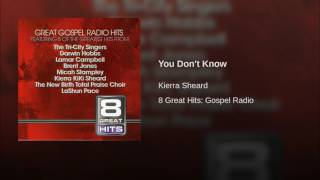
Watch the official You Don't Know
music video
A Story of Rescue, Not Just Belief
One reason the song feels powerful is that it moves beyond vague encouragement. It tells a story. The most vivid moment is the verse about Sheard's mother, where a doctor says the situation is over, but God "stepped right in" and restored her.
That detail changes the whole song. Suddenly, the message is not just that faith feels good. It is that faith was tested in a crisis. The song frames divine help as intervention in a moment of loss, and that makes the praise sound earned.
The Testimony Arc
The song's narrative unfolds in a clear order:
- A lesson from her mother about speaking for herself.
- A confession of trust based on witnessed miracles.
- A family crisis involving her mother.
- A broader claim that God has delivered her before.
- A final call for others to trust as well.
That movement matters. It begins in memory, passes through pain, and ends in encouragement.
Why the Chorus Hits So Hard
The chorus is built around the gap between public appearance and private experience. Sheard suggests that even with endless language, praise would still fall short. The phrase a thousand tongues
gives that idea scale without overexplaining it.
Interpretation: The hook works because it combines humility and confidence at the same time. She is confident that God has acted in her life, but humble about her limits as a speaker. She cannot fully express the blessing, only point toward it.
This also explains why the chorus feels communal even though it is deeply personal. After insisting that others do not know her full story, she opens the door by saying what happened for her can happen for them too. In other words, testimony becomes invitation.
Faith, Family, and Survival as Main Motifs
Several motifs carry the message throughout the song:
- Voice: The opening lesson about speaking for herself makes the voice a symbol of agency.
- Miracles: References to mountains being moved point to impossible situations becoming possible.
- Family: The mother's illness grounds the song in real relationships, not abstract theology.
- Victory: The ending shifts from survival to triumph, saying believers are not left defeated.
The phrase living testimony
is especially important. It suggests that survival itself is evidence. She does not merely tell a testimony; she embodies one.
How the Sound Supports the Meaning
Musically, the song fits the polished gospel-and-R&B style associated with late-2000s and early-2010s mainstream gospel. The production team named in the writing credits includes figures known for sleek, radio-ready arrangements, and the song reflects that kind of structure: strong rhythm, layered harmonies, and a vocal build that rises from reflection into declaration.
That progression mirrors the lyrics. The verses feel conversational, almost like spoken witness in church. Then the chorus opens up emotionally, giving the testimony a larger, more anthem-like shape.
Interpretation: The production choice matters because this is a song about moving from private memory to public proclamation. The arrangement helps stage that movement.
What Makes the Song Distinct in Kierra Sheard's Catalog
Kierra Sheard often balances technical vocal skill with a direct, youth-friendly gospel message. This song stands out because it leans heavily on testimony rather than metaphor. Instead of hiding meaning in poetic mystery, it tells listeners plainly that God has delivered, healed, and sustained her.
That plainness is part of its strength. In gospel, clarity can be more moving than ambiguity. A listener does not need to decode the main point: the singer is alive, grateful, and determined to praise from personal knowledge.
Final Take on the Meaning
So, the meaning of You Don't Know Kierra Sheard is about more than saying thank you. It is about protecting the truth of one's testimony. The song argues that outsiders may hear the praise, but only the survivor knows the depth of the rescue behind it.
That is why the title lands so strongly. It names the distance between appearance and experience, then closes that distance with witness. Sheard turns private deliverance into public encouragement.
Disclaimer: This interpretation is based on the song's lyrics, performance, and gospel context. As with any song, listeners may hear meanings that are personal to their own lives.







