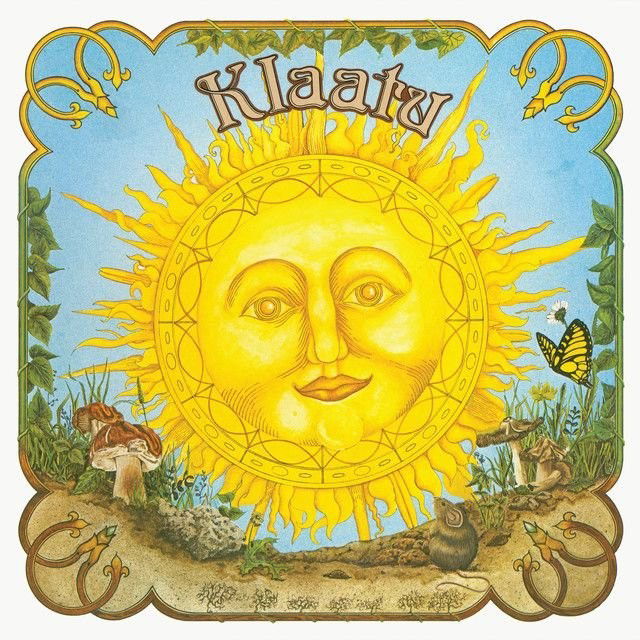
Why Klaatu's Alien Call Still Resonates
The meaning of Calling Occupants of Interplanetary Craft Klaatu starts with a wild image: people on Earth trying to reach aliens through thought, music, and a united plea. On the surface, it sounds like pure science fiction. But the song works because it treats that idea as more than a joke.
"Calling Occupants of Interplanetary Craft" - Klaatu
To telepath messages through the vast unknown
Please close your eyes and concertrate
Loading lyrics...
Unable to load lyrics
We're unable to display the lyrics at this time. Please try again later.
Klaatu, the Canadian rock band behind the track, released it in 1976 on 3:47 EST, and the song later gained even wider attention through the Carpenters' 1977 cover. Those facts are well documented in major music references and discographies. The original writers were John Woloschuk and Terry Draper.
What gives the song staying power is its mix of camp, sincerity, and worry. They frame contact with outer space as a way to talk about life on Earth.
A cosmic message with a human need
At the center, the song imagines a global broadcast to visitors from beyond. The singers ask listeners to focus their minds and send a signal into the unknown. Phrases like telepath messages
and world contact day
make the act feel half ritual, half public event.
That setup creates the song's main emotional engine. They are not just trying to find aliens. They are trying to prove that humanity can unite around a shared hope.
Interpretation: In this reading, the extraterrestrials stand for any higher power, wiser force, or outside perspective that might break human conflict. The song uses UFO language, but the deeper need is earthly: they want help, peace, and reassurance.

Watch the official Calling Occupants of Interplanetary Craft
music video
The chorus turns curiosity into a plea
The repeated hook, Calling occupants
, matters because it keeps changing in tone. At first it sounds playful and theatrical, almost like a radio transmission. As the song continues, the repetition becomes more urgent.
That shift is important to the meaning of Calling Occupants of Interplanetary Craft Klaatu. The chorus is not only about making contact. It is about repeating a hope until it becomes a prayer.
The song even frames the unknown beings as friendly. The line We are your friends
reverses the usual fear found in alien stories. Instead of panic, the song offers diplomacy.
Beneath the sci-fi, there is fear about Earth
The most serious section arrives when the lyrics ask the visitors to come peacefully because Earth may not survive on its own. That is where the song stops sounding like a novelty and starts sounding like a warning.
Please come in peace
Our earth may never survive
These brief lines suggest global danger without naming one cause. They could point to war, pollution, political collapse, or a general loss of faith in human judgment.
Interpretation: Many listeners hear this as a 1970s anxiety song in disguise. The decade carried deep fears about nuclear conflict, ecological damage, and social instability. By asking outsiders to intervene, the song dramatizes a crisis of confidence in humanity itself.
Who is speaking in the song?
The voice is mostly collective. Rather than one narrator telling a personal story, the lyrics speak as a group trying to represent Earth. That first-person-plural stance gives the song its unusual scale.
They are not singing about private heartbreak. They are acting like ambassadors.
That is why the song feels both intimate and huge. A simple invitation to close their eyes and concentrate becomes a fantasy of planet-wide unity. Even the wording around mind power and thought transmission makes belief itself part of the performance.
Sound and arrangement make the idea believable
A big reason the track works is its production. Klaatu lean into a spacious, dramatic arrangement that supports the interstellar theme. The music has a floating, cinematic quality, with layered vocals and a grand pop structure that make the message feel ceremonial.
Instead of mocking the premise, the sound treats it seriously. That choice matters. If the band had played the song only for laughs, its emotional core would disappear.
The arrangement also mirrors the lyrics' movement. It begins with invitation and wonder, then grows in scale as the call expands outward. By the time the plea becomes urgent, the music has already built a sense of spectacle.
Why the song still connects now
For modern listeners in the United States, the song can feel surprisingly current. People still live with fears about global crisis, division, and whether anyone is truly listening. The fantasy of sending one message beyond human systems still has power.
That helps explain why the meaning of Calling Occupants of Interplanetary Craft Klaatu goes beyond its UFO imagery. It speaks to a timeless wish: if people cannot save themselves, maybe a wiser audience is out there.
At the same time, the song is not purely bleak. Its optimism matters just as much as its fear. They imagine contact as peaceful, mutual, and even healing.
Final transmission
In the end, Klaatu's song is about more than aliens. It uses space-age language to ask whether humanity can come together, admit its limits, and ask for peace without shame.
That balance of wonder and alarm is why the song endures. It is strange, catchy, and sincere all at once.
Disclaimer: This interpretation separates documented facts from informed reading. Like many songs, its meaning can stay open to more than one valid view.







