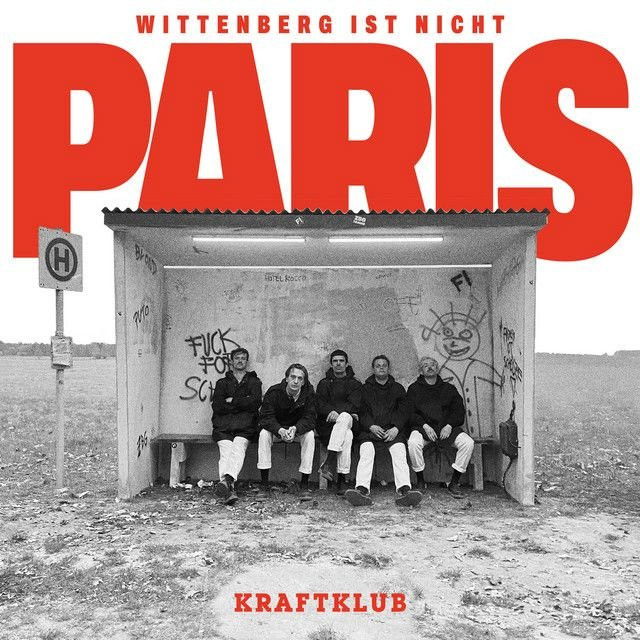
Why ‘Wittenberg ist nicht Paris’ Hits So Hard
The Core Meaning Behind the Song
The meaning of Wittenberg ist nicht Paris Kraftklub centers on class, place, and the limits of symbolic politics. The song looks at a person who leaves eastern Germany for a more progressive, stylish city life, then speaks about politics from that safer distance. Kraftklub use that story to ask a hard question: what happens when someone escapes a troubled place, but then judges it without living in its daily reality anymore?
"Wittenberg ist nicht Paris" - Kraftklub
Bitte versteck' dich in den Büschen
Sag' mir, wer soll dich beschützen?
Loading lyrics...
Unable to load lyrics
We're unable to display the lyrics at this time. Please try again later.
The title line, Wittenberg ist nicht Paris
, is the key. It does not only compare two cities. It draws a line between a smaller East German town and the image of a cosmopolitan, fashionable capital. In plain terms, the song argues that political values may be easier to display in trendy neighborhoods than in places still shaped by economic decline, inheritance, exclusion, and far-right tension.
Watch the official Wittenberg ist nicht Paris
music video
A Song About Distance, Not Just Geography
Kraftklub are a band from Chemnitz, and their work often deals with eastern German identity, frustration, and irony, as seen across their career and public profile on their official channels and label materials.
Here, they sketch a person who has traded one life for another. The move is presented with some sympathy. The song understands why someone would exchange the old routine for cafés and designer furniture stores
. That detail matters because it shows how culture and taste become signs of belonging. The new city offers comfort, status, and a cleaner political self-image.
But the band also shows the moral trap inside that move. The person now celebrates election results in their district and shouts Nazis out
where, as the lyric says, there may be fewer actual Nazis nearby. The point is not that anti-fascism is wrong. The point is that it is easier, safer, and more rewarding in the right postcode.
How the Verses Build the Story
The opening images are tense and immediate. There is fear, danger, and mistrust of authority. When the lyric mentions East German police officers
, it suggests a world where institutions do not feel protective. That line helps explain why someone would want to leave.
The next move is social rather than physical. Once the character enters a new urban scene, they begin to adapt. One of the sharpest examples is the shift in speech and manners, marked by the line about Viertel Fünf
changing to a more polished way of telling time.
Doch manche der Türen
werden dein Leben lang zu bleiben
Those lines, even in brief form, capture the song’s class argument. The character may fit in outwardly, but some doors stay closed. The band suggests that accent, background, family wealth, and unspoken social codes still matter.
The Chorus Turns the Song Into Social Critique
The chorus is simple, but it carries the full weight of the song. Repeating Wittenberg ist nicht Paris
turns a local observation into a larger statement about inequality across regions.
Interpretation: Paris here works less as a literal destination than as a symbol. It stands for prestige, urban progress, cultural capital, and the fantasy of being on the “right” side of history. Wittenberg stands for a place burdened by history, underinvestment, and political tension. By repeating the contrast, Kraftklub reject the idea that one slogan or one election map can flatten those differences.
Class, Inheritance, and Belonging
One of the song’s smartest details is the line about ownership and inheritance. The lyric says, in effect, that in this new place people are not renting; they have inherited something. That shifts the theme from politics to class structure.
The song argues that belonging is not only about ideas. It is also about property, family history, and access. Someone can learn the codes of a neighborhood and still feel the social limits around them. They may be liked, but not fully welcomed.
This is why the song avoids becoming a simple attack on people who move away. It sees both sides: the urge to escape is real, and so is the emptiness of acting morally superior from afar.
How the Sound Supports the Message
Kraftklub are known for mixing indie rock, punk energy, and sharp, talk-sung phrasing, a style documented by their official artist pages and live performances. That matters here. The music gives the lyrics momentum rather than softness.
The track’s likely effect comes from that familiar Kraftklub push: brisk drums, driving guitars, and vocals that sound half conversational, half accusatory. Instead of making the song mournful, the arrangement makes it feel restless and unsparing. That fits a lyric about social friction. The band are not looking for a dreamy escape; they are pressing on a bruise.
Why the Song Connects Beyond Germany
For U.S. listeners, the setting may be specific, but the themes travel easily. Many countries have a version of this divide: large progressive cities versus smaller places that feel ignored, mocked, or politically abandoned.
The song speaks to a common modern tension:
- leaving home to find freedom,
- building a new identity,
- then wondering what was lost,
- and who gets to speak for the place left behind.
That is why the meaning of Wittenberg ist nicht Paris Kraftklub feels bigger than one German town. It is about the gap between values performed in comfort and values tested in harder places.
The Lasting Takeaway
Kraftklub do not romanticize Wittenberg, and they do not glorify Paris either. They show how both places carry illusions: one can be dangerous and stifling, the other polished but exclusionary.
Interpretation: the song’s deepest message is that moral clarity becomes weaker when it ignores material reality. Politics, class, and belonging are messy on the ground. The refrain reminds listeners that different places ask different things of people.
That is what gives the song its sting. It is not just saying one city is unlike another. It is saying that judgment becomes cheap when distance makes struggle invisible.
Disclaimer: This interpretation is based on the lyrics, known context about Kraftklub, and the song’s themes. As with any song, listeners may hear different meanings in it.







