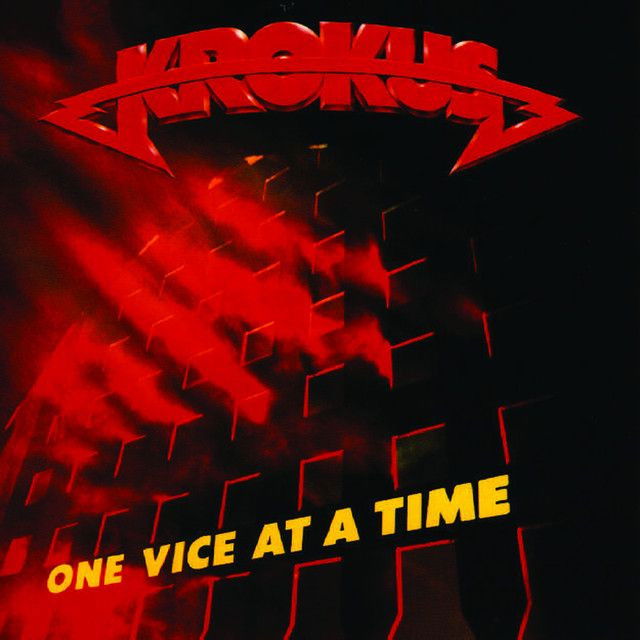
What 'Long Stick Goes Boom' Really Means
The meaning of Long Stick Goes Boom Krokus is not especially hidden. This is a swaggering hard rock song built on sexual innuendo, nightlife energy, and the kind of oversized confidence that defined much of early-1980s metal. Krokus do not present romance as tender or reflective here. They present it as heat, risk, motion, and release.
"Long Stick Goes Boom" - Krokus
Burnin' bones and bedside time
Once again we meet tonight
Loading lyrics...
Unable to load lyrics
We're unable to display the lyrics at this time. Please try again later.
That directness is part of why the song lasted. First released on One Vice at a Time in 1982, it became one of the Swiss band’s signature tracks, and later even lent its name to the 2014 live album Long Stick Goes Boom: Live from da House of Rust.[1] Research notes that the original song reached No. 22 in the U.S., showing how strongly its blunt, catchy style connected with American hard rock listeners.[1]
The Song’s Core Idea: Innuendo Turned into Anthem
On the page, the song is a chain of suggestive lines. In performance, it becomes bigger than that. The title phrase long stick goes boom
works as a crude joke, but also as a chant. It is meant to hit like a drum fill or a fist in the air.
Interpretation: The song is less about a detailed story than about building tension and then exploding it in the chorus. The verses describe anticipation, physical attraction, and the rush of a late-night encounter. Then the hook turns that mood into a communal shout.
A few short phrases make that clear: burnin' bones
, magical light
, and blood is hot
. None of those lines are complex poetry. They are simple signals for desire, body heat, and impulsive action.
Watch the official Long Stick Goes Boom
music video
Who Is Speaking in the Lyrics?
The voice in the song shifts between “they” as a band persona and a direct address to a partner. The result feels half seduction, half stage performance. Even when the words are personal, the delivery suggests an audience is in the room.
That matters because Krokus were always built for live impact. According to the research on Live from da House of Rust, singer Marc Storace said the band wanted recordings that captured what they really sounded like onstage, because the live setting showed their full energy more clearly.[1] That helps explain why even the original studio version feels written for crowd response.
How the Verses Build the Mood
The opening lines jump straight into sex jokes and physical imagery. There is no mystery about the setup. The song begins in a world of bedrooms, bodies, and nighttime reunion. When the lyric hints that the pair meet tonight
, it frames the encounter as something anticipated and repeated, not accidental.
Later, the lines get even more forceful. The singer says the time is right, the body is ready, and the action should happen immediately. That makes the track feel urgent rather than romantic.
A Short Look at the Chorus
Before the hook arrives, the band piles up action verbs: gonna hit it
and gonna kick it
. They are not describing emotions in detail. They are revving the engine.
You give us fever
You give us sweat
Tonight long stick goes boom
This is the song’s whole method in miniature: body language, rising intensity, then the explosive title line.
Sound Matters as Much as the Words
The meaning of Long Stick Goes Boom Krokus becomes clearer when the music is considered. This is metal and hard rock that favors punch over nuance. The guitars are thick and aggressive, the rhythm section pushes forward, and the vocal style is shouted with a grin rather than sung with vulnerability.
That sound changes how the lyrics land. If these words were whispered over a softer arrangement, they might sound sleazy or awkward. Over hard-driving riffs, they become cartoonishly bold. Krokus turn innuendo into theater.
Research on the 2014 live album also highlights how important performance was to the band’s identity, noting that the record aimed to capture their live sound and even showcase multiple guitar styles.[1] That reinforces the idea that this song works best as physical rock spectacle.
Artist Context: Why Krokus Sound This Way
Krokus came from Switzerland, but their style clearly spoke to the same loud, riff-heavy tradition that fueled AC/DC-style hard rock and early-'80s metal. They were not chasing subtle literary songwriting. They were chasing impact.
That is why the song’s bluntness should be read in context. It belongs to a tradition where exaggeration is part of the fun. Reviews of the later live album praised that energy, with AllMusic describing the set as highly energetic and Blabbermouth noting Storace’s undimmed force onstage.[1] Those comments are about a live release, but they fit this song’s spirit exactly.
Two Plausible Readings
Interpretation 1: A straight sex anthem. This is the simplest reading, and the strongest. The title, the body imagery, and the urgent commands all point there.
Interpretation 2: A parody of macho rock excess. Some listeners may hear the song as knowingly over-the-top. The language is so exaggerated that it can feel like Krokus are winking at the audience while still delivering the goods.
Both readings can be true at once. Hard rock often lives in that space, where sincerity and self-aware showmanship overlap.
Why the Song Still Gets Talked About
The song survives because it does one job very well. It takes a crude joke, locks it to a huge riff, and sells it with total conviction. There is no deep psychological portrait here. The appeal is immediacy.
For many listeners, that is enough. The chorus is memorable, the energy is physical, and the attitude is unmistakable. In that sense, the meaning of Long Stick Goes Boom Krokus is simple: desire turned into a high-volume rock event.
Final Take
Krokus built this song as a hard-rock blast of lust, bravado, and crowd-ready release. Its lyrics are direct, its hook is explosive, and its music makes the innuendo feel larger than life.
That said, song meaning is always part fact and part interpretation. This reading is based on the lyrics, the band’s style, and available historical context.







