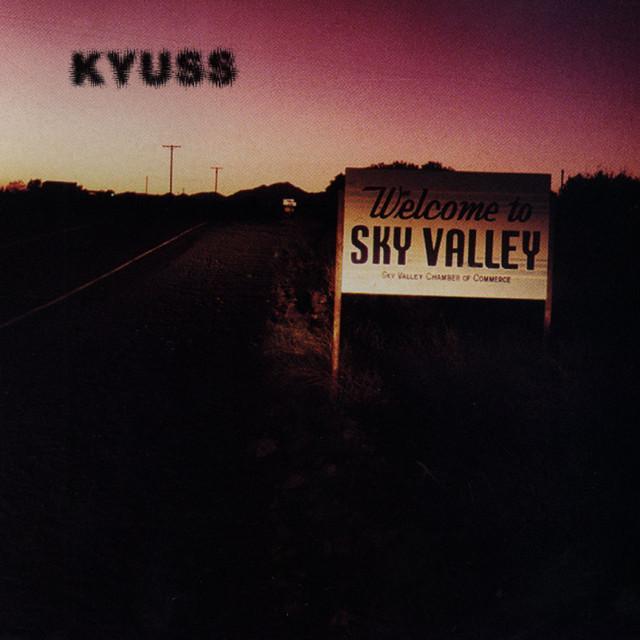
Why Kyuss Made Sadness Sound So Heavy
The meaning of Supa Scoopa and Mighty Scoop Kyuss comes through less like a neat story and more like an emotional blur. The song sounds like someone talking to a person who is leaving, fading, or already gone. What makes it hit hard is that the voice is not calm. They move between hurt, sarcasm, longing, and resignation.
"Supa Scoopa and Mighty Scoop" - Kyuss
Like I can't live without you
Today
Loading lyrics...
Unable to load lyrics
We're unable to display the lyrics at this time. Please try again later.
Kyuss released the song on ...And the Circus Leaves Town in 1995, the band’s final studio album, a fact documented in the band’s discography at AllMusic and Discogs. Josh Homme wrote the song, and singer John Garcia later told Songfacts that when Homme brought him Supa Scoopa and Mighty Scoop
, Garcia had to make it his own, because Homme’s version and Garcia’s version felt very different. That detail matters for interpretation: the song likely began with one emotional outline and gained another through performance.
A breakup song, but not a simple one
At the core, this feels like a song about separation. The opening lines push back against control and dependence. When the singer says take me away
and pairs it with the idea of not being able to live without someone, they seem to reject a manipulative bond.
Interpretation: this is not a straightforward love song. It sounds more like a relationship in collapse, where desire and resentment still exist at the same time. The lyric about love in one moment and damage in the next suggests unstable intimacy rather than comfort.
That tension carries into the middle of the song. The voice sounds bruised but not destroyed. There is even a bitter edge in the question about whether everyone enjoy the show
. That phrase makes the breakup feel public, performative, or humiliating.

Watch the official Supa Scoopa and Mighty Scoop
music video
The lonely refrain gives the song its center
The clearest emotional key may be the recurring idea that someone is home, yet still isolated. The short refrain around you’re home
and alone
turns physical space into emotional emptiness.
Interpretation: the song suggests that being settled is not the same as being safe. A person can be in a familiar place and still feel cut off from everyone around them. That is why the repeated line about being always on his own
lands so hard. It is simple, but it gives the song a deep sense of abandonment.
And you know
You’re home
Alone
Always on his own
This is the article’s only multi-line lyric quote, and even here the power comes from repetition, not detail. Kyuss use that repetition like a weight pressing down on the track.
How the verses move from anger to grief
One reason the song feels human is that it does not stay in one mood. Early lines sound accusatory. Later lines sound wounded. By the end, the speaker seems less interested in fighting and more interested in admitting loss.
A few key turns shape that arc:
- The opening resists emotional control.
- The middle mocks the drama around the split.
- The later lines admit it is
so sad to see you go
. - The refrain returns to loneliness as the final truth.
That shift gives the song depth. It is not just about blaming someone else. It is also about recognizing the empty space left behind.
The music makes the meaning feel bigger
Kyuss are often described as a defining desert rock or stoner rock band, known for downtuned guitars and massive grooves, as noted by Songfacts. Garcia also explained there that Kyuss songs were not built around lots of solos because Josh Homme preferred a rhythm-focused approach.
That matters here. The song’s meaning is carried by feel as much as words. The guitar tone is thick and dry, the groove is locked in, and the performance creates a sense of drag, like emotion being pulled across hot pavement.
Instead of decorating the sadness, the band trap it inside the riff. The repetition mirrors obsessive thinking. The heaviness mirrors emotional pressure. Garcia’s vocal delivery adds another layer: he does not sound polished or distant. He sounds like someone trying to hold the song together while feeling every line.
Artist context helps explain the abstraction
Garcia told Songfacts that many of his lyrics are fictional love tragedies and abstract stories, often drawn from personal or observed experience. He also said he believes listeners should find their own meaning in a song. That is a useful frame here.
So, factually, they should be careful not to force one exact plot onto the lyric. Interpretation: the song most likely uses a relationship breakdown as its main emotional engine, but it stays vague on purpose. That vagueness lets listeners hear romance, betrayal, loneliness, or even band-fracture energy inside it.
There is also a creative tension behind the song. Garcia said he had to fall in love with songs written by other bandmates and transform them into something he could fully sing. That may be why “Supa Scoopa and Mighty Scoop” feels both personal and elusive: it is a shared creation shaped by different instincts.
Final read on the meaning of Supa Scoopa and Mighty Scoop Kyuss
The meaning of Supa Scoopa and Mighty Scoop Kyuss is best understood as emotional fallout made physical. It is about someone leaving, someone hurting, and someone trying to turn chaos into a statement. The lyric stays abstract, but the feeling is clear: anger fades, loneliness remains, and the music makes that loneliness feel huge.
That is why the song lasts. It does not explain itself too much. It lets the riff, the repetition, and the emotional cracks do the work.
Disclaimer: This interpretation combines documented context with close lyrical reading. As John Garcia has suggested, listeners may find their own meaning in the song.







