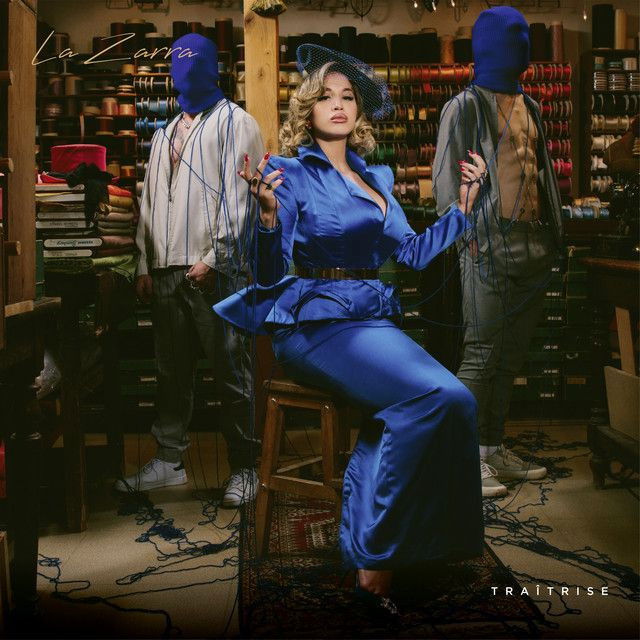
Why “Tu t’en iras” Cuts So Deep
The meaning of Tu t’en iras La Zarra centers on a painful idea: when someone has been hurt enough times, they may expect the end of love before the relationship has even fully begun. In this song, La Zarra presents a speaker who does not trust promises, even when affection is offered.
"Tu t’en iras" - La Zarra
Même sans douter
Tu diras que tu m'aimes
Loading lyrics...
Unable to load lyrics
We're unable to display the lyrics at this time. Please try again later.
That is what gives the track its sting. It is not just a breakup song. It is a song about living in the shadow of earlier breakups, and hearing goodbye long before goodbye arrives.
A Love Story Ruled by Prediction
At its core, the song follows someone who believes a partner will eventually leave. Early lines suggest that even declarations of love feel empty. The speaker hears romance, but they do not believe it will last.
The central refrain, Tu t’en iras
, means “you will leave.” That phrase matters because it is not framed as a question. It is treated as an outcome the speaker already knows. When the lyric adds comme tous les autres hommes
, it widens the pain from one relationship to a pattern.
Interpretation: the song is less about one bad partner than about emotional repetition. This person is not reacting only to the present. They are reacting to everyone who came before.

Watch the official Tu t’en iras
music video
The Narrator’s Wound: Doubt Before Intimacy
One of the strongest parts of the lyric is how it blends accusation with self-criticism. The speaker does not simply point at the other person and call them false. They also admit guilt, suspicion, and exhaustion.
When they repeat Moi, j’en doutais
and later describe having lost faith in love, the song reveals a mind trained by disappointment. They expect betrayal, and that expectation shapes how they hear every word and gesture.
This is why the song feels emotionally mature. It understands that fear in relationships is rarely clean. People can feel wounded, defensive, and self-aware all at once.
What the Chorus Really Means
The chorus is memorable because it compresses the song’s whole emotional world into a few short lines. The speaker says the partner will leave their arms and become like the others before them. In plain terms, love is being treated as temporary from the start.
There is also a striking line of resistance in Je n’attendrai pas
. The speaker is not only bracing for abandonment. They are also trying to reclaim control. If being left feels inevitable, then refusing to wait becomes a kind of defense.
Interpretation: this can be heard in two ways:
- as strength, where the speaker refuses to be passive
- as heartbreak, where they prepare for loss so early that closeness never feels safe
That tension is the song’s emotional center.
Small Phrases, Big Themes
The verses deepen the picture by showing how this fear affects communication. The speaker says they feel held back and struggle to express themselves. They worry they say too much, yet still cannot say the right thing.
That contradiction is key. Someone hurt by past love may talk and still feel unheard. They may explain themselves and still feel exposed. The line J’m’attends au pire
makes that plain: they expect the worst before events prove it.
A few motifs keep returning:
- Departure: leaving, goodbye, empty arms
- Repetition: the same ending happening again and again
- Doubt: suspicion replacing trust
- Emotional fatigue: love becoming effort rather than relief
Together, these ideas turn the song into a portrait of romantic burnout.
How La Zarra’s Style Carries the Meaning
La Zarra, the stage name of Fatima Zahra Hafdi, is a Moroccan-Canadian singer known for blending French chanson drama with modern pop styling; she also represented France at the Eurovision Song Contest 2023. That context helps explain why this song feels both classic and contemporary.
The production around “Tu t’en iras” supports the lyric’s emotional distance. Rather than sounding messy or explosive, the arrangement feels poised and theatrical. That matters. The speaker is in pain, but they are not collapsing in public. They sound elegant, controlled, and tired.
This kind of polished restraint makes the song sharper. Instead of screaming the heartbreak, La Zarra lets it harden into certainty. The result feels closer to fatalism than panic.
A Brief Narrative of Emotional Retreat
The song’s movement is easy to trace:
- The speaker doubts the partner’s words.
- They connect this relationship to previous disappointments.
- They admit their own fear, silence, and overthinking.
- They reach exhaustion and reject the cycle.
By the final section, the song is no longer asking who is at fault. It is showing what repeated disappointment does to a person’s emotional stamina. Love starts to feel like labor. Goodbye starts to feel built in.
One More Reading Worth Considering
There is another possible angle in the meaning of Tu t’en iras La Zarra. The partner may not actually have done much yet. Some lines suggest the speaker is reacting to a forecast rather than confirmed betrayal.
Interpretation: if that reading is right, the song becomes partly about self-sabotage. The speaker may be so shaped by old wounds that they can only imagine one ending. That does not make their pain unreal. It makes it tragic.
Final Take on the Song’s Message
“Tu t’en iras” is powerful because it captures a very common but rarely elegant feeling: being unable to enjoy love because past hurt has already written the ending. The song turns that fear into something grand, clear, and memorable.
For many listeners, that is the real meaning. It is not simply “you will leave.” It is, “I have seen this story before, and I do not know how to believe in a different one.”
Disclaimer: This article offers an interpretation of the song based on its lyrics, performance, and public artist context. Meanings can vary from listener to listener.








