
Why 'Avec le temps' Still Hurts
The meaning of Avec le temps Léo Ferré starts with a painful idea: time does not always heal in a warm, uplifting way. Sometimes, it simply wears things down. In this song, love does not explode. It fades. Memory weakens, devotion looks foolish, and the self is left tired rather than redeemed.
"Avec le temps" - Léo Ferré
Avec le temps, va, tout s'en va
On oublie le visage, et l'on oublie la voix
Loading lyrics...
Unable to load lyrics
We're unable to display the lyrics at this time. Please try again later.
Léo Ferré, the singer-songwriter who wrote and performed the song, was one of the major voices of French chanson, known for mixing poetry, politics, and raw feeling in his work. Basic biographical facts about Ferré and his place in French music are widely documented by reference sources such as Britannica and Radio France. That larger context matters, because this song sounds like the work of an artist who distrusted easy comfort.
A breakup song, but colder than that
At first glance, they can hear this as a love song in reverse. The speaker looks back on a once-powerful attachment and admits that even the most intense bond can disappear. Early on, the lyric says faces and voices are forgotten, and the famous refrain, tout s'en va
, makes the point brutally simple: everything goes.
But the song is not just about one lost lover. It also studies what happens after grief has lasted too long. The heart no longer races, the search for answers stops, and resignation takes over. That is why the final blow, on n'aime plus
, feels larger than heartbreak. It suggests not just losing someone, but losing the ability to love with the same force.
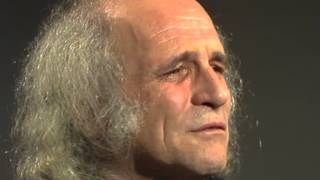
Watch the official Avec le temps
music video
How the verses deepen the meaning
Each verse adds a new layer to the song’s emotional collapse. Instead of repeating the same complaint, Ferré shows different things that time erases.
First, desire turns into distance
The lyrics recall a beloved person once sought everywhere, even obsessively. Images of reading meaning in glances and in what hides entre les lignes
suggest a romance built on longing, mystery, and projection. The speaker once believed deeply in that emotional world.
Then the song undercuts it. Promises become makeup, disguise, performance. What once seemed sacred now looks staged. Interpretation: this shift suggests that heartbreak changes memory itself; the past is no longer trusted.
Then memory itself starts to rot
One of the most striking moves in the song is the claim that even happy memories decay. Ferré does not present nostalgia as sweet. He presents it as something damaged, dusty, almost grotesque.
That is where the song becomes more than a breakup ballad. The speaker is not simply sad. They are disillusioned. By the time tenderness leaves on a Saturday night, loneliness feels routine rather than dramatic.
The song’s most devastating passage
Near the end, the lyric gathers physical images of exhaustion and alienation:
blanchi comme un cheval fourbu
dans un lit de hasard
These short images describe a person worn down, chilled, and emotionally stranded. The body carries the history of failed love. The random bed also hints that intimacy has become empty habit, not connection.
Sound and performance: why it feels so final
Part of the meaning of Avec le temps Léo Ferré comes from how it sounds. Ferré’s performance is restrained, almost conversational at points, but heavy with fatigue. They do not sound like someone trying to win sympathy. They sound like someone reporting a truth they hate but accept.
The arrangement is equally important. The song is usually heard as sparse and slow, with piano and orchestral shading giving it the gravity of a late-night confession. That minimal space matters. It leaves silence around the words, and that silence becomes part of the message.
Rather than building toward catharsis, the music often feels like it settles downward. This supports the lyric’s central idea: not a storm of feeling, but erosion.
Ferré’s wider artistic context
Ferré often wrote songs that refused sentimentality, and that helps explain why this one remains so piercing. They worked in a tradition where the chanson could carry literary weight, but Ferré also pushed that form toward something more confrontational and intimate. Overviews of his career in sources like Britannica note his seriousness as both poet and performer.
That context matters because “Avec le temps” does not offer a neat lesson. It does not say love was false, and it does not say pain makes people wiser. Instead, it says time can strip away illusion until almost nothing is left.
Two strong ways to read the song
Interpretation 1: It is about the death of romantic love. In this reading, every verse measures the distance between past devotion and present emptiness.
Interpretation 2: It is about aging itself. The lost lover matters, but the deeper subject is the erosion of faith, passion, and self-image over years.
Both readings fit because the song keeps moving between intimate details and universal statements.
Why it still lands with listeners
The song lasts because it tells an ugly truth many songs avoid. Love does not always end in flames or noble sadness. Sometimes it simply thins out, memory by memory, habit by habit, until one day life feels quieter and colder.
That honesty is the real power behind the meaning of Avec le temps Léo Ferré. Ferré turns fading feeling into something almost philosophical, yet never abstract. They keep it human, bodily, and painfully recognizable.
Disclaimer: This article offers an interpretation of the song based on its lyrics, performance, and documented artist context. Meaning can vary from listener to listener.








