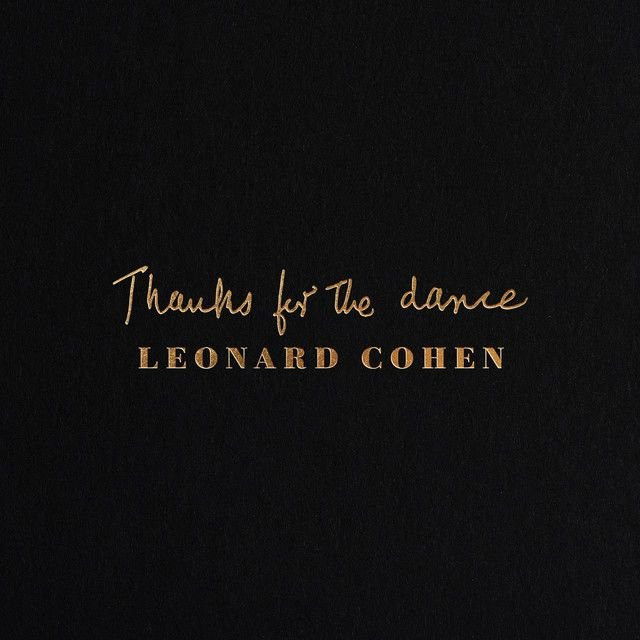
Puppets by Leonard Cohen
The meaning of Puppets Leonard Cohen turns on one hard idea: human beings often act as if they are pulled by history, power, hatred, and habit. In this song, Leonard Cohen does not offer comfort. They present a grim vision in which war crimes, political violence, and private indifference all belong to the same broken theater.
"Puppets" - Leonard Cohen
Jewish puppets did not choose
Puppet vultures eat the dead
Loading lyrics...
Unable to load lyrics
We're unable to display the lyrics at this time. Please try again later.
Released on the posthumous album Thanks for the Dance, the song was credited to Leonard Cohen and Adam Cohen, with the album completed by Adam Cohen after Leonard’s death, as noted by Columbia Records and Leonard Cohen’s official site. That context matters. It places “Puppets” in Cohen’s late style: spare, severe, and focused on judgment, history, and the failure of human innocence.
A Song About Power Without Mercy
At the most direct level, the song describes a world where people become instruments. It names genocide, armies, presidents, lovers, and readers, then folds them into one repeated image: the puppet. The point is not that all people are equal in guilt. Rather, the song shows how violence moves through systems, roles, and crowds.
When Cohen repeats puppet me and puppet you
, they widen the frame. The song is not only about famous tyrants or distant history. It also includes ordinary people, including the listener. That move gives the song its sting.
Interpretation: Cohen seems to be warning that people are more manipulable than they like to believe. Politics, tribal identity, and daily comfort can make moral blindness feel normal.
Watch the official Puppets
music video
History Enters the Room
The opening is shocking because it invokes the Holocaust directly. By using phrases like burned the Jews
and then pairing identities in the same repeated structure, the song forces listeners to sit with atrocity as a human event, not an abstract lesson. Cohen, who was Jewish and often wrote about faith, guilt, and history, had long engaged Jewish imagery and moral struggle across their catalog, documented by the Rock and Roll Hall of Fame and major retrospectives from The New York Times.
The song’s language is blunt on purpose. It does not narrate a full story. Instead, it stacks images: corpses, vultures, sailors, flames. That piling-up creates a sense of history as machinery. One horror leads to another.
Puppet Presidents command
Puppet troops to burn the land
Puppet fire, puppet flames
Feed on all the puppet names
This is the song’s clearest political statement. Leaders give orders, soldiers carry them out, and then destruction spreads beyond ideology into pure ruin.
The Most Unsettling Idea: Bystanders
One of the song’s sharpest turns comes when it leaves the battlefield and enters private life. Cohen mentions lovers in happiness and a reader who simply goes on with the evening. In paraphrase, the song suggests that comfort can coexist with catastrophe. People can know terrible things are happening and still return to bed.
That is why phrases like shakes his head
matter. The gesture signals mild disapproval without action. Cohen seems interested in passive spectatorship: the kind of moral response that stops at recognition.
Interpretation: This may be the song’s accusation against modern media culture as much as against old political evil. News becomes another performance, and outrage becomes another routine.
Why the Repetition Feels So Cold
Musically, “Puppets” is spare and chant-like, consistent with the stripped-down atmosphere of Thanks for the Dance, which featured contributions from collaborators including Daniel Lanois, Beck, and Javier Mas, according to the album notes summarized by NPR and Pitchfork. Even without a crowded arrangement, the track feels heavy.
That effect comes from repetition. Cohen keeps returning to puppet presidents
and puppet troops
, reducing individuals to roles. The music supports that narrowing. Instead of dramatic release, the song moves with a grave, almost ritual pace. It sounds less like protest and more like a verdict.
Cohen’s late vocal style also matters. Their near-spoken delivery often sounded like witness testimony. Here, that voice makes the lyrics feel carved in stone rather than sung for pleasure.
Symbols That Carry the Meaning
Several images deepen the song’s message:
- Puppets: human beings shaped by systems, leaders, fear, and fate.
- Fire: war, genocide, and destruction that consumes names and identities.
- Vultures and corpses: the aftermath of violence, where death becomes part of a cycle.
- Night and day: the sense that cruelty does not end; it simply changes scenes.
The line about puppet night
suggests that darkness is not an exception. It is the next act. That theatrical image fits the title perfectly. History becomes a staged performance, but the suffering is real.
A Few Ways to Read It
There is more than one valid reading of the meaning of Puppets Leonard Cohen.
Interpretation 1: It is a political song about how leaders, armies, and ideologies turn people into tools.
Interpretation 2: It is also a spiritual song. Cohen may be asking whether human freedom is weaker than people hope, especially under pressure from history and desire.
Interpretation 3: It can be heard as a media-age warning. People witness horror, react briefly, and then resume ordinary life.
These readings work together rather than compete.
Why the Song Still Lands
“Puppets” is difficult because it refuses easy moral distance. It does not let listeners place evil only in the past or only in other people. By repeating the puppet image across victims, rulers, soldiers, and spectators, Cohen creates a bleak portrait of shared entanglement in violence.
That does not erase responsibility. It makes responsibility more urgent. The song argues, in its severe way, that people must resist becoming automatic.
Disclaimer: This interpretation is based on the song’s lyrics, documented release context, and Leonard Cohen’s broader body of work. As with all art, other readings are possible.









